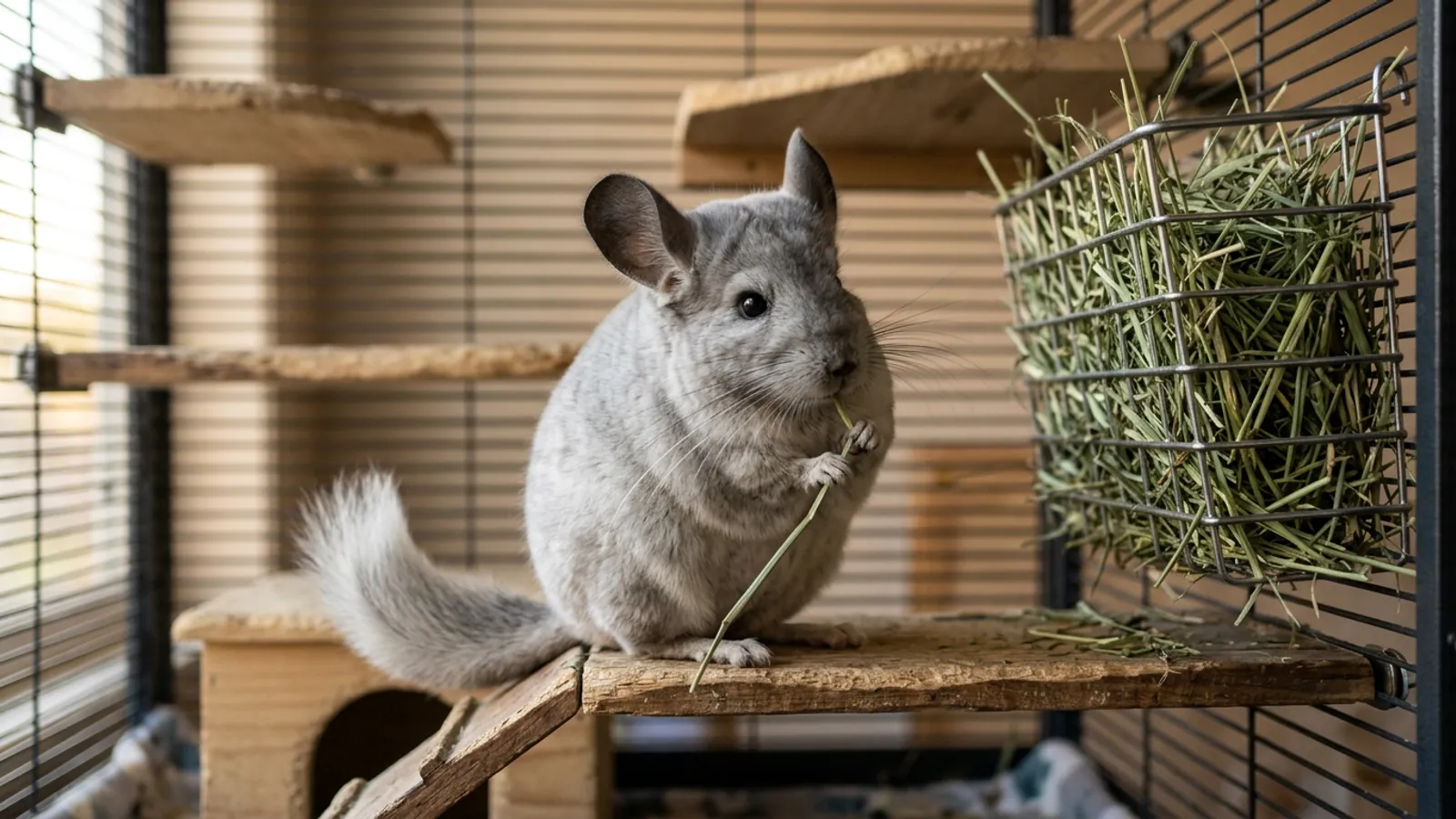
A chinchilla diet is one of the simplest feeding jobs in the whole pet world and one of the easiest to get quietly wrong. There are really only three things in it that matter, and once they are right you barely think about food again. But I have watched what happens when they go wrong, up close, because one of my two chinchillas came to me with dental disease that I now manage every single day. So when I talk about what goes in the bowl, I am not reciting a chart. I am telling you what keeps Juniper eating and what keeps Pebble's gut moving, and why the order of those three things is not negotiable.
What a chinchilla diet is built to do
Before the food, the animal. A chinchilla is a hindgut fermenter with a long, busy digestive tract built to process a steady stream of coarse, low-value plant fiber. It is not built for rich food in bursts. The gut wants to be moving more or less constantly, and it moves best on fiber. Take the fiber away, or swap it for something soft and sugary, and the whole system slows down. A slow chinchilla gut is not a minor thing. It can tip into bloat or full stasis, where the animal stops passing droppings and stops eating, and that is an emergency that needs an exotics vet, not a wait-and-see.
The second thing the diet has to do is wear down teeth. Chinchilla teeth never stop growing, front and back, for the animal's whole life. The only thing that keeps them the right length and shape is grinding tough, abrasive plant material for hours a day. Juniper is the reason I am blunt about this. Her teeth do not wear evenly on their own, so I see, up close and constantly, what a diet that fails to grind teeth down leads to: pain, drooling, dropped food, weight loss. You can read more about that in the piece on chinchilla teeth, but in brief, food is dental care here. It is not separate from it.
So every feeding decision comes back to those two jobs: keep the gut full of moving fiber, and keep the teeth grinding. Hold onto that and the rest of this is mostly detail.
The wild chinchilla diet, and why it still rules the bowl
Chinchillas come from the high, dry slopes of the Andes, and the wild chinchilla diet there is about as far from a rich pet-store treat as you can get. Up at altitude the vegetation is sparse and tough: grasses, hardy little shrubs, forbs, seeds, the odd bit of bark or cactus. It is high in fiber, low in fat, low in sugar, and there is never very much of it at once. An animal that evolved to work hard for coarse, dry forage did not evolve any ability to cope with a steady supply of sweet, fatty, or watery food. That mismatch is the source of almost every diet mistake I see.
This is why the chinchilla natural diet matters even for an animal that has never seen a mountain. The body in your cage is still the mountain body. It still expects fiber first and richness almost never. When people ask me why they cannot just feed a nice varied bowl the way they might for a rabbit or a guinea pig, this is the answer: the guts and teeth in front of you are tuned to scarcity and toughness. I go into the wild picture in more detail in what do chinchillas eat in the wild, but for the bowl at home the lesson is simple. Copy the fiber. Skip the abundance.
Hay is the whole meal, not a side dish
Grass hay is the diet. Everything else is a supplement to it. Your chinchilla should have unlimited, fresh, clean grass hay available all day and all night, and should be eating a pile of it roughly the size of its own body every day. That is not a garnish. That is the meal, and it is doing both jobs at once: filling the gut with moving fiber and grinding the teeth.
By grass hay I mean timothy, orchard grass, meadow, oat, or a similar grass hay. Timothy is the one I keep as the everyday staple, and I buy it in bulk so I am never tempted to ration it. Oxbow Western Timothy Hay, 9 lb box As an Amazon Associate I earn from qualifying purchases. Fresh matters here. Good hay smells green and sweet and is a bit crunchy. If it looks gray, smells musty or dusty, or has any hint of damp, it is done, and I bin it rather than risk a respiratory problem or mold. I keep the current supply in a dry, airy spot, not a sealed bag that sweats.
One hay is a real exception: alfalfa. Alfalfa is a legume, not a grass, and it is much higher in calcium and protein. It is the wrong staple for a healthy adult, because that extra load is not something the mountain body needs day to day. Where it earns a place is in specific situations, mostly young kits who are still growing, or a pregnant or nursing female, or sometimes an underweight animal a vet is trying to build back up. For a normal adult, grass hay is the base and alfalfa is at most an occasional thing, not the pile they live on. If you want the longer version of all of this, I wrote it up in chinchilla hay and specifically timothy hay for chinchillas.
The one thing I will not let you talk yourself out of is the "unlimited" part. A chinchilla that runs out of hay for a few hours, especially overnight, is a chinchilla whose gut has nothing to do. Keep the rack full. Refresh it daily even if there is some left, because they pick through and waste the coarser bits, and picky is fine as long as the good stuff is always there.
Pellets are a measured supplement, not the meal
Pellets are the second thing in the diet, and the word that matters is measured. A plain, grass-based chinchilla pellet fills in the vitamins and minerals that hay alone can be a little short on, and it gives you a reliable daily nutritional floor. But it is a supplement to unlimited hay, never a replacement for it. The usual amount for an adult is about one to two tablespoons a day, given as a set portion rather than topped up all day long. If your chinchilla is filling up on pellets and ignoring hay, the pellets are too generous, and you cut them back until the hay pile is the thing that disappears.
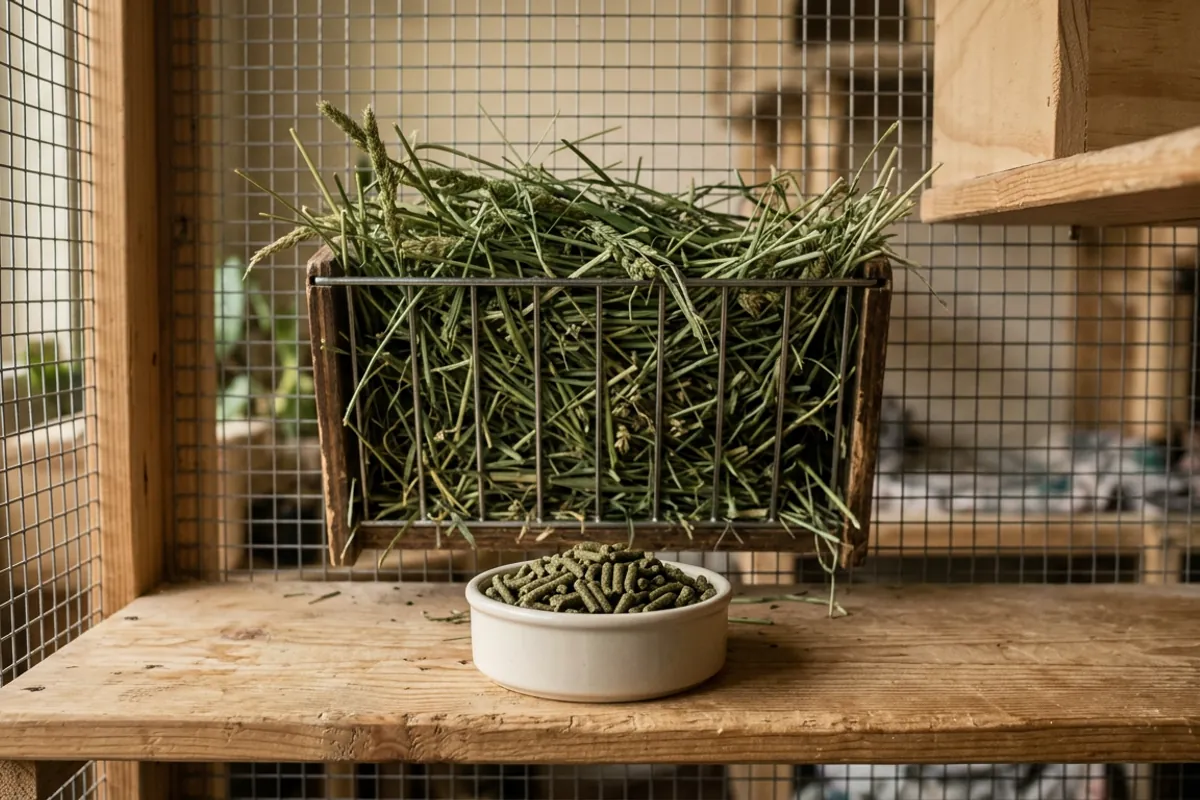
Buy plain. A good chinchilla pellet is uniform, grass-based, and boring to look at. Oxbow and Mazuri are the two brands I see recommended again and again by experienced keepers, and the Mazuri chinchilla diet and the Oxbow grass-based pellets both do the plain, single-type job well. I have written separately about where they fit in chinchilla pellets and about Oxbow chinchilla pellets in particular. The brand matters less than the rule: one uniform pellet, nothing added.
What I will name plainly as the wrong buy is the colorful muesli-style mix, the kind with dried corn, seeds, banana chips, little colored bits, and nuts thrown in. It looks generous and it is a trap. Chinchillas are champion selective feeders. Given a mix, they eat the sweet fatty pieces and leave the boring healthy ones, so you get a fat animal on an unbalanced diet who is also skipping the fiber. If a bag looks like trail mix, it is not chinchilla food. Skip it.
A chinchilla diet list, and the treats that are safe
People love a chinchilla diet list, so here is mine, in strict order of importance: unlimited grass hay, a measured daily portion of plain pellets, clean water, and then, occasionally and in tiny amounts, a safe treat. That fourth item is the one that gets animals into trouble, so I want to be careful about it.
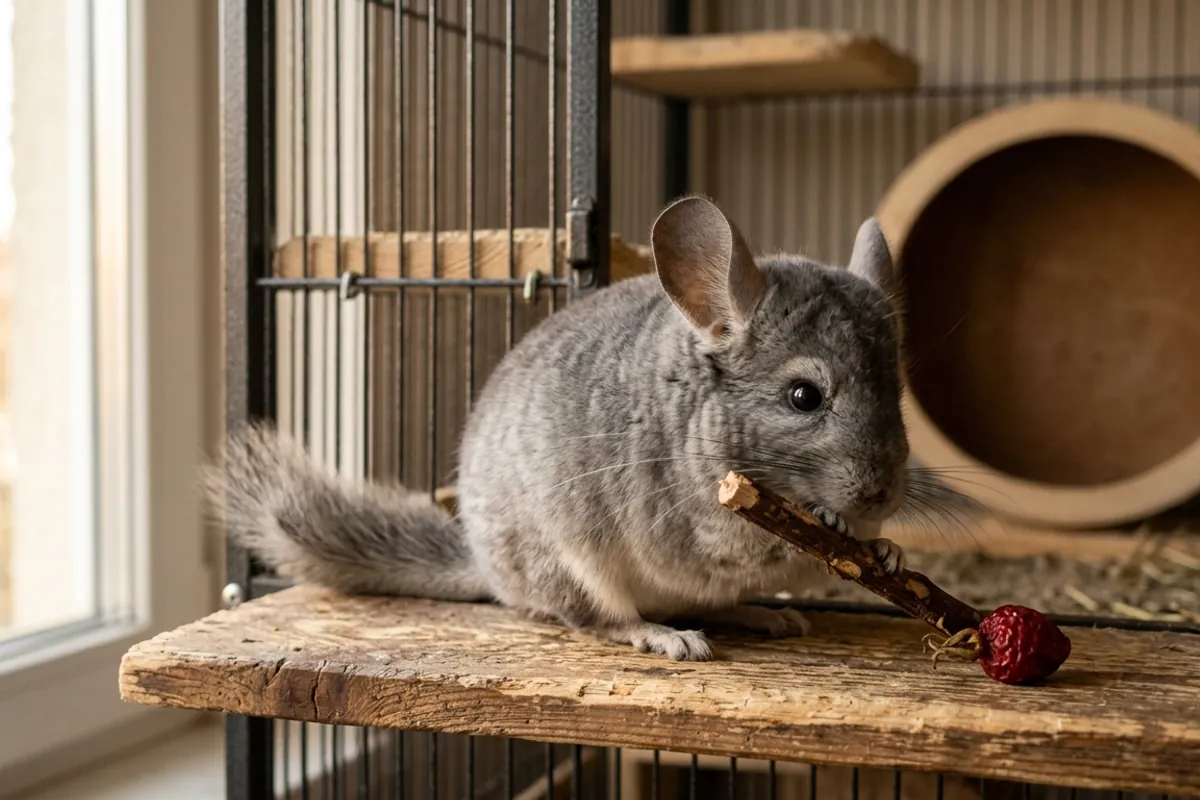
A chinchilla treat is a pinch, not a portion, and a few times a week at most. The safest ones are dry, plain, and low in sugar and fat. A single plain rose hip is my everyday go-to, and I keep those in the house on purpose. I explain why in dried rose hips for chinchillas. A few plain rolled oats, a small piece of a plain dried herb, a little bit of plain dried leaf or flower sold for small animals, all fine in small amounts. The rule is dry, plain, and small.
Chewing itself is part of the diet, even when there is no nutrition in it, because it is teeth work. Safe untreated wood gives the teeth something to grind between meals, and it saves your cage from getting chewed to bits. I keep a rotation of apple wood and similar safe chews going all the time. emours apple wood chew sticks, 40 count As an Amazon Associate I earn from qualifying purchases. Juniper's teeth are the reason I never treat chews as optional. For the fuller picture of what wood is safe and what is not, I put it all in chinchilla chew toys.
Now the flip side of the list, because a treat list is only useful if you also know the hard nos. No nuts and no seeds, ever, as a routine food; they are far too fatty for this animal. No sugary fresh fruit, no dried fruit as a habit, no raisins, no banana chips. No fresh vegetables in any real quantity, and especially nothing watery like lettuce or cucumber, which can upset a gut built for dry forage. No chocolate, no human snacks, nothing salty. When in doubt, the answer is hay. I keep the fuller version of the safe-and-unsafe question in what can a chinchilla eat and what to feed a chinchilla.
Water, and the foods that quietly do harm
Water is the part of the diet people forget is part of the diet. Clean, fresh water, changed daily, available all the time. I use a bottle rather than a bowl because a bowl gets bedding, droppings, and dust kicked into it within the hour, and a chinchilla with a wet chin or a wet chest is a chinchilla with a skin problem waiting to happen. This animal only ever gets wet on the outside from a dust bath, never water, and a leaking or dripping bottle undoes that. Check the spout works and the bottle is not fouled every single day. I go through the choices in chinchilla water bottle.
The quiet harms are worth naming again because they rarely look like harm at the time. A rich treat does not drop an animal on the spot. It shows up weeks later as a soft, overweight chinchilla who has learned to refuse hay, or as loose droppings, or as a gut that has slowed down. The two things I watch hardest are droppings and appetite. A healthy chinchilla produces a lot of firm, dry, oval droppings. If those go small, sparse, soft, or stop, or if the animal goes off its hay, that is not a food preference to wait out. That is a gut telling you something, and if it does not resolve fast, it is an exotics vet call. Bloat and stasis move quicker than people expect, and a chinchilla that has stopped eating does not have days to spare.
Any change to the diet goes in slowly. New hay, new pellet brand, a first-time treat, all introduced over a week or so, a little at a time, so a sensitive gut can adjust and so you can spot a bad reaction while it is small. Switching a whole bag overnight is how you turn a harmless new food into a sick animal.
Putting the routine together
The whole thing collapses into a rhythm you can run half-asleep. Every day: top up the hay so it is never empty, give the one measured portion of pellets, change the water, and glance at the litter to check the droppings look right. A few times a week: a pinch of a safe treat, and a check that the chew rotation still has something worth gnawing. That is the entire chinchilla diet. It is dull on purpose. Dull is what a healthy gut and healthy teeth want.
If you weigh your chinchilla now and then, you have an early-warning system that beats eyeballing a fluffy animal, because dense fur hides a lot. A slow, steady drop is worth a vet conversation before it becomes a visible one. And if you keep a rescue with existing dental disease, as I do with Juniper, the hay-first discipline stops being general advice and becomes the thing standing between a manageable condition and a crisis.
None of this is complicated, and that is the point I want to leave you with. The mistakes come from doing more, not less: fancier bowls, generous mixes, daily treats, variety for its own sake. The animal in front of you is a mountain animal that thrives on tough, dry, boring fiber and almost nothing else. Feed it like that. If you want the wider view of how food sits alongside the rest of care, the hub page on chinchilla diet, food, and hay ties it together, but you already have the whole meal: hay first, pellets measured, water clean, treats tiny, and a close eye on the droppings.