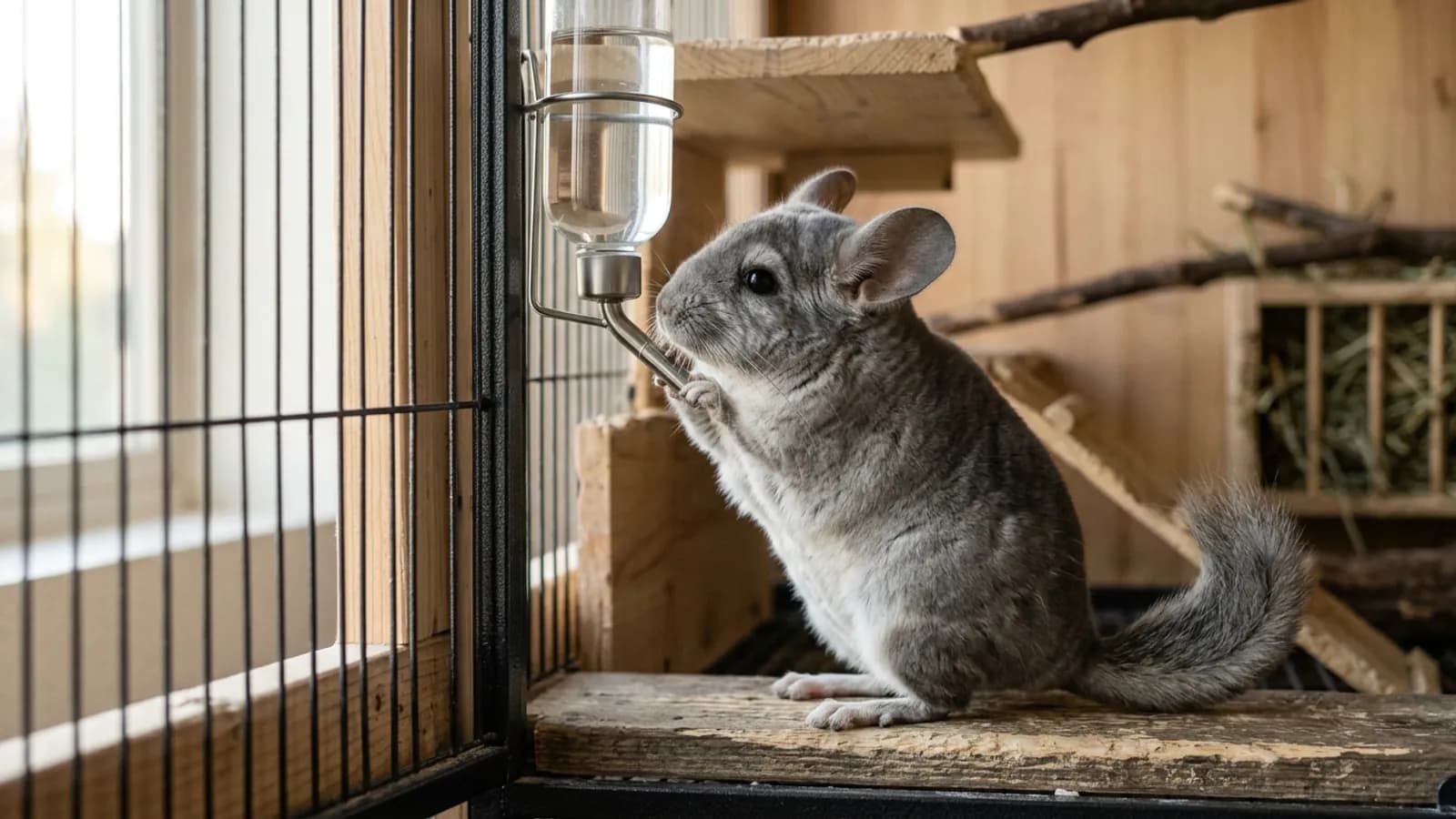
A chinchilla water bottle is one of those pieces of kit that looks too simple to get wrong, and then you get it wrong anyway. It is a tube, a spout, and some water. Then you watch it drip all over the ledge, or you find a green film growing in the bottom of it, or you realise your chinchilla has been quietly chewing the reservoir into a slow leak, and you start to understand why I have opinions about them. Water is not optional and it is not a place to cut corners. A chinchilla needs clean water available every hour of every day, and the bottle you pick decides whether that actually happens or just looks like it does from across the room.
I have kept chinchillas for about ten years, and in that time I have thrown out more bottles than I would like to admit. What follows is what I have settled on, and why. None of it is complicated, but the small details are the whole game.
Why a bottle beats a bowl for a chinchilla
The first thing new owners ask is whether a bowl would be simpler. It would, and it would also be a mistake. A chinchilla's coat is the densest fur of any land mammal, something like fifty to eighty hairs growing from a single follicle. That density is why they are so soft, and it is also why a wet chinchilla is a genuine problem rather than a mild inconvenience. Water does not bead off and evaporate the way it would on a dog. It soaks down to the skin and sits there, and damp skin under dense fur is where fungal infections start. This is the same reason chinchillas bathe in dust and never in water. If you want the full picture on that, I wrote about what a soaked coat and a drooling chin each mean, and separately about why the bath is dust and not water.
An open bowl invites exactly the outcome you are trying to avoid. A chinchilla will step in it, kick bedding and droppings into it, tip it over, and end the day with a wet foot or a wet flank. A bottle with a sipper tube delivers water on demand and keeps both the water and the animal dry. The bottle mounts on the bars of the cage, out of the way of the litter and the ledges, which is one more reason I want a cage made of metal and wood rather than the flimsy plastic-based setups sold for smaller rodents.
Critter Nation double unit small animal cage As an Amazon Associate I earn from qualifying purchases.
The bars give you somewhere solid to clip a bottle at the right height, and the whole thing stays put when a chinchilla decides to test it.
Glass or plastic, and what a chinchilla will do to either
Here is the truth about plastic around chinchillas: they chew it. Not out of malice, but because chewing is what their teeth are built to do all day, and a plastic reservoir sitting within reach is just another thing to gnaw. A chewed plastic bottle cracks, leaks, and worst of all sends little shards of plastic into an animal that cannot digest them. I have seen a plastic bottle go from full to empty overnight through a hole no bigger than a pinhead.
That is the case for a glass water bottle for chinchilla use. Glass will not be chewed through, it does not scratch and hold biofilm the way scuffed plastic does, and you can actually see how clean the inside is. The trade-offs are honest ones: glass is heavier, it costs more, and it will break if it hits a hard floor while you are refilling it. I think those are worth accepting. If you do stay with a plastic bottle for cost reasons, the non-negotiable is that the chinchilla can reach only the spout and not the body of the bottle. A wire guard around the reservoir, or mounting it fully outside the bars with just the tube poking through, is what keeps a plastic chinchilla bottle from becoming a chew toy.
Whichever material you choose, the spout should be stainless steel, never plastic. The spout is the one part the teeth touch every day, and a plastic tip gets bitten flat and starts to leak within weeks. Giving your chinchilla plenty of proper things to chew takes some of the pressure off the bottle too, and it is dental care they need regardless.
emours apple wood chew sticks, 40 count As an Amazon Associate I earn from qualifying purchases.
A good selection of chew toys is not decoration, it is how those ever-growing teeth stay worn down, and a chinchilla with satisfying wood to work on is less inclined to attack the water bottle.
What actually makes the best chinchilla water bottle
When people ask me for the best chinchilla water bottle, they usually want a brand name. I am going to disappoint them, because I do not do sponsored endorsements and the right bottle is defined by features, not a logo. Here is what I look for.
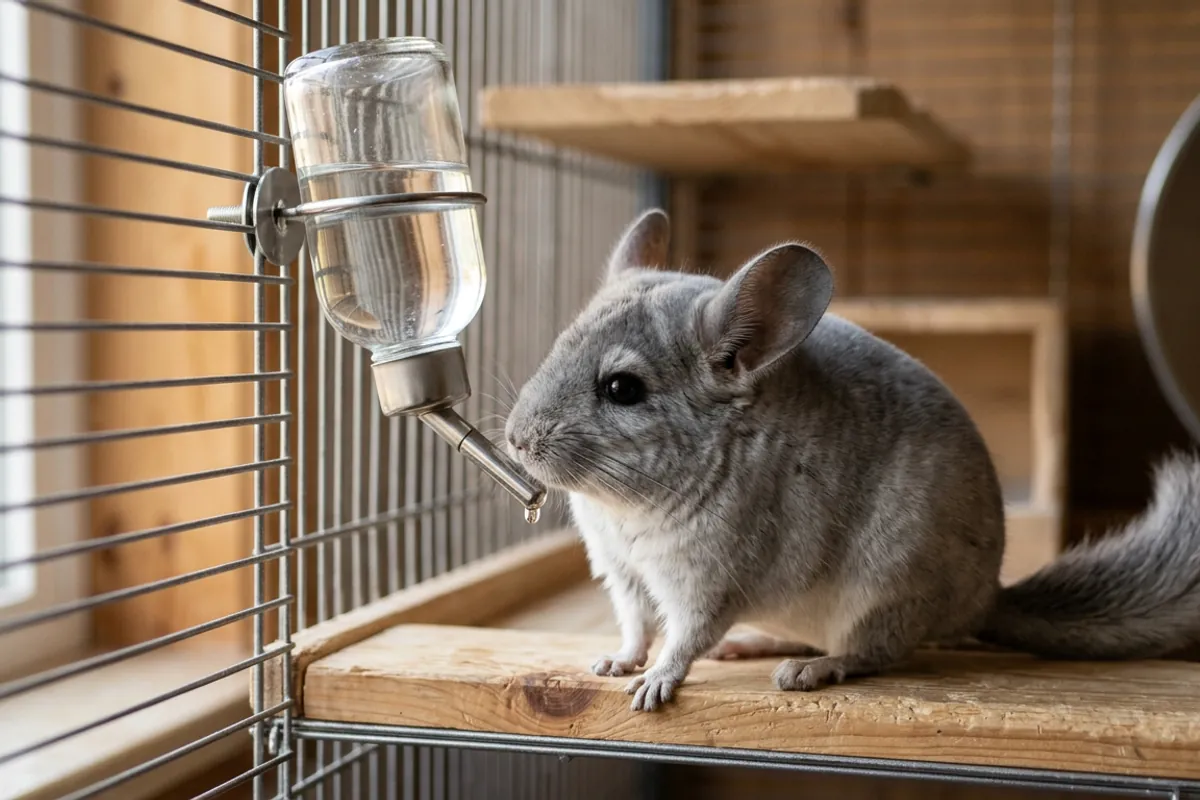
The sipper tube should have a ball-bearing valve, the small steel ball that seals the tube until the animal licks it. This is what stops the bottle from draining itself. Cheap tubes with a worn or missing ball drip constantly, and a dripping bottle empties itself onto the bedding while you are at work.
The size should be modest, not generous. A huge reservoir sounds convenient, but a chinchilla drinks surprisingly little, and water that sits for days goes stale and grows things. A smaller bottle that you refill fully every day keeps the water fresher than a large one you top up occasionally. As a rule I would rather refill more often than serve old water.
The mouth of the bottle should be wide enough to get a bottle brush inside. If you cannot fit a brush in, you cannot clean it properly, and I will come back to why that matters. And the mount should be secure and simple, so the bottle sits flush against the bars and cannot be swung, knocked loose, or wedged at an angle that traps the ball valve open. That is the whole specification. A glass body, a stainless steel ball-bearing spout, a sensible size, a wide neck, and a solid mount. Any bottle that ticks those boxes is a good one.
What water goes in the bottle
For most people, plain tap water is fine, and I use it myself. If your tap water is heavily chlorinated or very hard, a simple filter jug takes the edge off, and there is no harm in filtered water. What I would not do is overthink it with bottled mineral water or additives. A chinchilla needs clean, fresh, room-temperature water, full stop.
The word that matters most in that sentence is fresh. Change the water every single day, and do not just top up what is left. Topping up means the last inch of yesterday's water, plus whatever has started growing in it, stays in the bottle indefinitely. Tip the whole thing out, give it a quick rinse, and refill. It takes ten seconds and it is the difference between water your chinchilla wants to drink and water it avoids.
Keeping the bottle clean, the part people skip
This is where most water bottle problems actually live. A bottle that is refilled but never scrubbed builds up biofilm, that slightly slimy layer you feel on the inside glass, and in a bright spot it will grow green algae on top of that. Biofilm is bacteria, and a chinchilla drinking through a fouled tube is drinking that bacteria all day.
My routine is simple. Daily, I empty and rinse and refill. Once a week, the bottle gets a real clean: a bottle brush down the body with a little unscented soap, a thin pipe cleaner or a dedicated spout brush through the tube, a thorough rinse until there is no soap smell left, and a check that the ball valve still moves freely. The tube is the part everyone forgets, and it is the part the animal's mouth actually touches. If you can see cloudiness inside the tube, it is overdue.
Every so often I do a deeper clean by soaking the bottle in a solution of white vinegar and water to break down mineral scale and stubborn film, then rinsing it very well. If a bottle has scratches you cannot brush clean, or a tube that stays cloudy no matter what, replace it. A bottle is cheap and a gut infection is not.
Placement, height, and checking it actually works
A bottle only counts if the chinchilla can drink from it comfortably. Mount it so the spout sits at about the height of the animal's head when it stands normally on a ledge, not so high it has to crane up and not so low it has to hunch down. Chinchillas are climbers, so use a ledge or the bars to give them a natural spot to reach it, and think about the whole layout the way I do in the piece on building a cage setup that keeps the animal healthy.
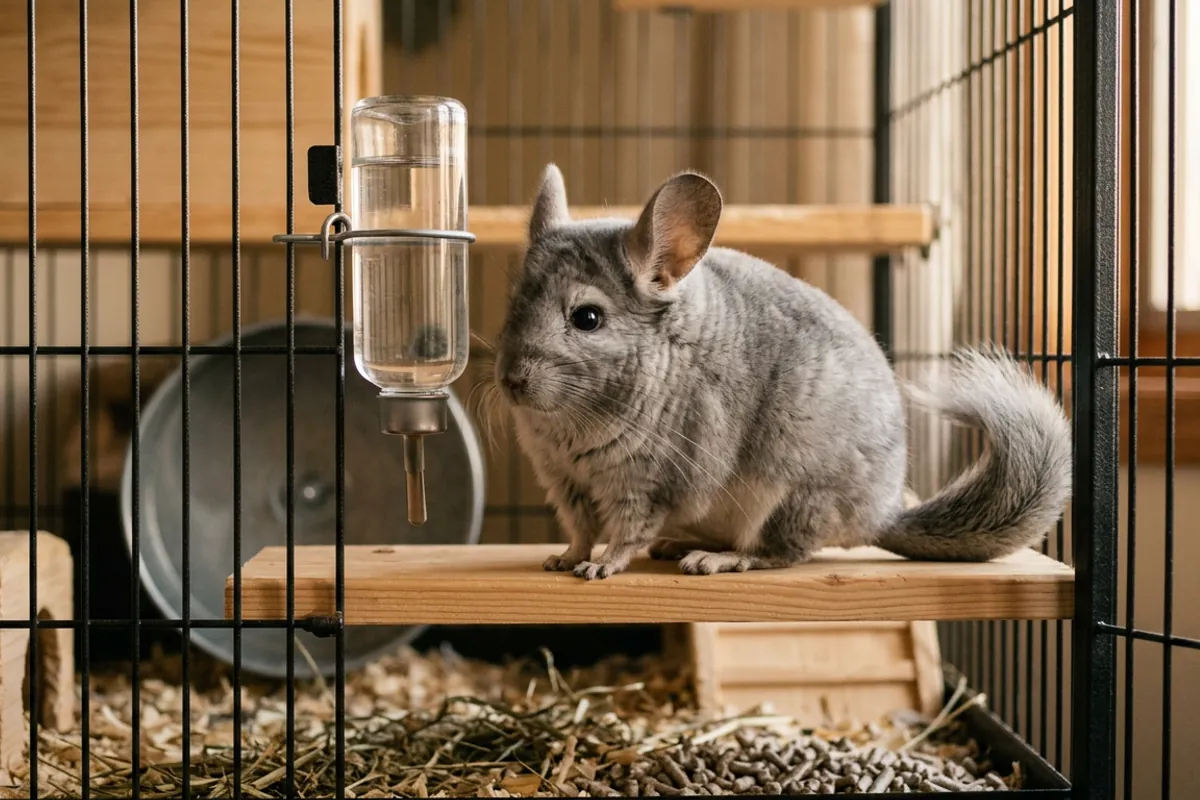
Mount it securely enough that it cannot be swung or pushed sideways, because a bottle knocked to an angle can trap the ball valve open and drain onto the bedding. Wet bedding under the bottle is its own hazard: it holds damp against the cage floor, it can grow mold, and it keeps that corner permanently soggy. If you find a wet patch under the bottle every morning, the valve or the mount is the problem, and it needs fixing rather than mopping.
Get into the habit of checking the bottle works, not just that it is full. Tap the ball with a fingertip and watch a drop form. A bottle can look full while the tube is blocked or the ball is stuck, and a chinchilla can go without water behind a bottle that appears perfectly fine. If you are away for the day, I think a second bottle is worth it, mounted on the other side of the cage. It doubles as a backup if one fails and means the animal is never relying on a single point of failure.
When water intake matters most
There are times when the water bottle stops being routine and becomes the thing standing between your chinchilla and real trouble. Heat is the big one. Chinchillas come from a cold, dry mountain climate and they do not shed heat well. The comfortable range is 60 to 70°F (15 to 21°C). Above 75°F (24°C) is getting risky, and 80°F (27°C) and up is an emergency, faster still in humid air. In warm weather a chinchilla needs water even more than usual, and I watch the bottle level closely on hot days. I keep a thermometer and hygrometer on the cage so I am reacting to the actual conditions, not guessing.
digital thermometer and humidity gauge with remote probes As an Amazon Associate I earn from qualifying purchases.
If the room is drifting into the danger zone, the water bottle is not the fix on its own, and I have written separately about heat safety and the warning signs of heat stroke, which you should know cold before summer arrives.
Diet is the quieter reason water matters so much. A chinchilla lives on dry food. The foundation is unlimited grass hay, timothy or another quality grass hay, available at all times, with plain pellets as a measured supplement on top.
Oxbow Western Timothy Hay, 40 oz bag As an Amazon Associate I earn from qualifying purchases.
Because that whole diet is dry, water is not a garnish, it is essential to moving all that fibre through the gut. You can read the full approach in the guide to diet, food, and hay. My rescue Juniper, who I manage day to day for dental disease, is a reminder of how these things connect: an animal whose teeth hurt may drink and eat differently, and a sudden change in how much a chinchilla uses its water bottle is worth taking seriously.
That is the last thing I will say. Watch the level. A chinchilla that suddenly stops drinking, or one that starts drinking noticeably more than usual, is telling you something, and neither is normal. Both can point to illness, and both are worth a call to an exotics vet rather than a wait-and-see. I am an experienced keeper, not a vet, and the water bottle is one of the clearest early windows you have into whether something is wrong. Keep it clean, keep it fresh, check that it works, and pay attention to what it tells you.