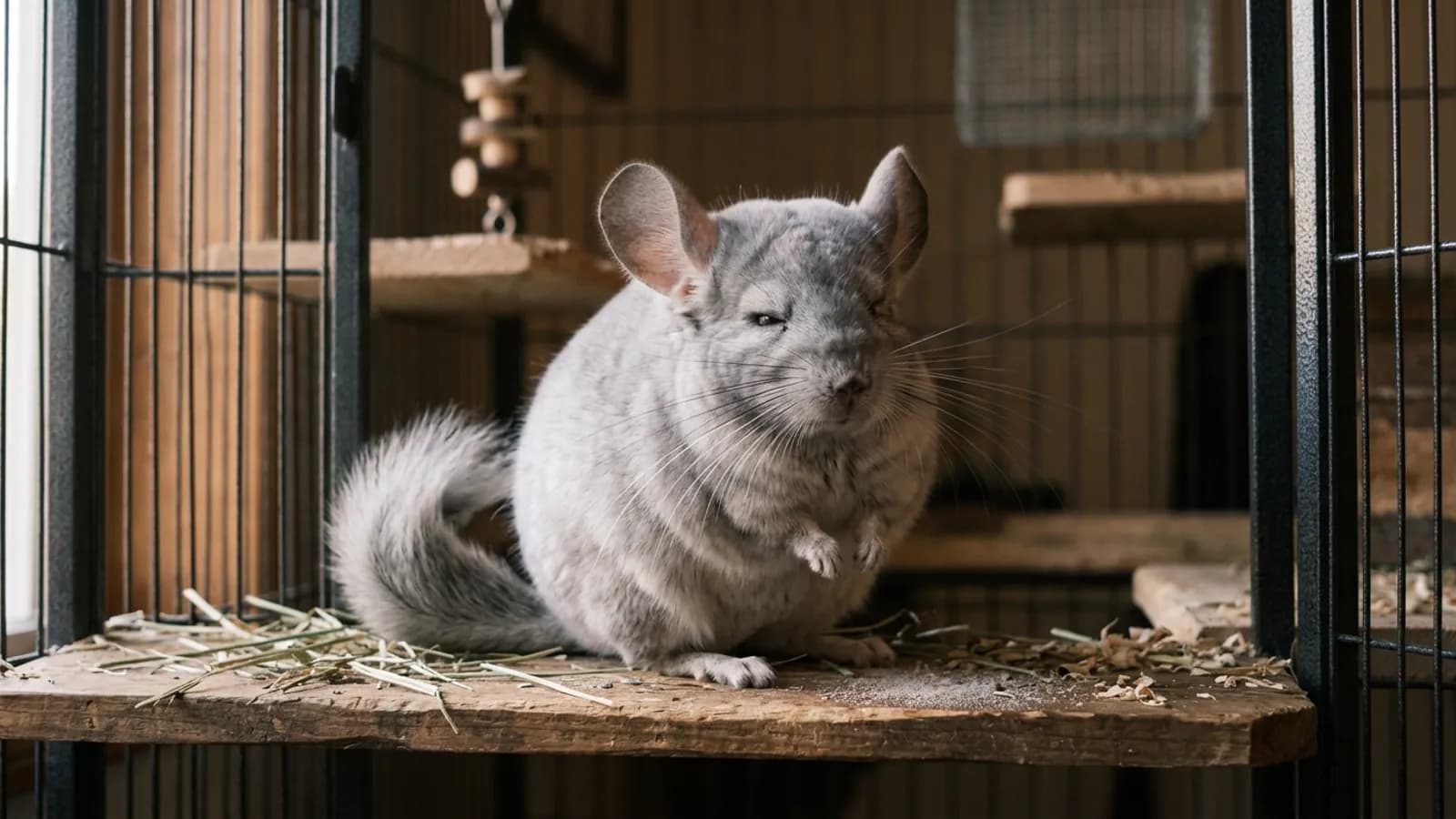
A chinchilla sneeze is a small, dry, almost polite sound, and the first time you hear one at two in the morning you will sit straight up in bed. Chinchilla sneezing sits right on the line between completely normal and a reason to book a vet this week, and the sneeze itself will not tell you which one you have. The context will. How often it happens, how long it has been going on, whether anything is coming out of the nose, and what the rest of the animal is doing while it sneezes are the four things I look at, in that order. I have kept chinchillas for about ten years, including a rescue whose dental disease I manage every single day, and nearly every sneezing scare I have had turned out to be something I could see in the room rather than something hiding inside the animal. The ones that were not were the ones that came with company.
What a chinchilla sneeze actually is
A sneeze is a reflex that clears the nasal passages. That is the whole mechanism. A chinchilla nose is tiny, the airways behind it are narrow, and the animal spends its life with its face buried in hay, fur, and dust, so very little is needed to set one off: a puff of bath dust, a hay stalk shattering as she drags it out of the feeder, her own coat after a grooming session, cold air sliding off a window.
What I have never found is a credible published figure for how many sneezes a day count as normal in a chinchilla, and I do not trust anyone who offers you one. So I read the pattern instead of counting.
Harmless sneezing comes in short bursts, usually one to three in a row. It lines up with something obvious that just happened. It is finished inside a minute, and the chinchilla goes straight back to eating hay or throwing herself off a ledge. Nothing comes out of the nose. Nothing else about her has changed.
Sneezing I take seriously does the opposite. It repeats through the day, it comes back on days when nothing in the room changed, or it arrives with company: discharge, watery eyes, a change in the sound of her breathing, a quiet animal, less hay disappearing overnight.
One rule sits above all of that. Chinchillas breathe through their noses by strong preference, and a chinchilla breathing with her mouth open, or pumping her flanks visibly with each breath, is not a wait and see case. That is a same day emergency call, whatever else is or is not going on.
The everyday irritants that make a healthy chinchilla sneeze
Most of the time, when someone tells me my chinchilla is sneezing, the answer is in the room. These are the causes I work through first, roughly in the order they turn up.
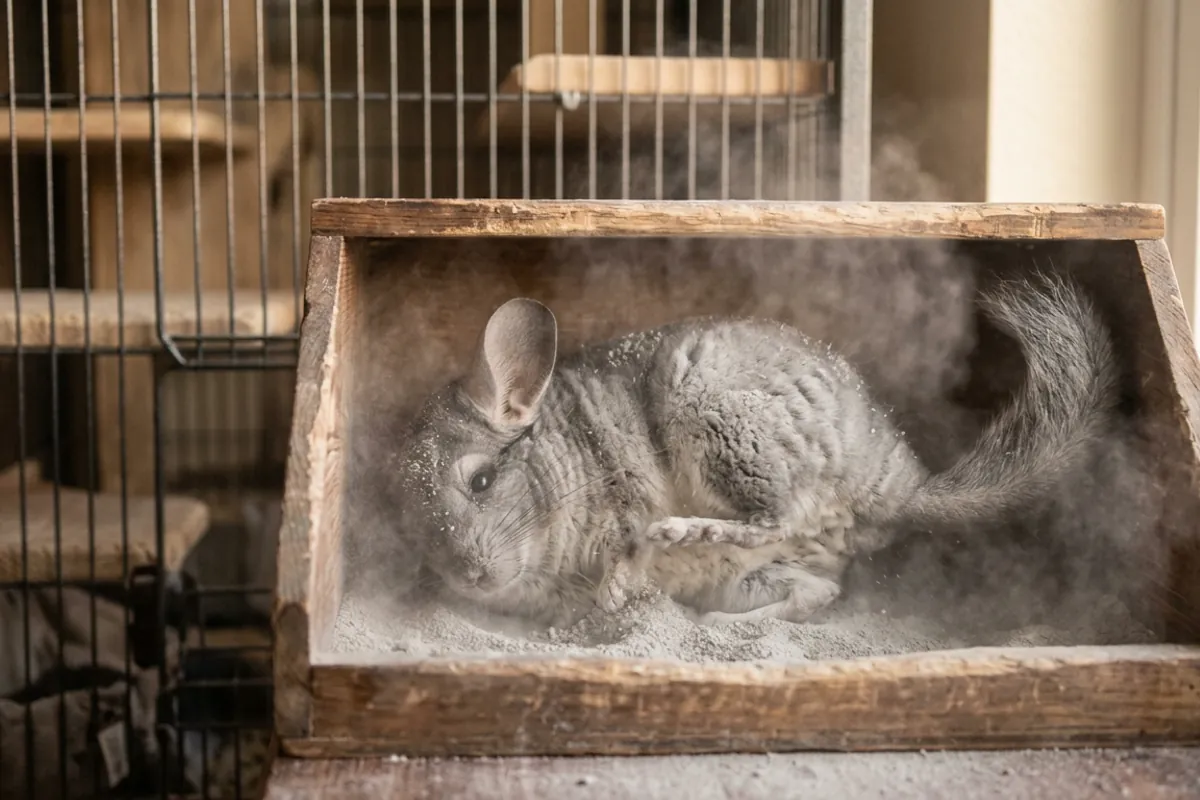
Bath dust. A proper chinchilla dust bath is fine volcanic pumice, and fine is the entire point, because it has to travel through a coat with dozens of hairs coming out of each follicle to reach the skin. Good dust does that job and nothing else does it. Lixit Blue Beauty chinchilla dust, 3 lb As an Amazon Associate I earn from qualifying purchases. But a cloud of it is still particles in the air. I offer a bath two or three times a week for 10 to 15 minutes and then take it out again. A bath left in the cage all day means she is breathing dust for hours and rolling in her own droppings besides. Bathe in an enclosed house or a tall container so the cloud stays put, and give the room a little time to settle before you close the door for the night. A few sneezes in the ten minutes after a bath, then silence, is the most ordinary thing in chinchilla keeping.
Hay dust. The bottom of a hay bag is powder and leaf shatter. I shake the fines out over a bin before the hay goes anywhere near the feeder, and I buy hay that arrives as long, green, intact strands rather than compressed crumbs. Oxbow Western Timothy Hay, 40 oz bag As an Amazon Associate I earn from qualifying purchases.
Bedding. Kiln dried pine or a plain paper based bedding is what I use. Cedar never goes in a chinchilla room: the aromatic oils are an airway irritant. Neither does anything scented, and neither does cheap, low grade shavings that pour out of the bag as grey powder. There is more on the materials I trust and refuse in my guide to chinchilla safe bedding.
Household air. Scented candles, plug in air fresheners, aerosol deodorant, oven cleaner, cooking smoke, cigarette smoke, perfume, incense. A chinchilla's room should smell of hay and nothing else. Their lungs are small and they are much closer to the floor than you are.
Drafts and forced air. A cage sitting directly in the blast of a heating vent or an air conditioning outlet dries the airways out. Ventilation matters, but the moving air should pass near the cage, not through it.
When I am hunting one of these down, I change one variable at a time and give it three or four days. Pulling the dust bath, the new bedding, and the scented candle all at once tells you the sneezing stopped but never tells you why, and next month you will be guessing again.
When sneezing means a chinchilla respiratory infection
A chinchilla respiratory infection is the reason we all worry about a sneeze, and it deserves the worry. These animals are small, their reserves are thin, and an upper airway infection can move down into the lungs faster than most owners expect.
The chinchilla respiratory infection symptoms I watch for, beyond the sneezing itself:
- Discharge from one or both nostrils, especially discharge that thickens or turns cloudy, yellow, or green rather than staying clear.
- Crusting around the nostrils, or damp, matted fur on the inside of the forearms where she has been wiping her face.
- Watery or gummy eyes, or one eye running when the other is dry. A running eye can also be an eye problem in its own right, but paired with sneezing it points at the airways or the teeth.
- Chinchilla wheezing, clicking, rattling, or any breath sound you can hear across a quiet room. Healthy chinchilla breathing is silent.
- Breathing with effort, faster breathing at rest, or an open mouth.
- A chinchilla who is flat, hunched, and slow to react, sitting puffed in a corner instead of coming to the bars.
- Less hay eaten, and smaller or fewer droppings, which is often the earliest hard evidence you get.
The bacteria exotics vets most often name in these cases include Bordetella, Pasteurella, Streptococcus, and Pseudomonas. Which one is at fault is not something you or I can tell by looking, and it changes what treatment works, which is exactly why this ends at a clinic.
Can she catch your cold? The human viruses that give you a head cold are not the usual cause of a chinchilla respiratory infection, and I would not lose sleep over that specific route. I still do not handle my animals while I am ill, and I do wash my hands first, because Bordetella in particular does move between species and a dog with kennel cough in the same house is a real consideration.
The dental link most owners miss
This is the one that surprises people, and it is why sneezing belongs in a conversation about teeth.
A chinchilla's cheek teeth grow continuously for her whole life. When they are not worn down properly, they do not just overgrow into the mouth. The roots elongate in the other direction, up into the skull, and the upper cheek tooth roots sit directly beneath the nasal passages and the tear ducts. Elongated roots can press on and intrude into that space. The result can be chronic sneezing, nasal discharge, and a weeping eye, often worse on one side, in an animal whose lungs are perfectly fine.
Juniper came to me neglected and with her teeth already a problem, and managing her is why I am uncompromising about hay. I cannot see her back teeth by lifting a lip, and neither can you. Nobody can. Diagnosing this takes an exotics vet with an oral scope and skull radiographs, and it is the single most common reason a course of antibiotics clears a chinchilla's nose for two weeks and then the sneezing comes straight back.
The signs I look for alongside the sneeze: a damp chin or wet, matted fur down the front, food picked up and dropped, a preference for pellets over hay, weight sliding down week on week, or a lump along the jaw line. My full account of what to watch for is in chinchilla teeth problems.
Prevention here is unglamorous and it is the whole game: unlimited grass hay, in front of her every hour of the day, forever. Oxbow Western Timothy Hay, 9 lb box As an Amazon Associate I earn from qualifying purchases. Pellets are a measured supplement, not the meal. And real variety in safe chews, because a chinchilla who is bored of the same block stops using it. emours apple wood chew sticks, 40 count As an Amazon Associate I earn from qualifying purchases.
What I check at home before I pick up the phone
If the chinchilla is bright, eating normally, producing normal droppings, and the sneezing has an obvious trigger, I will give it 24 to 48 hours of close watching. That is my ceiling, not a starting point. Anything else, and I call.
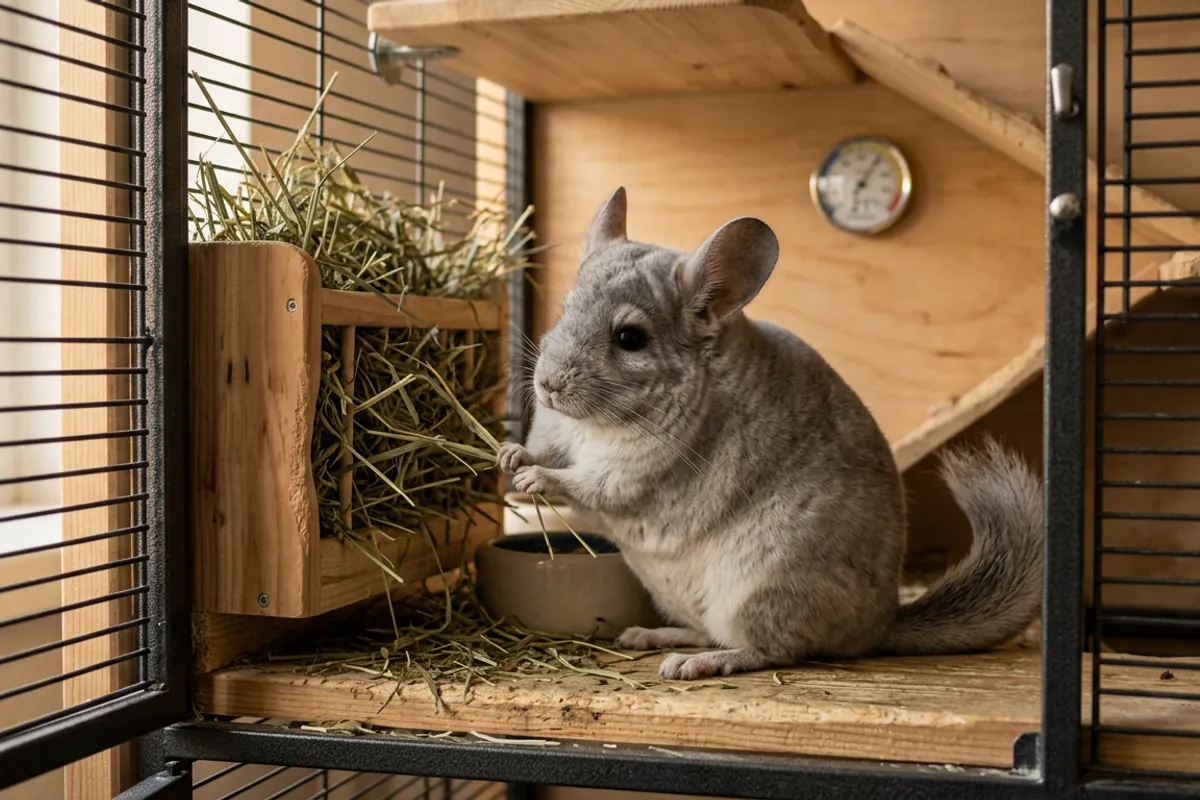
What I actually do in those two days:
- Watch in silence. Sit in the dark room and listen to her breathe for a couple of minutes. You are listening for anything that is not silence.
- Look at the nostrils in good light, and look at the inside of both forearms for damp or crusted fur.
- Weigh her. A kitchen scale in grams and a weekly weight in a notebook is the cheapest diagnostic tool in this hobby. A chinchilla can hide illness behind her coat for days, but she cannot hide the number.
- Count the droppings in the tray against a normal morning, and check they are firm and full sized.
- Note the timing of every sneezing bout against what happened just before it.
What I never do at home: no human decongestants or cold remedies, no antibiotics left over from another pet, no essential oils, no vapour rub, and absolutely no steam or humidifier aimed at the cage. Chinchillas do not tolerate a damp coat. Their fur is too dense to dry out on its own, which is why they bathe in dust and never in water, and adding moisture to a chinchilla with a breathing problem makes two problems.
The temperature and humidity numbers behind a lot of this
Before you decide you are looking at an infection, rule out heat, because the two get confused constantly and the response could not be more different.
Pebble came to me out of an overheated attic, and her first summer with me ended in a night at an emergency vet. That is why I will not soften this. The comfortable range is 60 to 70°F (15 to 21°C). Above 75°F (24°C) is genuinely risky. At 80°F (27°C) and up you have an emergency on your hands, and it arrives faster in humid air. Humidity matters on its own too: chinchillas come from a dry climate and I keep the room well below 50 percent relative humidity where I can.
A chinchilla in heat distress does not sneeze. She breathes fast and shallow, sometimes with her mouth open, her ears flush bright red and feel hot, she drools, and she lies flat out on her side instead of sitting up. That is heat stroke and it needs cooling and a vet immediately, not a discussion about dust.
You cannot judge either number by how the room feels to you, dressed as you are, standing five feet above the cage. Put a thermometer and hygrometer at cage height and read it. digital thermometer and humidity gauge with remote probes As an Amazon Associate I earn from qualifying purchases. There is more on the numbers in chinchilla temperature, and a heat danger calculator if you want it worked out for your room.
When to call an exotics vet, and what treatment looks like
I am an experienced keeper, not a vet, and respiratory disease is well past the line where keeper judgement ends.
Call the same day for: any laboured or open mouth breathing, any audible wheeze or rattle, thick or coloured nasal discharge, a chinchilla who has stopped eating hay, or one who is sitting hunched and unresponsive. Call within a day or two for: sneezing that has run beyond 48 hours with no identifiable trigger, sneezing plus a weeping eye, or any weight loss.
Chinchilla respiratory infection treatment starts with an exam and usually a culture or swab so the drug matches the organism, plus radiographs if the vet suspects tooth roots rather than lungs. Antibiotics are the core of it, and this is the part I want every owner to know: several common antibiotic classes, including oral penicillins, clindamycin, and lincomycin, can devastate the gut flora of a hindgut fermenter and kill a chinchilla that was going to survive the infection. An exotics vet knows this cold. A general small animal clinic may not. If you are handed a prescription by a vet who does not routinely see chinchillas, ask directly whether the drug is safe in this species before the first dose.
Supportive care often matters as much as the drug: fluids, nebulisation, syringe feeding a recovery formula if she has stopped eating, and keeping her warm without pushing the room above her safe range. Finish the entire course even after the nose dries up, and go back for the recheck. Sort out which exotics vet you would use now, while nothing is wrong, because the day you need one is the day nobody has an appointment.
The setup that prevents most of it
Most chinchilla sneezing I have dealt with over ten years traced back to air quality, and air quality is something you control. A tall cage of metal and wood with real airflow through it, no plastic anywhere, and a location out of direct drafts does most of the work. Critter Nation double unit small animal cage As an Amazon Associate I earn from qualifying purchases. Then it is unlimited clean hay with the fines shaken out, dust baths kept short and taken back out of the cage, bedding that is not cedar and not scented, a room where nobody sprays anything, and droppings and weight checked often enough that you notice a change in days rather than weeks.
Do that, and a stray sneeze after the dust bath is exactly what it sounds like: a chinchilla clearing her nose. And on the day the sneezing comes with a running nose, a quiet animal, and an empty hay rack, you will know immediately that this one is different, which is the only reason any of the watching matters.