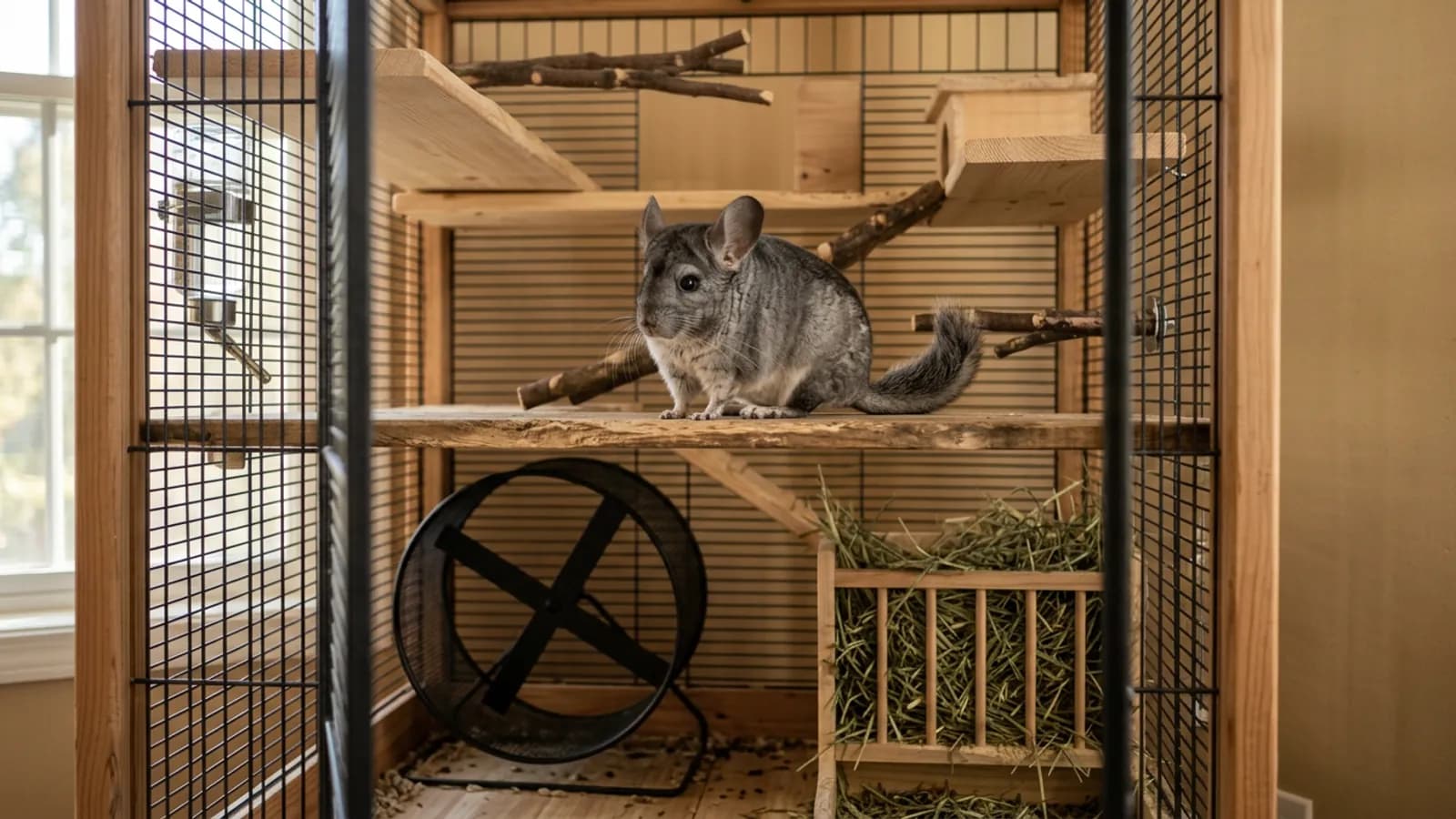
The ideal chinchilla cage is the one built around what the animal actually does: leap, climb, chew, and shed heat through every square inch of that dense coat. It is not the tank on the discount shelf, and it is not just the tallest thing with the biggest number on the box either. I have kept chinchillas for about ten years, and I have bought the wrong cage, so I write this owner to owner rather than off a spec sheet. Pebble and Juniper live in setups I would defend to anyone, and both started from the same short list of non-negotiables. Get those right and the rest is comfort. Get them wrong and you are replacing the whole thing inside a year, which is how most people end up here in the first place.
What makes a cage ideal, and what does not
An ideal chinchilla cage does three things at once: it gives a jumping animal room to climb, it is built from materials the chinchilla cannot turn into something dangerous, and it sits somewhere cool enough to keep that animal alive through a hot afternoon. Miss any one of those and the cage is not ideal, no matter how it photographs. I say that because the cages sold hardest are usually the ones that fail on all three: short, plastic-heavy, and marketed on floor area because a wide, low box is cheaper to ship than a tall one.
The word "ideal" gets abused in this hobby. A cage is not ideal because it has a cute barn roof or a matching food bowl. It is ideal when it matches the biology of the animal going into it. Chinchillas are built to climb rock faces, and they carry a coat so dense that water cannot reach the skin, which means heat is hard for them to dump. Everything in this piece comes back to those two facts. If you want the shorter buying-decision version, I wrote how to pick the best chinchilla cage without buying the wrong one twice, but the short answer is: buy for the animal, not for the shelf it will sit on.
Height beats floor space
Give me a tall cage over a wide one every time. A wild chinchilla lives on rocky slopes and moves up and down far more than side to side, and a pet chinchilla keeps that wiring intact. A tall cage with several levels lets it jump, land, and climb, which is exercise and enrichment in one. A long, low cage of the same volume gives you a bored animal with nowhere to go but laps. That is the whole reason I care more about vertical space than the footprint printed on the box.
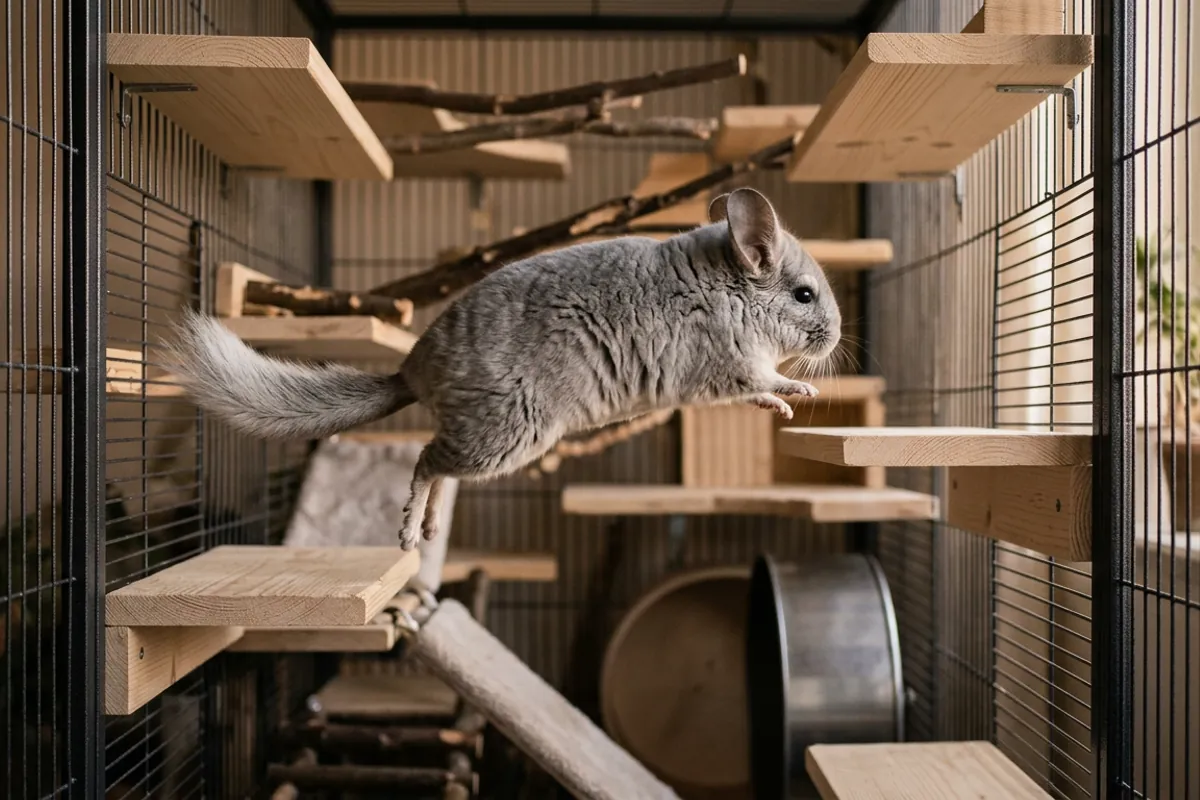
I have laid out the full argument in the biggest chinchilla cage, and why height beats floor space and why a big chinchilla cage is the baseline, but here is the working number I use: treat something around 2 feet by 2 feet of floor and 3 feet of height as a floor for one chinchilla, not a target. Bigger is genuinely better, and there is no such thing as too tall as long as you break the height into levels so any fall is a short one. Ledges do double duty here, adding climbing while turning a scary drop into a series of small hops. For a pair you go up, not sideways, because two animals need more perches and escape routes, not just more carpet.
Exact minimums get debated, and I will not pretend there is one blessed number every keeper agrees on. What nobody serious argues about is the direction: more room, more height, more levels. A multi-level unit like the ones I discuss in is the Critter Nation cage right for a chinchilla works because it is tall and you can fill it with wood. If you are choosing between two cages and can only afford one, buy the taller one.
Why the frame has to be metal and wood
A chinchilla is a chewing machine, and that is not a flaw to manage around, it is the whole animal. Their teeth grow for life, so they gnaw constantly to wear them down. Put plastic anywhere they can reach and they will strip it, swallow the pieces, and risk a gut blockage that becomes an emergency vet bill or worse. This is not a rare freak event. It is the predictable result of handing a rodent something soft to chew.
So the frame is powder-coated metal wire, the ledges and shelves are untreated safe wood, and there is no plastic pan, no plastic shelf, no plastic hidey-house inside. I go through the reasoning in full in why a chinchilla cage has to be metal. A metal wire and wood cage built for the job is the right starting point. Critter Nation double unit small animal cage As an Amazon Associate I earn from qualifying purchases. It costs more up front than a plastic-based small-animal cage, and it lasts through years of gnawing instead of being tossed out and replaced. Wire dog crates and glass aquariums both fail this test: crates on bar spacing, tanks on ventilation, and an animal that must stay cool cannot live in a box with no airflow.
Bar spacing and the floor
Two details separate a safe cage from a dangerous one, and both are easy to miss on a product page. The first is bar spacing. Horizontal bars an inch or so apart give a chinchilla a ladder to climb, which is good, but the gap has to be narrow enough that a head cannot push through and get stuck. Around half an inch to an inch is the range keepers stick to, and if there is any chance of kits in the cage, go narrower, because a baby chinchilla slips through a gap an adult never could.
The second is the floor. A bare wire floor is a foot injury waiting to happen. Chinchillas do not have padded paws built for standing on grid, and a wire base leads to sore, infected feet over time. The floor and any full shelves should be solid: a metal pan or wood, left bare or covered with bedding, but never an open grid the animal has to stand on. If a cage you like ships with wire shelves, swap in wood ledges before the chinchilla ever moves in. While you are at it, check the door latches. A chinchilla is smart and persistent, and a flimsy catch it can nose open is how animals end up loose behind the fridge. I get into the whole fit-out in how to build a chinchilla cage setup that keeps the animal healthy.
What goes inside an ideal cage
A cage is a shell until you fit it out, and a handful of things earn their place every single time.
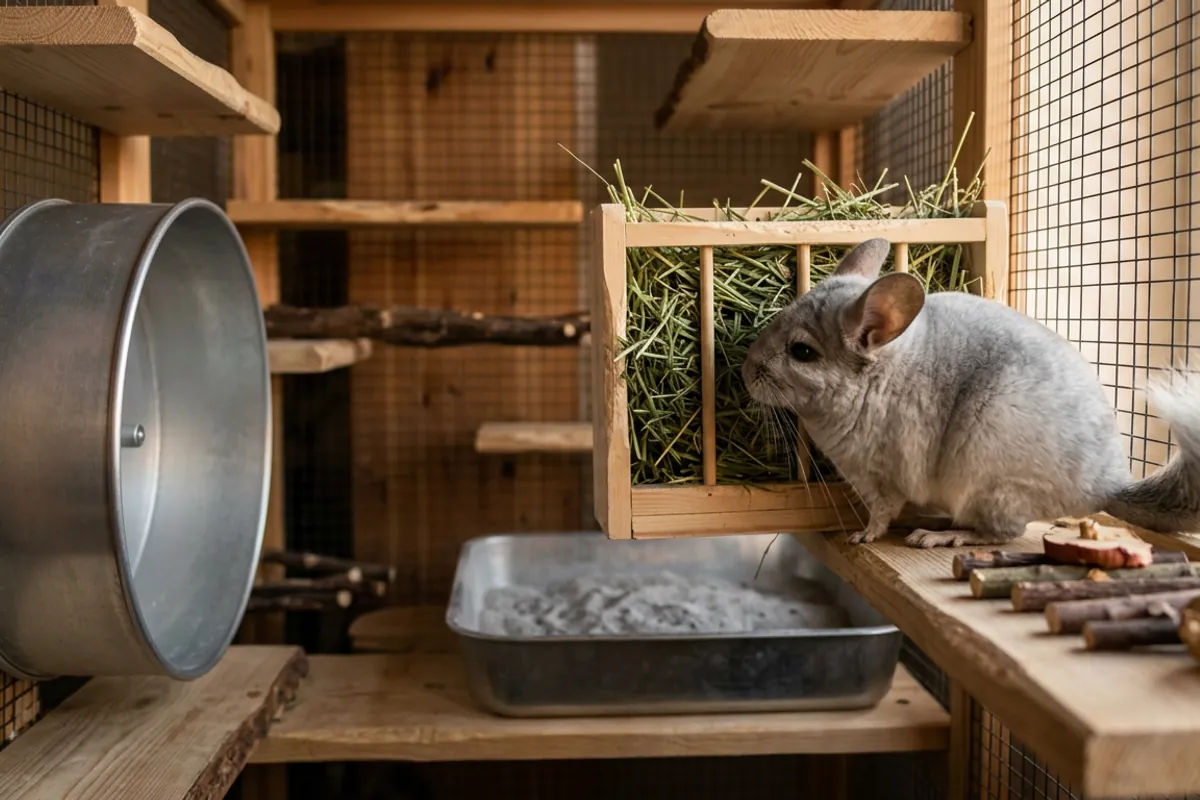
Hay comes first, because it is most of the diet and because chewing it wears down teeth that never stop growing. Grass hay like timothy should be in front of a chinchilla all day, every day, in a holder that keeps it off the floor and clean. I keep a box of timothy on hand for the cage. Oxbow Western Timothy Hay, 40 oz bag As an Amazon Associate I earn from qualifying purchases. I also buy it in bulk, because it never sits idle for long. Oxbow Western Timothy Hay, 9 lb box As an Amazon Associate I earn from qualifying purchases. Juniper, one of my two, has dental disease I manage day to day, and watching her up close is exactly why I am uncompromising about unlimited hay. The full case is in chinchilla hay, the honest version of why it is the whole meal.
Next is a running wheel with a solid surface, never wire or rungs, because a foot or a tail caught in an open wheel is a real and preventable injury. 15 inch Chin Spin solid surface chinchilla wheel As an Amazon Associate I earn from qualifying purchases. Go large rather than small, since a wheel that forces the back into a tight curve does more harm than good. I get into sizing in what a chinchilla on a wheel really needs to run safely.
Then a dust bath, because a chinchilla cleans that dense coat by rolling in fine volcanic dust and never in water. Lixit Blue Beauty chinchilla dust, 3 lb As an Amazon Associate I earn from qualifying purchases. A few sessions a week is plenty, and I take the bath out between them rather than leaving it in to be soiled or overused.
Chews are dental care, not decoration, so a variety of safe woods like apple keeps both the interest and the tooth wear up. emours apple wood chew sticks, 40 count As an Amazon Associate I earn from qualifying purchases. Add a glass water bottle rather than a chewable plastic one, and a solid wood hideout to feel safe in, and you have the bones of a good interior. For the fuller list of what actually earns a spot and what is filler, see cage accessories for chinchillas, and which ones actually earn their place.
Where you put it matters as much as what you buy
Here is the part I will not soften. The best cage in the world in the wrong spot can kill a chinchilla in an afternoon. Pebble came to me from a rehome out of an overheated attic, and her first summer brought a heatwave and a night at the emergency vet. That scare is why I am relentless about this, and why the heat guidance on this whole site is really Pebble's story turned into rules.
Chinchillas are comfortable at 60 to 70°F (15 to 21°C). Above 75°F (24°C) you are into risky territory, and 80°F (27°C) and up is an emergency, faster still if the air is humid, because that heavy coat cannot shed heat the way a thinner animal can. So the cage goes on an interior wall, out of direct sun, away from radiators and the hot side of the house, in the coolest room you have. It also needs airflow, which is another reason the metal cage beats a tank.
Put a thermometer and humidity gauge right on the cage so you read the animal's actual air, not a guess from across the room. digital thermometer and humidity gauge with remote probes As an Amazon Associate I earn from qualifying purchases. A chewable-safe cooling stone gives it a cool surface to stretch out on when the day climbs. Kaytee Chinchilla Chiller granite stone As an Amazon Associate I earn from qualifying purchases. Know the warning signs before you ever need them: I keep chinchilla heat safety and the heat danger calculator close, and I have written up the heat stroke warning signs every owner should know. If your chinchilla is lying on its side, breathing hard, with ears gone red and hot, that is a vet emergency right now, not after you finish reading.
Keeping the ideal cage ideal
A cage is not a buy-once decision, it is a thing you maintain. The good news is that a metal and wood cage set up right is easy to keep clean, and that matters because a filthy cage is an ammonia problem and a respiratory one. I spot clean the dust bath and the wettest corner daily, change bedding weekly, and pull the whole thing apart for a proper wash every few weeks. My full routine is in how to keep a clean chinchilla cage without it becoming a chore.
Wood ledges get chewed down over time, which is the point, and I replace them when they go thin or soiled rather than nursing them along. The one rule I never bend is that nothing plastic sneaks back in through a cheap replacement part or a tempting new toy, because the animal cannot tell the difference between the cage and the chew. Keep checking the things that made the cage ideal in the first place. Are the ledges still solid underfoot. Is the wheel surface intact and quiet. Is the thermometer still reading a safe number as the seasons turn.
An ideal chinchilla cage is not a purchase you make once and forget. It is a setup you keep honest, season after season, for an animal that can live well into its teens and deserves the same cage to still be right when it gets there.