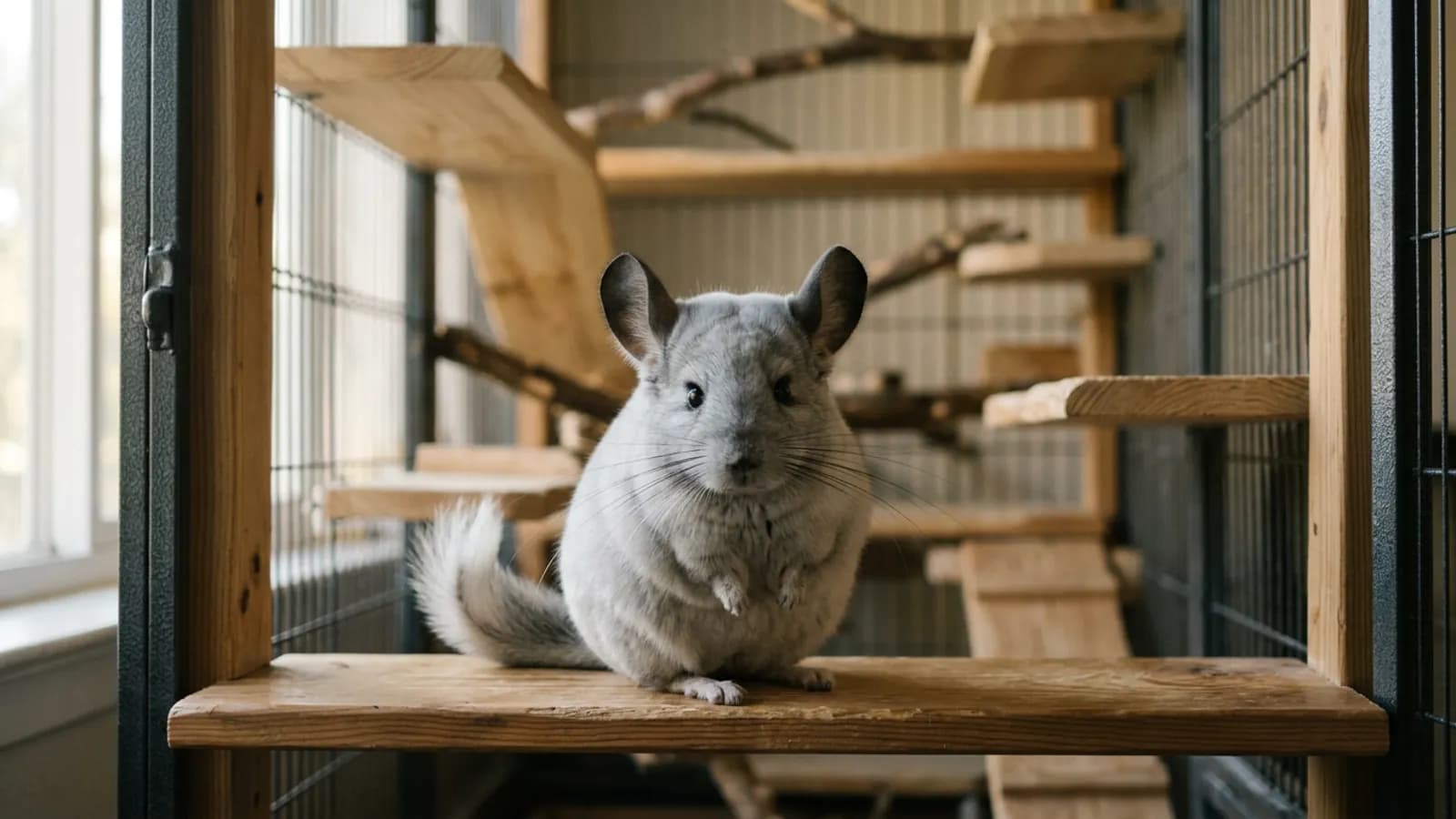
If you typed "chinchilla persian for sale" into a search bar, there is a real chance you are not shopping for the animal I keep at all. Most listings under that phrase are selling a Persian cat with a silver coat, not the small silver rodent that never touches water and needs a room kept cool. I have kept chinchillas for about ten years, and I built this site around them, so I want to untangle that phrase before you send anyone money. The word "chinchilla" is doing double duty here, and the two things it points at could not be more different to buy, to house, or to care for.
The phrase points two very different directions
There are two things a seller might mean by "chinchilla persian."
The first, and by far the most common, is a Persian cat in the chinchilla colour. That is a long-haired domestic cat whose white or pale fur is tipped at the very ends with a darker shade, giving a shimmery silver look. Breeders call that tipping "chinchilla," and it is a coat description, not a breed of its own. When you see "chinchilla persian for sale" with a price in the hundreds or low thousands and a photo of a fluffy cat with green or blue-green eyes, that is what you are looking at. I wrote out the whole tangle in the truth behind chinchilla persian cats for sale, and it is worth reading if the cat is your goal.
The second thing, much rarer, is someone genuinely selling a chinchilla, the rodent, and using "persian" loosely or wrongly to mean long or fancy fur. There is no recognised "persian chinchilla" in the rodent. Chinchillas do come in a long-furred type sometimes marketed as angora, but "persian" is not a standard chinchilla term, and a seller reaching for it is usually either confused or dressing up an ordinary animal. If a listing shows a small round-eared rodent with a bushy tail, that is my animal, and the word "persian" on it means very little.
So the first job is simply to work out which of those two you want, because everything after that splits.
Why a cat ever got called a chinchilla
It is a fair question. Why borrow a rodent's name for a cat coat at all?
The answer is the fur. A real chinchilla's coat is one of the densest in the animal world, and each hair is banded, dark at the tip over a paler shaft, which is what gives the living animal that soft grey shimmer. When Victorian cat breeders produced a white cat whose hairs carried just a whisper of dark colour at the tips, the shimmer reminded them of the rodent's pelt, and the name stuck. The same logic gave us the British chinchilla cats, which carry the tipping idea in a different breed entirely.
None of that means the cat is related to the rodent. It is not. A Persian cat is a carnivore that eats meat, drinks water freely, grooms itself with its tongue, and lives fifteen or so years indoors. The rodent I keep is a herbivore from the high Andes that eats grass hay, bathes only in dust, cannot tolerate a warm room, and lives easily into its teens with good care. If you want the fuller picture of what the actual animal is and why its biology drives every rule, I laid it out in what a chinchilla really is. The shared word is a coincidence of colour, nothing more.
If the cat is what you meant
I keep rodents, not cats, so I will not pretend to be your guide on Persian kittens. But a few things carry across from any careful animal purchase, and they are worth saying plainly.
A chinchilla-coloured Persian is still a Persian, which means a flat face, heavy grooming needs, and some well-documented breathing and eye issues that come with the shortened muzzle. Buy from someone who health-tests, will show you the kitten with its mother, and does not push you to pay a deposit sight unseen. A price that looks too good is usually a warning, not a bargain. And for anything medical, that is a conversation with a cat vet, not with me. Beyond that, I will hand you back to the dedicated cat piece and leave the cat expertise to people who actually keep them.
If the rodent is what you meant, start with the real cost
Now the part I can actually help with. If you want the chinchilla, the rodent, then "chinchilla persian for sale" was a slightly wrong turn of phrase, and the honest first thing to understand is what one really costs. Not the price on the animal, the price of keeping it alive and well for fifteen years or more.
The animal itself is usually the smallest number. A pet-shop or breeder chinchilla commonly runs somewhere in the range of 75 to 250, with rarer colours climbing higher. But the price tag hides the real bill, and I walked through the whole thing in what a chinchilla really costs. The cage, done once and done right, will cost more than the animal.
After the cage, the running costs are steady rather than shocking, but they add up. Hay, pellets, dust, and fresh chews are a monthly draw, and while none of it is expensive on its own, it never stops for the life of the animal. The bill that catches people out is the vet. Exotics vets who actually know chinchillas are thinner on the ground than cat and dog vets, they charge accordingly, and the two things most likely to send you to one, a dental problem or a heat emergency, do not schedule themselves conveniently. I keep a standing fund for exactly that, and I would tell anyone buying their first chinchilla to do the same before the animal arrives, not after the first scare.
I am blunt about this because I have watched it go wrong. Someone buys the animal on impulse for the price of a takeaway meal, then discovers the cage they need costs ten times that, and the animal ends up in something far too small.
What the animal needs in place before you buy
Here is what I would have standing and ready before a chinchilla comes home, not after.
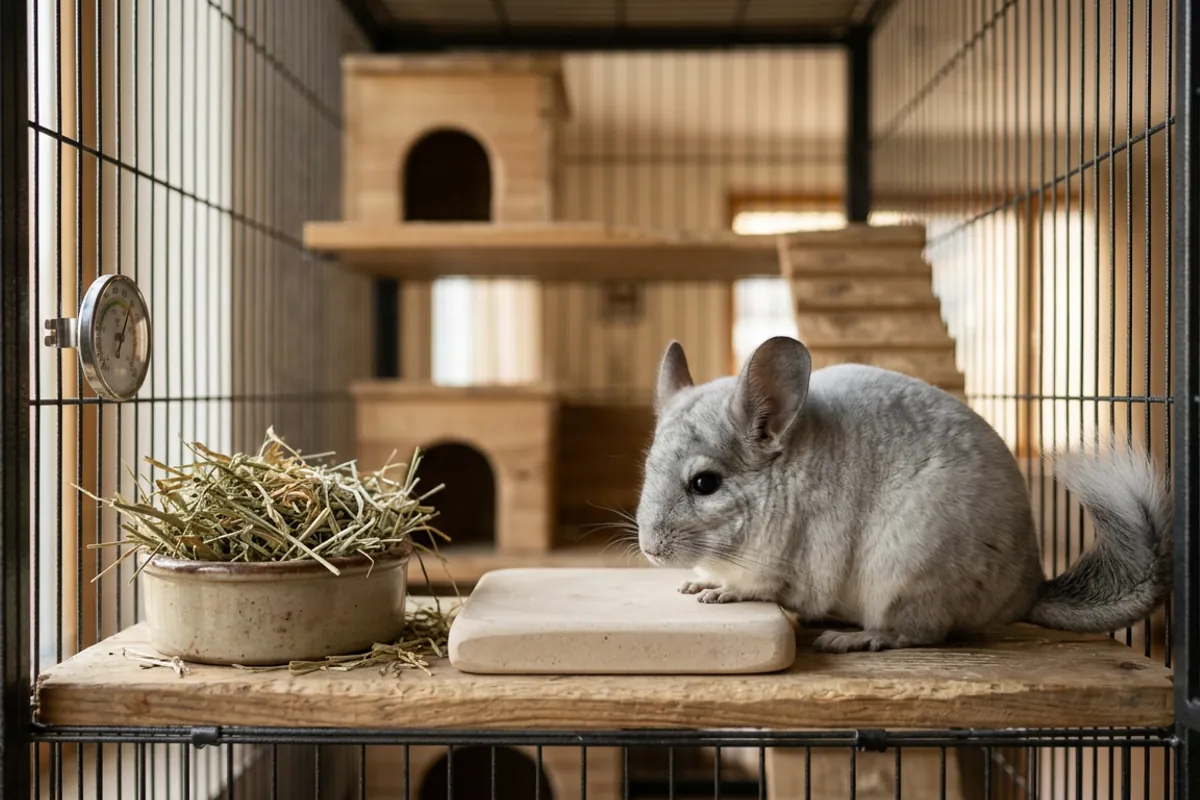
A tall cage made of metal and wood, with solid wooden ledges at different heights so the animal can climb and jump the way it is built to. No plastic anywhere it can reach, because they chew constantly and plastic in the gut is a real danger. A good starting point is a proper multi-level metal-and-wood setup. Critter Nation double unit small animal cage As an Amazon Associate I earn from qualifying purchases. I go through how to choose one without buying the wrong thing twice in the best chinchilla cage guide.
Unlimited grass hay, which is the whole foundation of the diet, not a side dish. Timothy hay is the standard, and I buy it in bulk because a chinchilla goes through a surprising amount. Oxbow Western Timothy Hay, 9 lb box As an Amazon Associate I earn from qualifying purchases. On top of the hay, a measured amount of plain pellets, never a muesli mix with dried fruit and coloured bits. My rescue Juniper has dental disease, and watching her manage it day to day is exactly why I will not budge on unlimited hay and a real spread of chews.
Dust for bathing, because a chinchilla never bathes in water. The fine volcanic pumice dust is what keeps that dense coat clean and healthy, and a proper bath house plus the right dust is not optional. Lixit Blue Beauty chinchilla dust, 3 lb As an Amazon Associate I earn from qualifying purchases. I explain the whole routine in the chinchilla dust bath done right.
Something to gnaw on, constantly, because those teeth never stop growing. A variety of safe woods matters more than any single toy. emours apple wood chew sticks, 40 count As an Amazon Associate I earn from qualifying purchases.
And the thing I am most relentless about: temperature control. My signature chinchilla, Pebble, came out of an overheated attic, and her first summer brought a heatwave and a night at the emergency vet that I will never forget. Chinchillas are comfortable at 60 to 70°F (15 to 21°C). Above 75°F (24°C) is getting risky, and 80°F (27°C) and up is a genuine emergency, faster still in humid air. Before the animal arrives, know how you will keep the room cool. A solid cooling stone gives them somewhere to shed heat, Kaytee Chinchilla Chiller granite stone As an Amazon Associate I earn from qualifying purchases. and a thermometer on the cage tells you the truth instead of your guess. digital thermometer and humidity gauge with remote probes As an Amazon Associate I earn from qualifying purchases. If you want to see how close your room runs to the danger line, I built a heat danger calculator for exactly that.
One more piece of gear worth naming plainly: if you get an exercise wheel, it must have a solid running surface, never wire or mesh, because wire wheels catch feet and tails and break legs. 15 inch Chin Spin solid surface chinchilla wheel As an Amazon Associate I earn from qualifying purchases.
Reading a real chinchilla listing without getting hurt
Say you have decided on the rodent and you are back looking at listings. Whether the ad says "persian" or not, the same warning signs apply.
Be wary of any seller who cannot tell you the animal's age, sex, or history, or who will not let you see where it is kept. A chinchilla kept too warm, fed a fruit-and-seed mix, or bathed in water by someone who did not know better may already have problems you cannot see in a photo. I wrote a full walkthrough of buying safely in how to buy a chinchilla for sale, and a gentler starting point in how to buy a chinchilla without regretting it later. If you are searching locally, how to find a chinchilla near me covers the same ground for rehomes and nearby breeders.
Two specific traps. First, "chinchilla and cage" bundles, where a too-small cage is thrown in to make the price look generous; the cage is usually the part you will replace first. Second, exotic-sounding labels like "persian," "angora," or invented colour names used to justify a higher price. A chinchilla's price should track its health, temperament, and how well it was raised, not a fancy word. Rare genuine colours do cost more, but a made-up label is not a rare colour.
And watch for the pure scam: a listing with a stunning photo, a price well below everyone else, and a seller who will only take a deposit by bank transfer and promises to ship the animal to you. Reputable chinchilla sellers rarely ship a live animal to a stranger sight unseen, and a demand for money up front before you have seen the animal or its housing is the oldest trick there is. If you cannot visit, at least ask for a live video call showing the animal where it actually lives. The best sellers ask you questions back, wanting to know whether you have a cool room and a big enough cage. That is who I would buy from.
What both searches actually share
Whether you leave here wanting the cat or the rodent, the same plain rule holds: do not buy on impulse, and do not buy on the strength of a photo and a low price. Both animals live well over a decade. Both cost far more to keep than to acquire. Both have health issues that a rushed, careless seller will happily hide from you.
For me, the fork is simple. If "chinchilla persian for sale" led you to a fluffy silver cat and that is what your heart is set on, go read the cat piece, find a breeder who health-tests, and talk to a cat vet. If it led you to a small round-eared rodent with a bushy tail, then welcome, you are in the right corner of the internet, and the honest truth is that the animal is wonderful and demanding in equal measure. Get the cool room, the tall cage, the endless hay, and the dust sorted first. Then find a seller who cares as much about where the animal is going as you do about bringing it home. The word on the listing barely matters. What you have ready for the animal matters enormously.