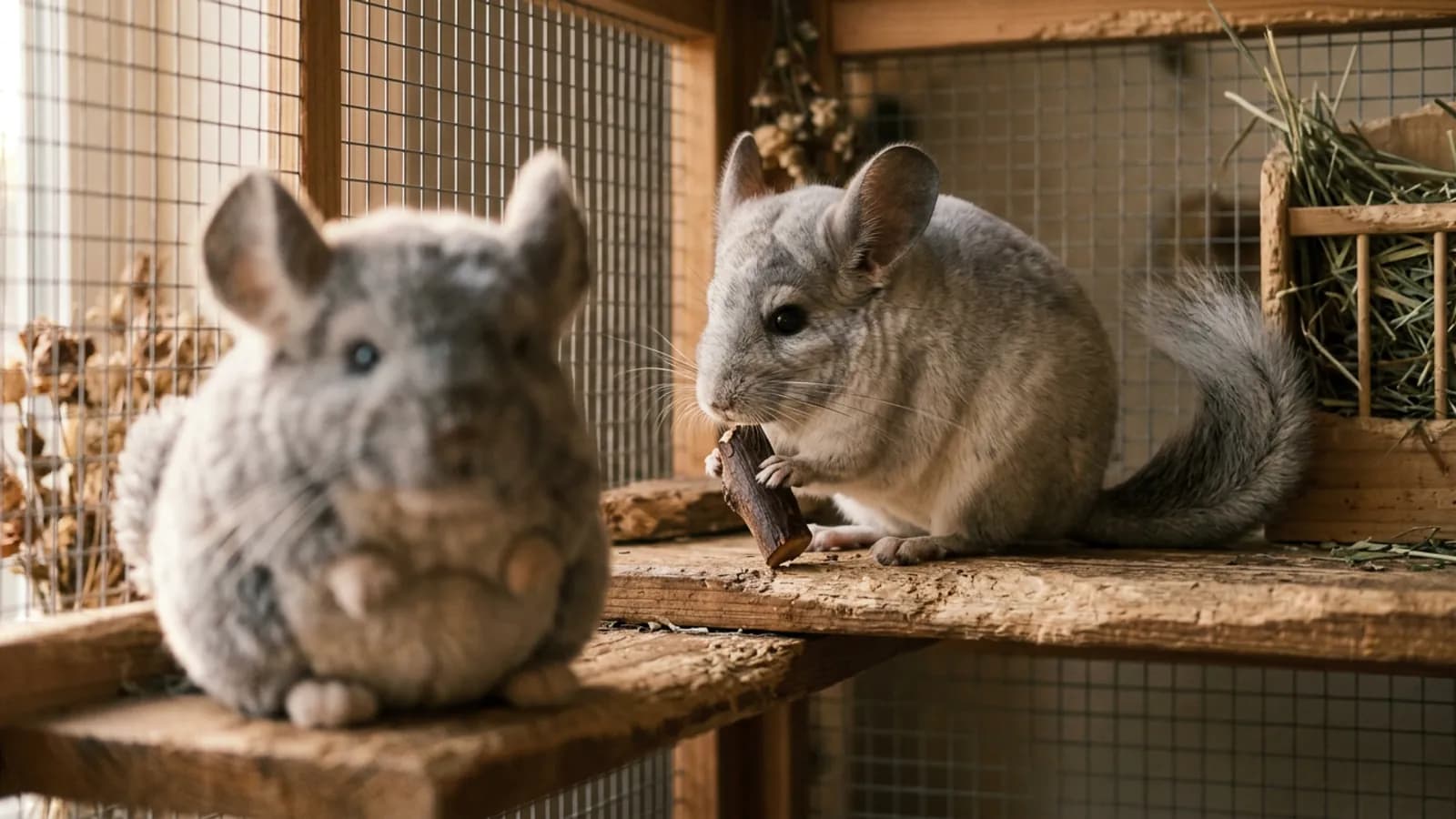
Search "chinchilla stuffed toy" and you get two very different things tangled together, and it matters a lot which one you mean. One is a plush chinchilla you buy to sit on a shelf. The other is the idea of dropping a soft, cuddly toy into the cage so the real animal has something to snuggle. The first is harmless. The second is one of the more dangerous things I watch well-meaning new owners reach for. So before we talk about which plush is cute, I want to be blunt about the version that ends with a phone call to an exotics vet: a fabric, stuffing-filled toy does not belong inside a chinchilla's home.
I have kept chinchillas for about ten years, and I have made almost every gear mistake there is to make. The stuffed-toy-in-the-cage instinct comes from a good place. We look at a small furry animal and our brains file it next to a kitten or a puppy, something that wants a plush companion. Chinchillas are not built like that, and their bodies punish the mistake in a specific, avoidable way. This article is about telling the keepsake apart from the hazard, and about what actually belongs in the cage instead.
Why a stuffed toy never belongs in the cage
Chinchillas chew constantly. It is not a bad habit you can train out, it is how their bodies work, and I will get to the teeth in a minute. The short version is that anything you put in the cage will get chewed, and a stuffed toy is made of the two worst possible materials for that: fabric and loose fiber stuffing.
When a chinchilla shreds a plush toy, it does not spit the pieces out. It swallows fabric threads and polyester fill, and a chinchilla's gut is not designed to move that through. Their digestive system runs on a steady flow of fiber from grass hay, and it slows or stops when something indigestible lodges in it. That is a gut impaction or a blockage, and it is a genuine emergency. A chinchilla that stops eating and stops passing droppings can go downhill in a day. By the time you notice, you are already at the vet, and the outcome is not guaranteed.
There is a second problem that gets less attention. Fabric toys trap moisture and hold onto urine and dust, and a chinchilla's dense coat plus a damp fabric object is a recipe for the exact humidity problems their fur cannot handle. Their coat is so thick that it does not dry the way ours does, which is the whole reason they bathe in dust and never in water. A soggy plush in the corner of the cage is a small, quiet version of the same hazard.
So the rule is simple and it does not bend: no stuffed toys, no fleece cuddle sacks meant as toys, no plush anything as an in-cage object for the animal to interact with. If you already have one in there, take it out today.
The teeth are the whole reason
To understand why chinchillas destroy everything soft, you have to understand their mouths. Chinchilla teeth grow continuously for their entire lives. There is no stopping point. The only thing that keeps them at a workable length is the grinding of chewing, hour after hour, mostly on tough grass hay and hard wood.
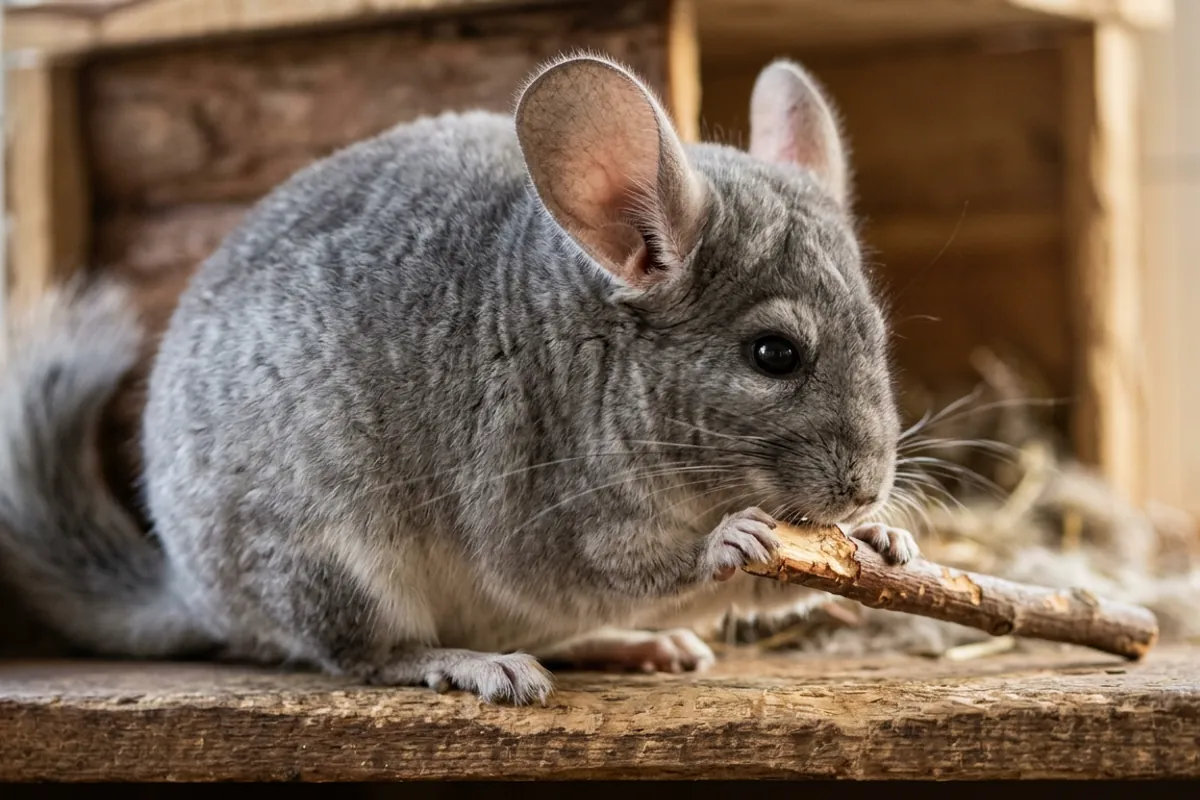
My Juniper is why I never soften on this. She came to me as a neglected rescue with dental disease, and I manage the fallout of poor tooth wear with her every single day. When the teeth do not wear down evenly, they overgrow, they form sharp spurs that cut the tongue and cheeks, and the roots can grow the wrong way into the jaw. That condition is malocclusion, and it is painful, progressive, and often not fully fixable once it takes hold. If you want the full picture of what that looks like and how to catch it early, I wrote about spotting malocclusion before it turns serious.
A stuffed toy gives a chinchilla exactly nothing on this front. It is soft, it offers no resistance, and the shredding it invites just feeds fabric into the gut. What the animal actually needs is hard, safe wood to gnaw on, replaced as it gets whittled down. Apple, pear, willow, and other untreated safe woods give the teeth something to work against.
A variety pack of apple wood and similar safe chews is the honest answer to the "toy" question. emours apple wood chew sticks, 40 count As an Amazon Associate I earn from qualifying purchases. Rotate a few kinds so the animal keeps engaging with them, and think of them not as decoration but as dental equipment. I go deeper on choosing and rotating these in the piece on chinchilla chew toys as dental care.
The plush chinchilla, kept where it belongs
Now the harmless version. A plush shaped like a chinchilla, sitting on a shelf, on a desk, on a kid's bed, is completely fine. Nobody is going to swallow fabric. A toy chinchilla stuffed animal is a lovely keepsake, and for a lot of people it is how the love of the animal started in the first place.
I have no problem with that at all, as long as it stays out of the cage. Keep it on the outside of the enclosure, keep it in another room, give it to the child who is obsessed with chinchillas and cannot have a live one yet. The danger was never the object existing. The danger is only the object being somewhere a real chinchilla can reach it and chew it.
If the plush is a stand-in for wanting the real animal, I would gently point you at reading up before you commit, because chinchillas are a fifteen-to-twenty-year responsibility that most people underestimate. My honest account of what chinchillas are like as pets is the reality check I wish someone had handed me. The stuffed toy asks nothing of you. The living one asks a great deal.
Chinchillas do not cuddle, and that is not sad
Part of why the stuffed-toy-in-the-cage idea persists is a misread of what chinchillas want. People imagine the animal curling up with a soft companion the way a dog does with a plush. Chinchillas do not work that way, and pretending otherwise leads to gear that does nothing for them.
Chinchillas are prey animals with an enormous amount of energy. They want to run, jump, climb, and stay busy, and they regulate their own comfort by staying cool and dry rather than by burrowing into something warm. A plush object in the cage is, at best, ignored, and at worst chewed into a hazard. They are also crepuscular, most active at dawn and dusk, so a lot of what they need is a rich environment to move through when you are asleep, not a static thing to hug.
They are social, and that need is real, but it is met by another chinchilla or by your genuine attention, not by an object. A bonded companion of the same species does far more for a chinchilla's wellbeing than any toy, plush or otherwise. If you are considering a second animal for company, that is a real conversation with real costs and quarantine rules, not something a stuffed toy substitutes for.
What actually goes in the cage instead
If the soft toy is out, what fills the space? Real enrichment for a chinchilla is about movement, chewing, and a place to run, all in materials that survive being gnawed. Here is what earns its spot.
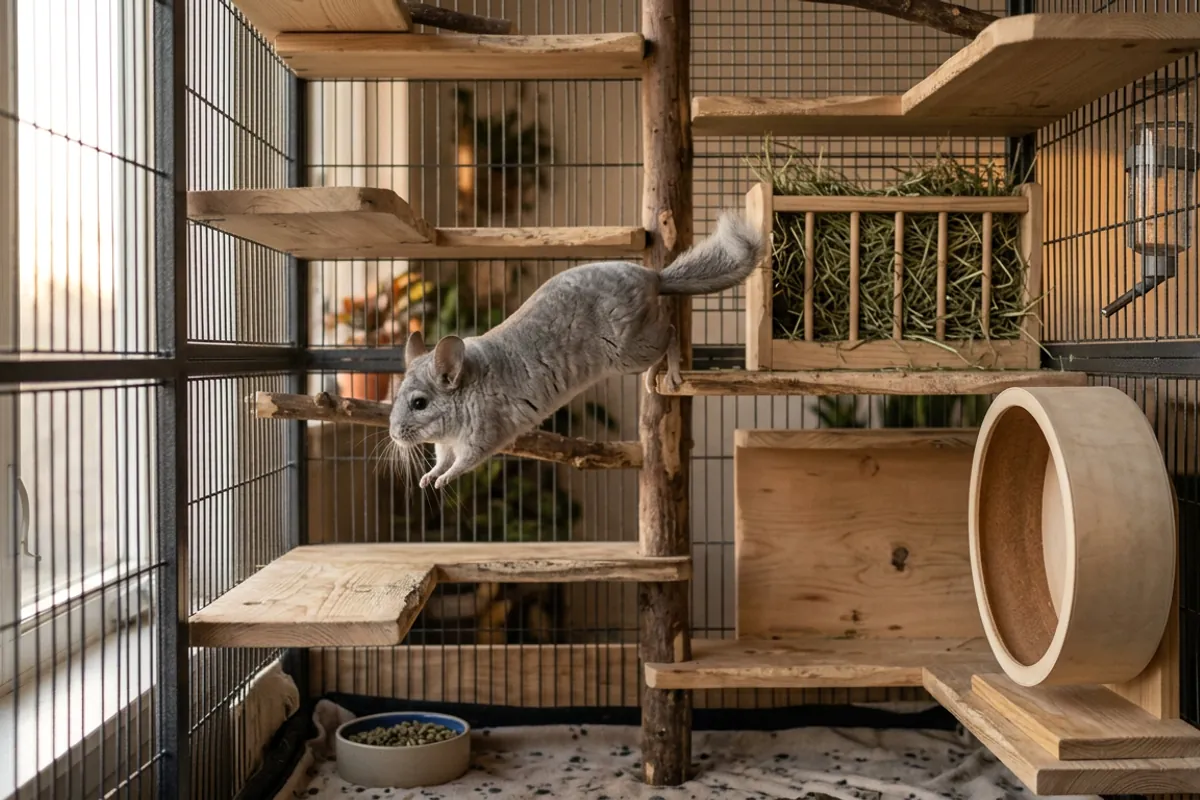
A tall cage in the right materials. The enclosure itself is the biggest piece of enrichment, because chinchillas are climbers and need vertical space with ledges to jump between. It should be metal and wood, tall rather than wide, with solid wooden ledges and no plastic anywhere the animal can reach. Critter Nation double unit small animal cage As an Amazon Associate I earn from qualifying purchases. Plastic is just another impaction risk waiting to be chewed, which is the same problem as the stuffed toy in a harder shell. I walk through the full layout in how to build a chinchilla cage setup.
A solid-surface running wheel. Chinchillas need to run, and a wheel gives them that when the cage door is shut. It must have a solid running surface, never wire or mesh rungs, because a foot or a leg caught in a wire wheel breaks bones. This is one place I will name the bad product plainly: wire wheels injure chinchillas, full stop. 15 inch Chin Spin solid surface chinchilla wheel As an Amazon Associate I earn from qualifying purchases.
Unlimited grass hay. This is not a toy, it is the foundation of the whole animal, but it also happens to be the best chewing enrichment there is. Chinchillas eat unlimited grass hay first, all day, with plain pellets only as a small measured supplement on top. The constant chewing on coarse hay is what keeps the teeth worn and the gut moving. Oxbow Western Timothy Hay, 40 oz bag As an Amazon Associate I earn from qualifying purchases. Buying it in bulk keeps the good stuff always available. Oxbow Western Timothy Hay, 9 lb box As an Amazon Associate I earn from qualifying purchases.
Safe wood chews, rotated. Covered above, but they belong on this list because they are the closest thing to a proper "toy" a chinchilla has. Hard, gnawable, replaceable.
A dust bath, offered on a schedule. This is the closest thing to a comfort ritual a chinchilla has, and it is dust, never water. Fine volcanic pumice dust is what keeps that dense coat clean and healthy. Lixit Blue Beauty chinchilla dust, 3 lb As an Amazon Associate I earn from qualifying purchases. A few sessions a week, not left in the cage full time, is the usual approach, and I lay out the timing in the chinchilla dust bath done right.
Notice what is not on that list: anything soft, anything plastic, anything that traps moisture. The pattern is consistent once you see it.
Keeping the room right matters more than any toy
I could give you the most enriched cage in the world and it would not save a chinchilla in a hot room. This is the part of chinchilla keeping I refuse to soften, because it is why my Pebble is still here.
Pebble came to me as a rehome out of an overheated attic, and her first summer brought a heatwave near-miss and a night at the emergency vet. That scare is the reason every temperature rule on this site reads the way it does. Chinchillas are comfortable at 60 to 70°F (15 to 21°C). Above 75°F (24°C) you are in risky territory, and at 80°F (27°C) and up you are in an emergency, faster still if the air is humid, because their dense coat cannot shed heat.
No stuffed toy, no plush, no cuddle object has any place in that math. If anything, a fabric object in the cage makes the heat picture worse by trapping warmth and moisture against the animal. What does help is knowing the room temperature at all times.
A thermometer and hygrometer on the cage tells you the two numbers that actually keep a chinchilla alive. digital thermometer and humidity gauge with remote probes As an Amazon Associate I earn from qualifying purchases. When the mercury climbs, a chilled solid stone gives the animal a cool surface to lie against. Kaytee Chinchilla Chiller granite stone As an Amazon Associate I earn from qualifying purchases. If you want to know exactly where your room sits relative to danger, I built a chinchilla heat danger calculator that turns temperature and humidity into a plain answer.
Bottom line, and when the vet is the only right move
Here is the whole thing in one breath. A chinchilla stuffed toy is a fine keepsake and a bad cage item. Keep the plush on a shelf, give it to the kid who loves the animal, and never put a soft, stuffing-filled toy where a living chinchilla can chew it. The real animal is served by hard wood chews, unlimited hay, a solid wheel, a tall metal-and-wood cage, dust baths, and a cool, dry room, not by anything soft.
I am an experienced keeper, not a vet, and there is a line where my advice stops and a professional's begins. If your chinchilla has swallowed fabric or stuffing, or if you find a shredded soft toy and cannot account for the missing material, watch closely for a chinchilla that stops eating, stops producing droppings or produces much smaller ones, sits hunched, or goes quiet and still when it should be active. Any of those after possible fabric ingestion is not a wait-and-see situation. Call an exotics vet the same day.
That is the honest version. The love that makes someone want to give their chinchilla a cuddly toy is real and good. It just has to be pointed at the things that keep the animal alive, and a stuffed toy in the cage is not one of them. If the plush is what got you here, let it stay a keepsake, and build the rest of the cage around what a chinchilla's body actually needs.