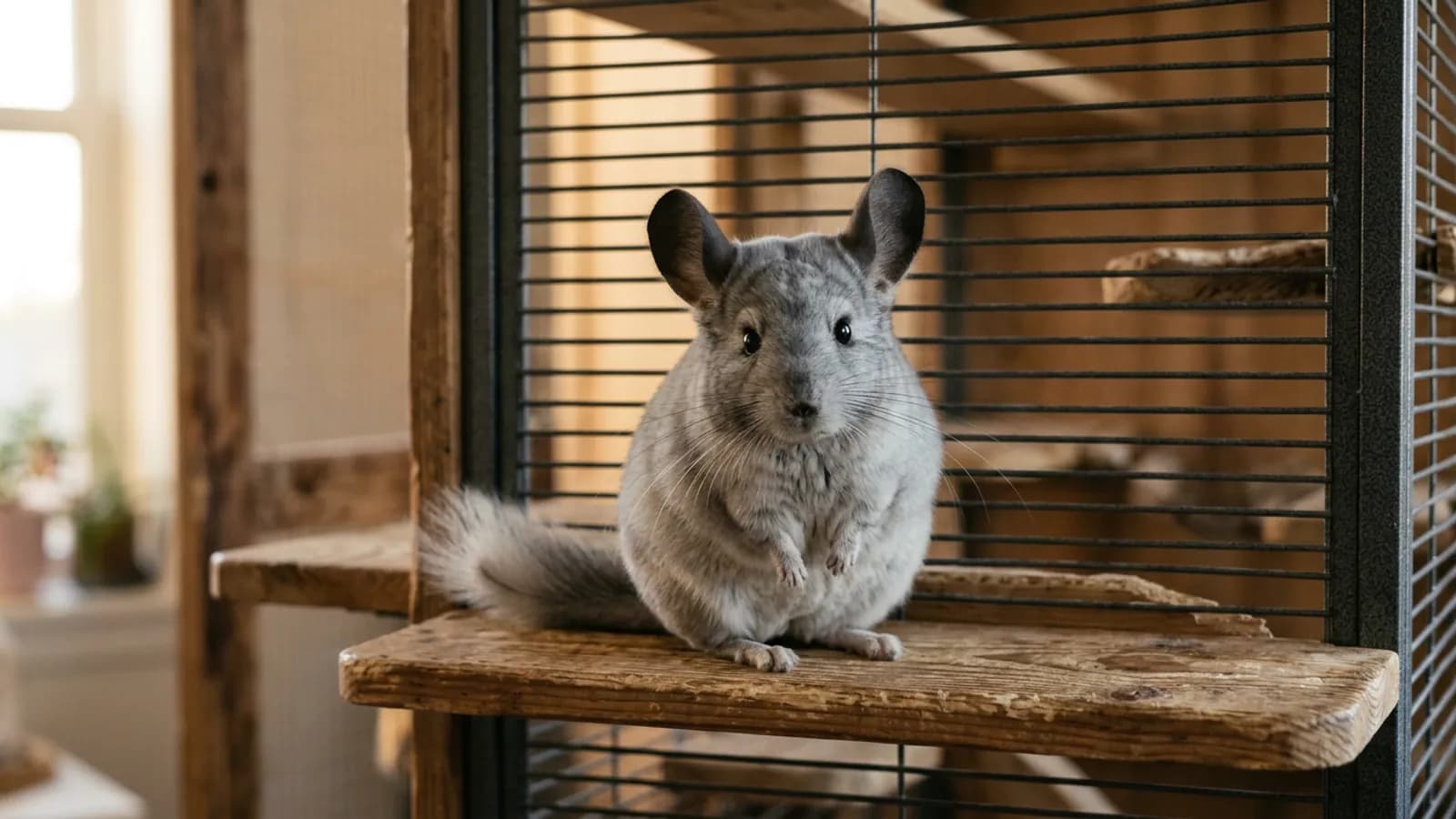
If you searched chinchilla littlest pet shop, there is a good chance you met a chinchilla the way a lot of people first do: as a tiny plastic figure with huge glossy eyes, boxed on a bright shelf next to a hundred other little animals. I understand the pull. The toy is cheap, it is cute, and it asks nothing of you. But somewhere between that shelf and a search bar, a bigger question tends to sneak in: could I have the actual animal? That is the question I want to answer honestly, because a living chinchilla and the Littlest Pet Shop version of one share a silhouette and almost nothing else. I have kept these animals for about ten years, and the gap between the toy and the real thing is the single most useful thing I can hand you before you spend a cent.
Why the toy sets the wrong expectations
A Littlest Pet Shop figure is designed to sit in a palm and look adorable at rest. That is its whole job. It does not need a temperature-controlled room, it never grinds its teeth down on hay, and it will happily be stuffed in a backpack for a week with no consequences. Every one of those things is the opposite of a real chinchilla, and the mismatch is where new owners get hurt.
A real chinchilla is a small, dense-furred rodent from the high Andes, bred by cold and altitude. It is crepuscular, which means it comes alive at dawn and dusk and wants to sleep through the middle of your day. It can live 10 to 20 years, so this is not a hamster-length commitment; it is closer to a dog or a cat in the runway of years you are signing up for. Most of them do not enjoy being held the way a cartoon suggests. They tolerate it at best and would usually rather run, jump, and bounce off vertical surfaces than be cradled. If your picture of chinchilla ownership is the toy come to life, sitting still in a small hand, the real animal will disappoint that picture and may suffer for it. I lay all of this out in more detail in chinchilla as pets, the honest version after ten years, because expectations are where most of the heartbreak starts.
What a real chinchilla costs before you bring it home
Here is the number people usually want first: the animal itself. A standard grey chinchilla from a pet shop or a breeder commonly runs somewhere in the range of 75 to 200, and color mutations like white, violet, or ebony often cost more, sometimes a few hundred. Rescues are frequently less, sometimes with the adoption fee covering a starter setup. Those are ballpark figures, they move with your region and the year, and I keep them soft on purpose because a precise price quoted with false confidence is worse than an honest range. For how the tag itself can mislead you, I wrote what a chinchilla price actually tells you, and what it hides.
The hard truth of buying-cost is that the purchase price is the cheap part. The animal is a small fraction of what year one costs you. If you are budgeting from the toy shelf, where the whole thing was five dollars, that framing will wreck you. The real setup, done right the first time, dwarfs the price of the chinchilla, and I would rather you know that now than discover it in a checkout line. The full accounting lives in what a chinchilla really costs, from the price tag to the vet fund.
Where chinchillas actually come from
Once you know you want the living animal, the next question is where. Broadly there are three sources, and they are not equal.
A dedicated chinchilla shop or a small breeder is usually your best bet. A good breeder or a specialist chinchilla shop can tell you the animal's age, sex, color, and often its parents, and they socialize the kits before they leave. When someone whose whole business is the chinchilla shop knows the line and hands you a health history, that is worth paying for. The catch is that not every place calling itself the chinchilla shop is that careful, so you still ask questions and you still look at the animals.
The pet shops that sell chinchillas as one species among many are the second route. Big-box stores can be fine, and they can be careless; it depends on the individual store and its staff. The animals there are more likely to have unknown ages, unknown sexes, and a stressful history of loud, bright, over-handled days. I walked through exactly what to check at one large chain in what a Petco chinchilla really costs, and what to check before you buy, and the checklist there applies to any pet shop.
The third route is rescue, and I have a soft spot for it because two of my own came that way. Both of my girls were rehomes. Adopting an adult means you can see the animal's temperament and health now, rather than gambling on a kit. Wherever you look, do not buy on impulse and do not buy the first sad-looking animal to rescue it from the shop; that is how you bring home a sick chinchilla and a vet bill. I put the whole vetting process into how to buy a chinchilla for sale without getting hurt or ripped off, and if you are searching locally, how to find a chinchilla near me without bringing home trouble covers the same ground for your area.
The setup the toy never shows you
The plastic figure comes with nothing. The living animal needs a real home before it arrives, not after. This is the part of buying-cost that surprises people most, so let me name the pieces plainly.
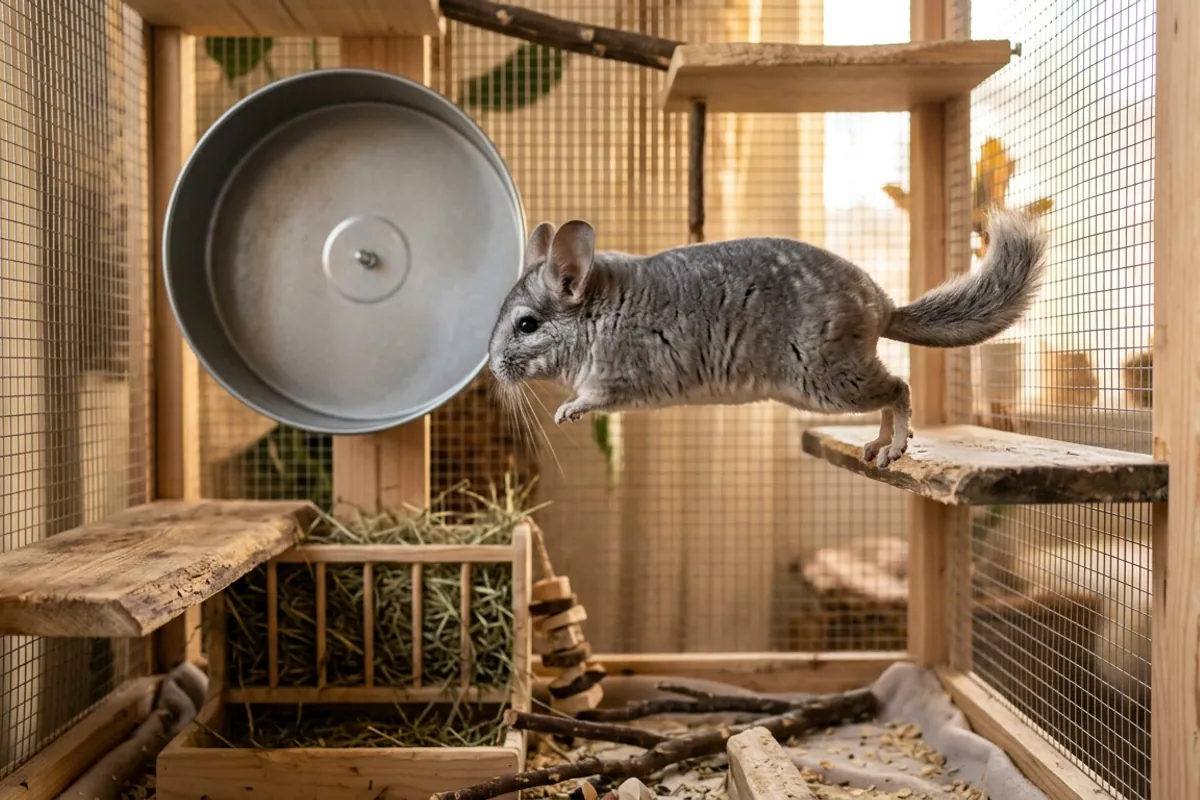
The cage is the biggest single line item and the one you must not cheap out on. Chinchillas are jumpers; they need vertical space, multiple wooden ledges, and bar spacing that is safe. Buy metal and wood, never plastic, because a bored chinchilla will chew plastic and can get an intestinal blockage from it. A tall, multi-level metal and wood cage is what you want. Critter Nation double unit small animal cage As an Amazon Associate I earn from qualifying purchases. I go through the sizing and the common mistakes in how to choose a chinchilla cage without buying the wrong one twice, and the setup as a whole in chinchilla cage setup.
Inside that cage, a chinchilla needs to run. An exercise wheel has to have a solid running surface, never wire or mesh rungs, because a wire wheel catches feet and legs and causes real injuries. 15 inch Chin Spin solid surface chinchilla wheel As an Amazon Associate I earn from qualifying purchases.
It needs dust, not water. This is the one rule people who only knew the toy find strangest: a chinchilla never bathes in water. Its fur is so dense that water cannot dry out of it properly, and a wet chinchilla can grow fungus against the skin. Instead they roll in fine volcanic dust that lifts oil and dirt out of the coat. Lixit Blue Beauty chinchilla dust, 3 lb As an Amazon Associate I earn from qualifying purchases. If that sounds odd, I explain the why of it in the chinchilla dust bath, done right from dust to schedule and in what bathing dust for chinchillas really is, and how to use it.
And it needs hay, constantly, which I will come back to because it ties straight into the two things that actually kill chinchillas.
Heat and teeth, the two things that actually kill chinchillas
If you remember nothing else from this article, remember this section. The toy never overheats and never grows a bad tooth. The real animal does both, and both can be fatal.
Start with heat, because it is the one that scared me straight. My Pebble came from a rehome out of an overheated attic, and her first summer with me brought a heatwave and a night at the emergency vet. That night is why I am relentless about temperature. Chinchillas are built for cold mountains and they cannot shed heat well through that thick coat. The comfortable range is 60 to 70°F, which is 15 to 21°C. Above 75°F, or 24°C, you are into risky territory. At 80°F, which is 27°C, and up, you are in an emergency, and it comes on faster in humid air because they cannot offload heat when the air is already wet. This is not a warning I will soften to sound friendlier: a chinchilla can die of heatstroke in a room a person finds merely warm.
So a real chinchilla needs a room you can keep cool, all summer, no exceptions. That often means air conditioning, and it always means watching the temperature rather than guessing at it. Keep a thermometer on the cage so you are reading the number, not your own comfort. digital thermometer and humidity gauge with remote probes As an Amazon Associate I earn from qualifying purchases. A chilled stone gives the animal a cool surface to lie against on a hot day, though it is a supplement to a cool room, not a substitute for one. Kaytee Chinchilla Chiller granite stone As an Amazon Associate I earn from qualifying purchases. Learn the warning signs before you ever need them, in chinchilla heat stroke: warning signs every owner should know, keep chinchilla heat safety handy, and if you are unsure whether your room is safe, run the numbers through the chinchilla heat danger calculator.
The second killer is teeth, and it is quieter. My other girl, Juniper, is a neglected rescue whose dental disease I manage day to day, and watching her up close is why I am uncompromising here. A chinchilla's teeth grow continuously for its whole life. The only thing that keeps them worn to a healthy length is constant chewing on the right material. That means unlimited grass hay as the base of the diet, always available, never rationed. Oxbow Western Timothy Hay, 40 oz bag As an Amazon Associate I earn from qualifying purchases. If you go through a lot of it, and you will, buying in bulk is cheaper per pound. Oxbow Western Timothy Hay, 9 lb box As an Amazon Associate I earn from qualifying purchases. Plain pellets are a measured supplement on top of the hay, not the main event, and safe chews give the teeth extra work. emours apple wood chew sticks, 40 count As an Amazon Associate I earn from qualifying purchases. When teeth are not worn down, they overgrow and can grow into the jaw and mouth, a painful condition called malocclusion that needs a vet. I wrote the whole picture in chinchilla teeth problems: spotting malocclusion before it turns serious, and the diet that prevents it in chinchilla diet, food, and hay. To be clear about my lane: I am an experienced keeper, not a vet, and once a tooth problem is visible, that is an exotics vet's job, not something you fix at home.
The monthly bill and the vet fund
Add it up over a month and the ongoing cost is modest but real: hay, dust, a bag of pellets, the electricity to keep a room cool through summer. None of it is dramatic on its own. The line that people skip, and the one I will not let you skip, is the vet fund.
Chinchillas are exotics. A regular cat-and-dog vet often cannot treat them, so you need an exotics vet, and exotics vets cost more. Dental work, a heat emergency, or a gut problem can each run into hundreds of dollars fast, and these animals hide illness until it is advanced because prey animals do. So you set money aside before you ever need it, quietly, every month, so that the night you are standing in an emergency clinic the money is already there. The toy never sends you to a vet at 2 a.m. The living animal might, and whether that night ends well often comes down to whether you built the fund. Over a 10 to 20 year life, that math matters; see how long chinchillas really live, and what changes the number for the runway you are budgeting across.
If this is really a gift for a child
A lot of chinchilla littlest pet shop searches come from a kid who loved the toy, or a parent looking at one. So let me speak to that plainly, because a chinchilla is a hard match for a young child and I would be lying to pretend otherwise.
The animal sleeps through the afternoon and wants to play at dawn and after bedtime, which is the reverse of a child's schedule. It mostly does not want to be held, and a child who squeezes or drops one can badly injure a small, fragile animal, or get a fear-bite in return. It needs a room kept genuinely cool, hay topped up every day, and a decade or two of steady care that will outlast a childhood interest in any toy line. None of that makes a chinchilla a bad pet. It makes it an adult's pet that a gentle, patient child can help with, under supervision, once everyone knows the crepuscular, hands-off, heat-sensitive reality. If what your child actually wants is the cuddly animal the figure promises, a chinchilla is not that animal, and it is far kinder to learn that from an article than from a frightened pet.
So should you get the real thing
Here is where I land after ten years. If you came in from the toy and what you wanted was something small, soft, and undemanding, the honest answer is that a real chinchilla is none of those in the way the figure implies, and you are allowed to keep the toy and stop there. That is not a failure; it is good judgment.
But if the search that started as chinchilla littlest pet shop has turned into a genuine willingness to keep a cool room all summer, to buy a tall metal and wood cage and unlimited hay, to build a vet fund, and to commit for 10 to 20 years to an animal that runs more than it cuddles, then a real chinchilla can be one of the most rewarding animals you will ever share a home with. Mine have been for me. Go in with your eyes open, buy from a careful source rather than an impulse, set the whole thing up before the animal arrives, and read chinchilla how to take care: the honest owner's checklist and chinchilla care before you decide. The toy costs a few dollars and asks nothing. The animal asks for everything on this list, and gives back more than the shelf ever hinted.