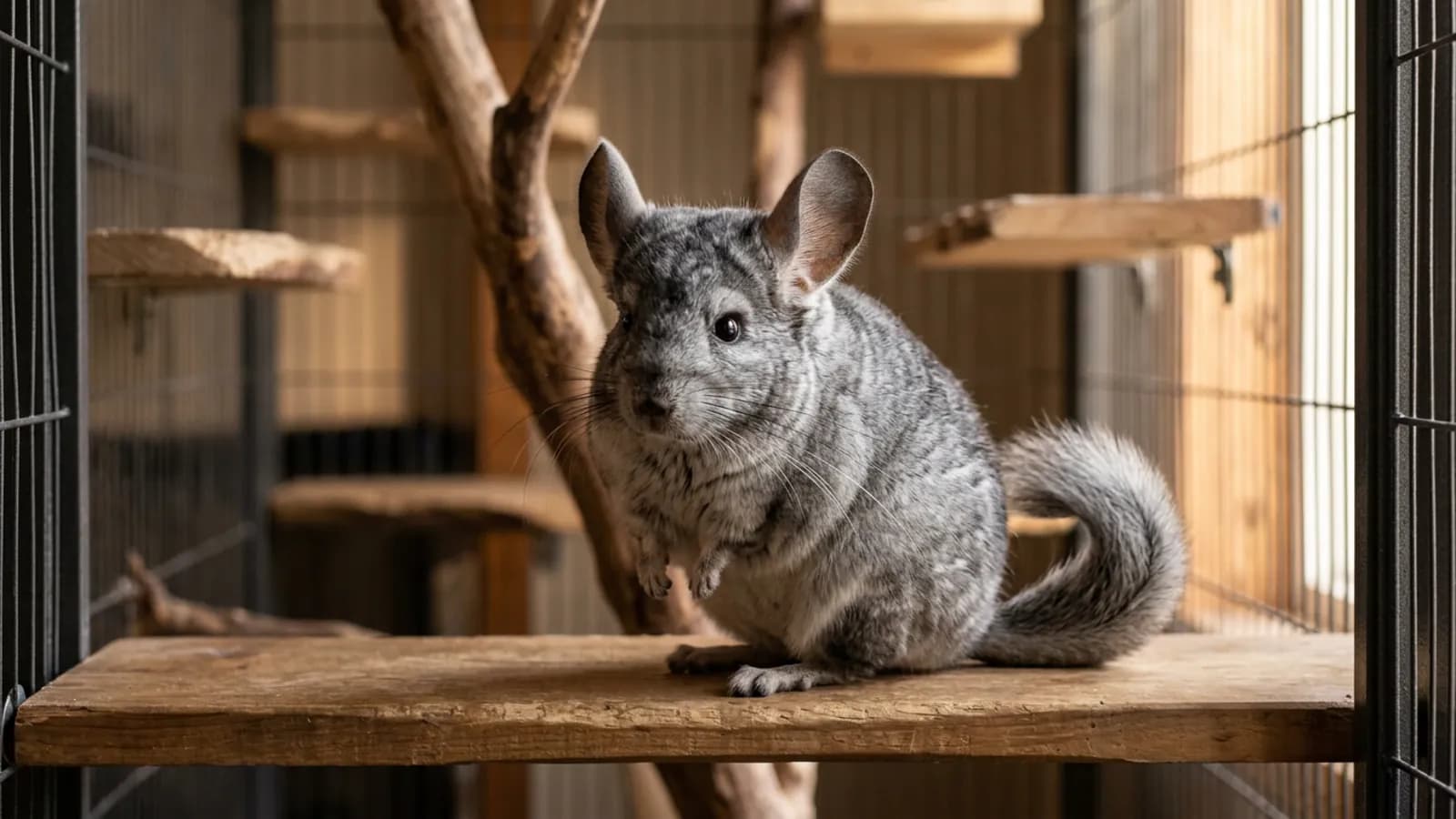
What chinchilla persian cats really are, and the rodent that lent them the name
If you searched for chinchilla persian cats and landed on a site run by someone who keeps the rodent, let me clear things up before you read another line. A chinchilla Persian is a cat. It is a Persian, one of the oldest and most recognisable long haired cat breeds, wearing a coat pattern that cat fanciers named after the animal I actually share my home with. There is no rodent in it. No hybrid, no cross, nothing bred from the little grey creature dozing in my cage right now. The word chinchilla here is borrowed the way a paint colour gets named after a bird. I have kept chinchillas for about ten years, so I will not pretend to hand you a cat breeder's credentials. What I can do is tell you where the name came from, what it does and does not mean, and why so many people arrive here by mistake.
What a chinchilla Persian cat actually is
A chinchilla Persian is a Persian cat with a very specific type of coat, called tipped. Picture a cat that is mostly pale, close to white, with only the very ends of the guard hairs carrying colour. The result is a coat that looks like it has been dusted with a darker powder, so the cat shimmers when it moves and the colour seems to shift with the light. On a silver chinchilla Persian the tipping is black, laid over a white undercoat, and the effect is a sparkling silver. There is a golden version too, where the undercoat is warm cream and the tips are darker, giving a coat that glows.
The rest of the cat is pure Persian. Long, dense fur, a round head, a short flat face, and a heavy body carried low. Chinchilla Persians are usually shown with green or blue green eyes, often outlined in a darker rim that makes them look as if they are wearing eyeliner. The nose is often brick red with a dark outline. None of that has anything to do with a rodent. It is a colour and pattern description, the same way you might describe a tabby or a tortoiseshell.
If you want the full picture of the breed and the cat behind the label, I have written it up separately in what a chinchilla persian really is. The short version is this: chinchilla is an adjective doing the work of describing fur, and the noun it is attached to is cat.
Where the name really comes from
The name is a compliment to my animals, honestly. A chinchilla, the rodent, has some of the densest fur of any land mammal, and every single hair is banded. The base of the hair is dark slate, the middle is pale, and the tip is dark again. Stack tens of thousands of those hairs together in one follicle group and you get the shimmering, smoky grey that a wild chinchilla wears in the Andes. Light hits the pale bands and the coat seems to glow from underneath.
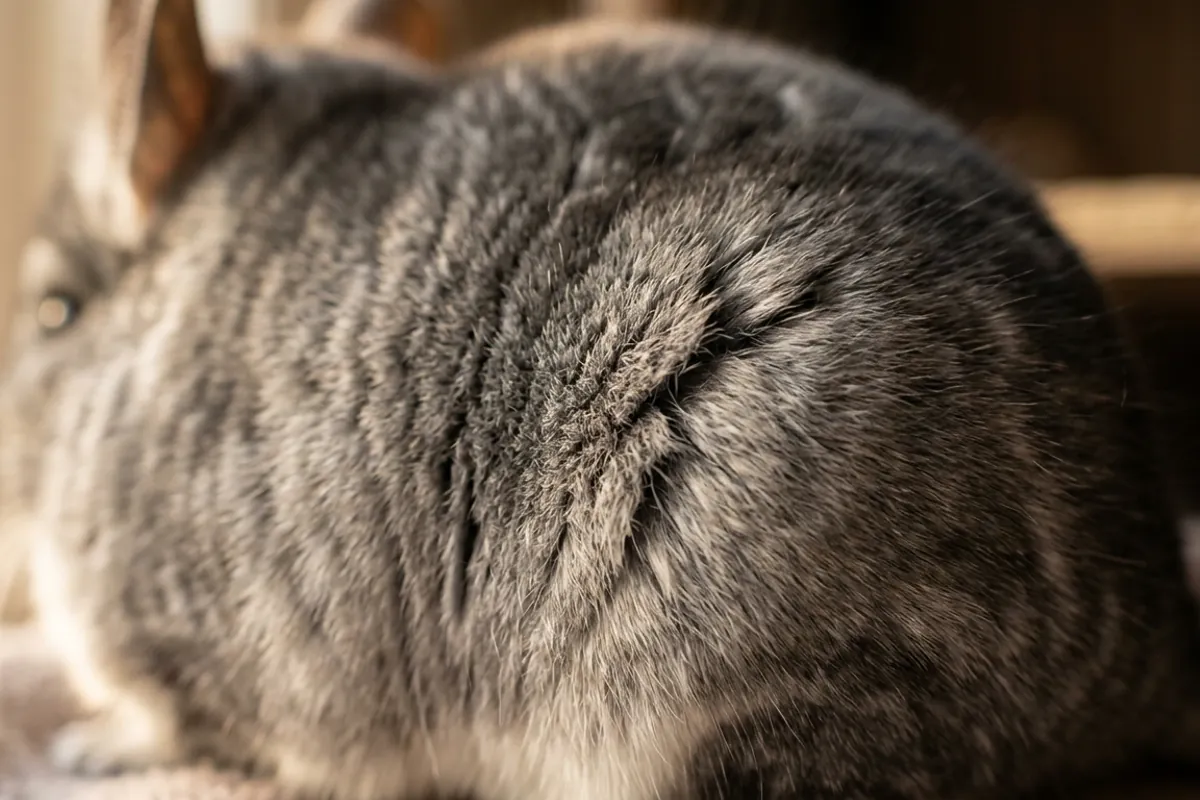
When Victorian cat breeders bred a Persian whose white coat carried just a whisper of dark tipping, that same glowing, dusted look was the obvious comparison. So they called the colour chinchilla. It stuck. The same borrowing happened with other breeds, which is why you will also find British chinchilla cats and a whole family of chinchilla cats that have nothing to do with the animal I keep. The word travelled from the fur trade into the cat fancy and never looked back.
I find it a little bittersweet, because the reason chinchillas have that famous fur is exactly why they were nearly wiped out in the wild. That coat is the thing that made them a target. If you want the real animal behind the name, dense fur, giant ears, a tail like a bottle brush, I go into it in what the chinchilla animal really is. The cat borrowed the shimmer. It did not borrow anything else.
Why it can never be a hybrid
This is the part I most want people to hear, because the search phrase makes some folks imagine a designer creature that is part cat, part chinchilla. That animal does not exist and cannot exist. Cats and chinchillas are not just different species, they are wildly different branches of the mammal family tree. A cat is a carnivore. A chinchilla is a rodent, more closely related to a guinea pig than to anything with whiskers and claws that hunts. You cannot cross them any more than you could cross a dog with a rabbit. Biology simply does not have a door there.
So if a listing anywhere offers you a chinchilla cat hybrid, or a kitten that is somehow part chinchilla, that is either a misunderstanding of the name or a straight up scam. What they are actually selling, at best, is a chinchilla coloured cat. At worst they are selling nothing real at all.
While I am clearing up confusions, there is a second one worth naming. Chinchilla is also a rabbit coat colour, which is how you end up with breeds like the American and the Standard chinchilla rabbit. Those are rabbits, not cats and not the rodent I keep, and I untangle them in what a chinchilla rabbit really is. Three completely different animals, one borrowed word. If you keep that straight, the whole tangle of chinchilla persian cats, chinchilla rabbits, and actual chinchillas suddenly makes sense.
Silver, golden, and the shaded cousins
Within chinchilla Persians, the differences people ask about come down to how much of each hair carries colour. A true chinchilla, sometimes called a shell, has only the faintest tipping, roughly the top eighth of the hair. That is the palest, most sparkling version. Add more tipping, colour down maybe a third of the hair, and you get what breeders call a shaded silver or shaded golden. The cat looks noticeably darker along the back and face while staying pale underneath. Push the tipping further still and you move toward smoke, which is a different look again.
The two colours you will see most often are silver and golden. Silver chinchilla Persians are the white and black tipped cats with the green eyes, the ones most people picture when they hear the name. Golden chinchilla Persians swap the white undercoat for a warm apricot and keep the black tips, which gives a much warmer, honey toned cat. I have written up the silver version on its own in what a chinchilla silver persian really is, again with the same honest caveat that it is a cat.
Names get slippery here, and different registries draw the lines in slightly different places, so do not treat shell, chinchilla, and shaded as hard scientific categories. They are show ring descriptions of a sliding scale. If a breeder tells you their kitten is a chinchilla golden and it looks a shade darker than the photo you had in your head, that is normal. The tipping varies from cat to cat, and a kitten's coat can shift as it grows in.
What I can, and cannot, tell you about the cat
Here is where I stay in my lane. I am an experienced chinchilla keeper, not a cat person and certainly not a vet. I do not own a Persian, I have never bred one, and I am not going to invent care advice for an animal I do not live with. So take the next paragraph as general, widely known information, not as instruction from an authority.
Persians, including the chinchilla coloured ones, are long haired and flat faced. The long coat means real grooming, most owners brush daily to keep it from matting, and the flat face means the breed is prone to tear staining and, in more extreme examples, breathing trouble. Persians are also associated with an inherited kidney condition that responsible breeders screen for. Those are the things I would want to ask a breeder and a cat vet about before bringing one home. I am telling you they exist, not how to manage them, because that is genuinely outside what I know first hand.
What I will say with confidence, because it is true of every animal, is that a coat colour tells you nothing about health or temperament. Chinchilla is a description of fur, not a promise of a calmer cat or a hardier one. Anyone pricing a kitten higher purely because it is a chinchilla silver is charging for looks. For the actual care of a Persian, find a breed savvy cat vet and a breeder who health tests. That is the honest handoff, and I would rather give you that than pretend.
If it was actually a chinchilla you wanted
Some of you searched chinchilla persian cats meaning to look at cats. Some of you got here because you want the rodent and the search engine tangled the words. If it is the actual chinchilla you are after, let me point you the right way, because this is the animal I can talk about all day.
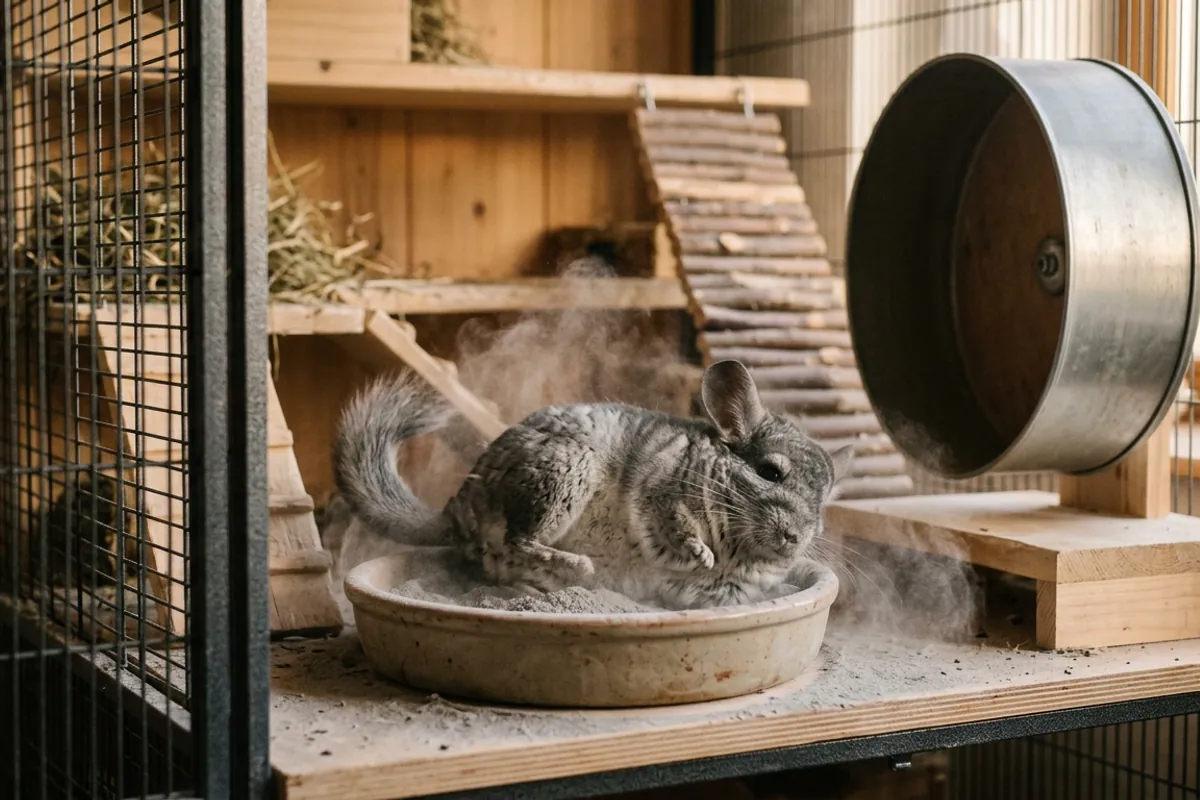
A real chinchilla is a prey animal from the cold, dry high Andes, and its care is built entirely around that. The single thing that will kill one fastest is heat. Chinchillas are comfortable at 60 to 70°F (15 to 21°C). Above 75°F (24°C) they start to struggle, and 80°F (27°C) and up is a genuine emergency, faster still in humid air, because that dense famous fur traps heat and they cannot pant it off. I keep a thermometer and humidity gauge on the cage and I watch it in summer. digital thermometer and humidity gauge with remote probes As an Amazon Associate I earn from qualifying purchases. A cool granite or marble slab in the cage gives them somewhere to dump body heat on a warm day. Kaytee Chinchilla Chiller granite stone As an Amazon Associate I earn from qualifying purchases.
The diet is grass hay, unlimited, all the time, with a measured scoop of plain pellets as a supplement and treats kept tiny and rare. The constant chewing of hay is what keeps their ever growing teeth worn down, which matters more than anything else in the long run. Oxbow Western Timothy Hay, 40 oz bag As an Amazon Associate I earn from qualifying purchases. They also never bathe in water. They roll in fine volcanic dust to keep that coat clean, a few times a week. Lixit Blue Beauty chinchilla dust, 3 lb As an Amazon Associate I earn from qualifying purchases. And they need a tall metal cage with wooden ledges, never plastic. Critter Nation double unit small animal cage As an Amazon Associate I earn from qualifying purchases. Inside it, a solid surface wheel lets them run without catching a foot on wire rungs. 15 inch Chin Spin solid surface chinchilla wheel As an Amazon Associate I earn from qualifying purchases.
If that is the animal you meant, start with what a chinchilla really is and my chinchilla care guide, and read the heat safety pages before summer, not during it.
Buying either one without getting confused
The confusion between the cat and the rodent is not just trivia, it costs people money and heartbreak. I have seen listings for chinchilla persian cats for sale sitting a click away from listings for actual chinchillas, and prices that make no sense until you realise the seller does not know which animal they are describing either. Before you pay anyone anything, be certain which of the three chinchilla things you are buying, the cat, the rabbit, or the rodent.
If it is the cat, look for a breeder who health tests for the kidney condition, who lets you see the kitten with its mother, and who talks openly about the flat face and the grooming. I dig into the sale side of things in the truth behind chinchilla persian cats for sale, because the word chinchilla gets used to inflate a price on an ordinary cat.
If it is the rodent, apply the same skepticism. A healthy chinchilla is bright, alert, and dry around the eyes, nose, and mouth, with clean fur and no bald patches. Ask what it is fed, how warm the room gets, and whether it has ever seen an exotics vet. A seller who cannot answer those is a seller to walk away from.
Either way, the trick is refusing to be dazzled by a word. Chinchilla is a shimmer of tipped fur on a cat, a coat colour on a rabbit, and the whole animal on the little grey creature I keep. Once you know which one you are looking at, you can judge it on its actual merits instead of the borrowed name.