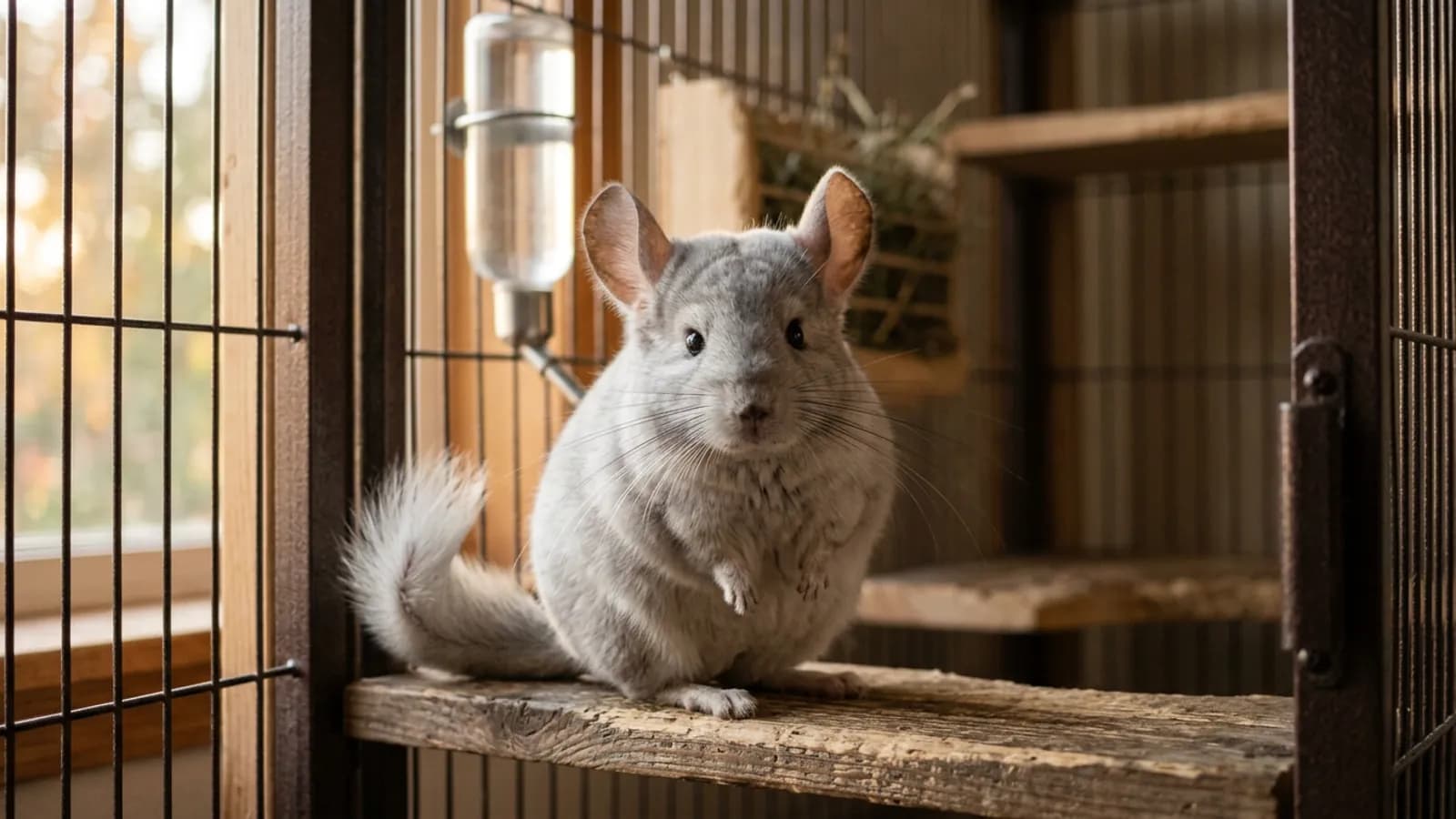
If you typed "chinchilla rabbit breed" into a search box and ended up on a site run by someone who keeps chinchillas, you have already walked straight into the exact tangle this article exists to untangle. The chinchilla rabbit breed is a real, recognised type of rabbit. It is not the animal I keep, it is not a rodent, and it needs a different life from the two little silver residents in my living room. The name is borrowed, nothing more. A rabbit was given a chinchilla's name because of the way its fur looks, and a hundred years later that borrowed name still sends people looking for one animal and finding pages about another. So let me do the honest thing and lay both animals side by side, tell you plainly which is which, and make sure that whichever one you are actually bringing home, you know what it needs before it arrives.
Two different animals wearing one name
My chinchillas, Pebble and Juniper, are rodents. They come from the high, dry, cold slopes of the Andes, they are built to shed heat badly and hold it worse, and they clean their dense coats by rolling in fine volcanic dust because water ruins that fur. That biology is not a footnote. It sets every rule I follow, and I have written about it at length in what a chinchilla really is.
The chinchilla rabbit is a rabbit. It is a lagomorph, not a rodent, and the two groups split a very long way back on the family tree even though people lump them together as "small furry pets." A rabbit is bigger, lives differently, breeds differently, and crucially does not share the chinchilla's terror of getting warm or its ban on water. When people write "chinchilla breed rabbit" or "chinchilla rabbit breed," they are talking about a domestic rabbit that a French breeder created in the early 1900s and named after the wild chinchilla's coat. The rabbit has never been a chinchilla. It just wears the look.
This is the same borrowing that gave us British chinchilla cats and the Persian variety people search for, and the same reason the Soviet Chinchilla is, despite the name, another rabbit entirely. Somewhere along the line, "chinchilla" stopped being only an animal and became a description of a particular silvery, salt-and-pepper coat. Once you see that, the whole muddle makes sense.
Where the chinchilla rabbit breed got its name
To understand why a rabbit borrowed my animal's name, you have to look closely at a chinchilla hair. On a standard grey chinchilla, a single strand is not one flat colour. It is banded: a dark slate base, a pale band above it, and a dark tip. Stack millions of those banded hairs together and the coat reads as a deep, shifting silver-grey that looks lit from underneath. Fur people call that structure agouti banding, and it is the single most recognisable thing about a wild-type chinchilla.
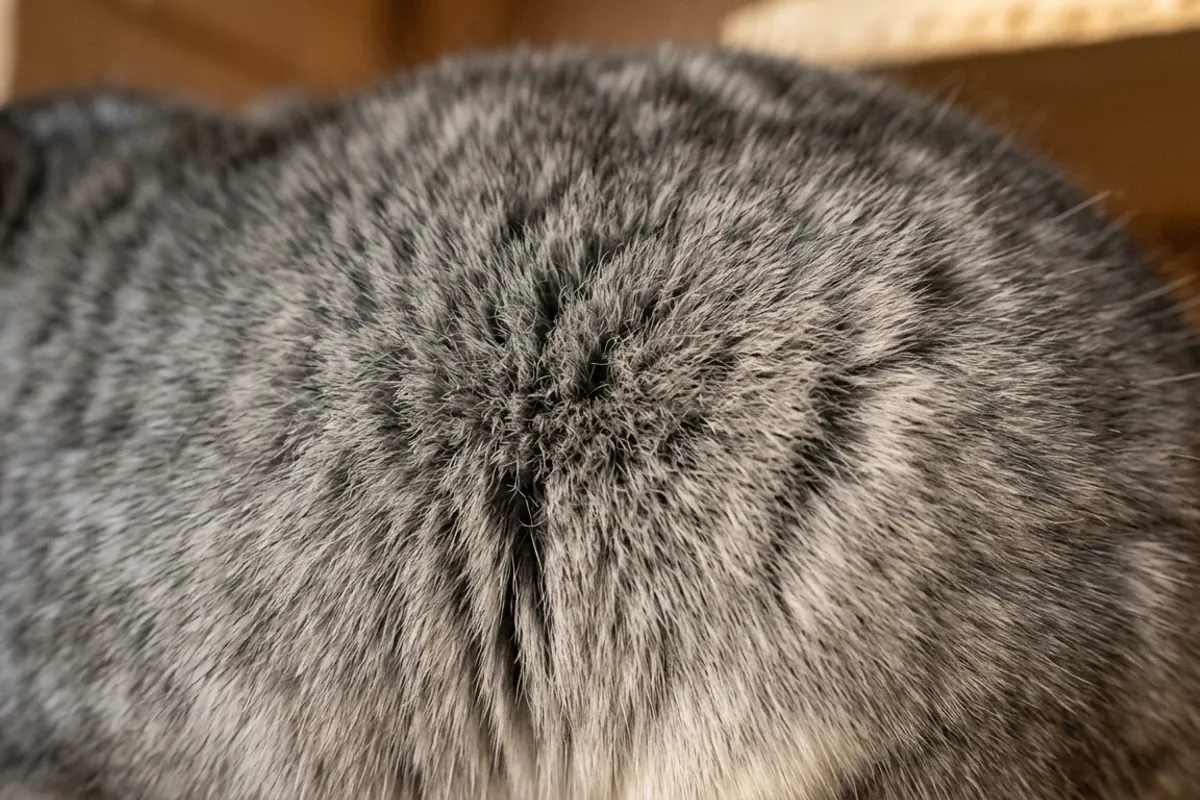
The early rabbit breeders in France were chasing that exact look. When they bred a rabbit whose fur carried a similar banded, ticked, silvery pattern, the resemblance to chinchilla pelts was obvious, and the name stuck. The rabbit was marketed as looking like chinchilla fur, which at the time was a luxury material, and the name did the selling. So the chinchilla rabbit breed is, at its root, a rabbit named for successfully imitating a rodent's coat.
I want to be precise about what that means, because it is the same point I make about every colour on this site. The name describes appearance, and appearance only. It changes nothing about the animal underneath. A rabbit that looks like chinchilla fur is still a rabbit in every way that matters for care, exactly as a black velvet chinchilla is still an ordinary chinchilla under a fancy coat name. The label is skin deep, quite literally.
The three chinchilla rabbit breeds
Here is where I have to be careful and stay in my lane. I keep chinchillas, not rabbits, so I am giving you the widely agreed outline and sending you to rabbit people for the fine detail. What is well established is that "the chinchilla rabbit" is not one breed but a small family of them, recognised separately by rabbit registries.
The original is usually called the Standard Chinchilla, the compact rabbit that started it all in France and was then exported around the world. From that starting point, breeders in the United States developed larger versions. One line was bred up into a heavier meat-and-fur rabbit generally known as the American Chinchilla. Another was pushed larger still into the Giant Chinchilla, a genuinely big rabbit developed in the United States for size while keeping the chinchilla coat pattern. So when a listing says "chinchilla rabbit," the honest answer to "which one" is that it could be any of three, and they differ mostly in body size and weight rather than in that shared silvery coat.
What all three have in common is the coat that earned the name, a body plan and lifespan typical of domestic rabbits, and needs that are rabbit needs. If you are seriously choosing between them, talk to a rabbit breeder or a rabbit rescue, because the differences that matter for a rabbit owner, temperament, size at adulthood, space, are outside what I can responsibly claim expertise on. I will not dress up guesses as facts to fill a section.
What the rabbit and my chinchillas share, and where they split apart
It is tempting to assume that two small, furry, long-eared pets need roughly the same setup. They do not, and getting this wrong is where animals suffer. Let me be specific.
The one place they genuinely overlap is fibre. Both a rabbit and a chinchilla live on grass hay. For my chinchillas, unlimited grass hay is the whole foundation of the diet, and it is not optional. Their molars grow for life and only constant chewing of coarse, abrasive hay wears those teeth down evenly. Juniper came to me as a neglected rescue with dental disease, and I manage the fallout of poorly worn teeth every single day, so I am uncompromising here. Rabbits also need unlimited hay for their own continuously growing teeth and their gut. So if you take one habit from a chinchilla page and apply it to a rabbit, "endless hay" is the safe one. I keep good grass hay in bulk so it is always in front of them.
Oxbow Western Timothy Hay, 9 lb box As an Amazon Associate I earn from qualifying purchases.
Now the splits, and they are large.
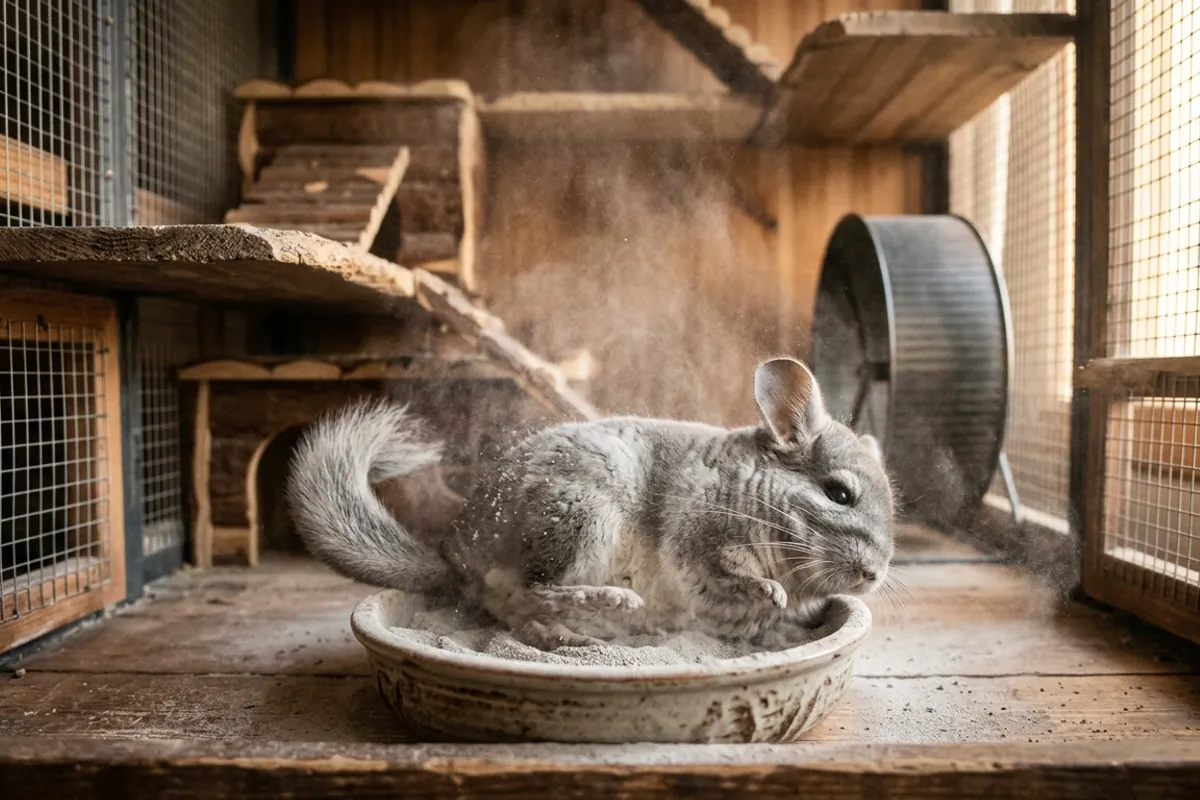
Water on the coat. A rabbit can get damp and dry off. A chinchilla must never, ever bathe in water. That dense coat, up to fifty or more hairs from a single follicle, traps water against the skin, takes days to dry, and grows fungus in the meantime. My chinchillas clean themselves by rolling in fine volcanic pumice dust, and that is the only bath they get. I explain the whole method in the chinchilla dust bath, done right, and the dust itself matters, so I buy proper chinchilla bathing dust rather than craft sand.
Lixit Blue Beauty chinchilla dust, 3 lb As an Amazon Associate I earn from qualifying purchases.
Heat. This is the one that keeps me up at night and the reason I am relentless about it. Pebble came out of an overheated attic and nearly died in her first summer, a night at the emergency vet that rewrote how I keep these animals. A chinchilla is comfortable at 60 to 70°F (15 to 21°C). Above 75°F (24°C) is already risky. At 80°F (27°C) and up you are in emergency territory, and humid air makes it worse and faster because they cannot shed heat by sweating or panting well. A rabbit tolerates a much wider band of ordinary household temperatures. If you house a chinchilla the way a rabbit is happy to live, in a warm room in July, you can kill it. I keep a thermometer and humidity gauge on the cage so the number is never a guess, and a chinchilla-safe cooling stone in the enclosure for the edge of summer.
digital thermometer and humidity gauge with remote probes As an Amazon Associate I earn from qualifying purchases.
Kaytee Chinchilla Chiller granite stone As an Amazon Associate I earn from qualifying purchases.
Housing. Both do best in roomy enclosures, but a chinchilla needs a tall, all-metal-and-wood cage with solid wooden ledges to jump between, because they climb and leap and because they chew everything, so plastic is out on two counts, it gets gnawed and swallowed and it cannot take the abuse. If you want the honest version of what a good one looks like, I wrote how to choose a chinchilla cage without buying it twice. A rabbit's housing priorities are different again. The lesson is not "buy the same box," it is "these are different animals."
Pellets. My chinchillas get plain, measured chinchilla pellets on top of the hay, not a rabbit food. The formulations differ, and treats and mixes marketed for rabbits are not a safe substitute. There is more in chinchilla pellets, the honest version.
The chinchilla dog breed question, answered honestly
I get asked about a "chinchilla dog breed" often enough that it deserves a straight answer instead of a shrug. There is no dog breed called the chinchilla. Not recognised, not a real established type, not anything I would send you looking for.
What is almost certainly happening is one of two things. Either the word has been borrowed again, the way it was borrowed for rabbits and cats, to describe a dog with a soft, silvery, ticked coat that reminds someone of chinchilla fur, or the search has simply crossed wires and mashed two unrelated pet searches together. Coat colours described as "chinchilla" do turn up in the cat world in a formal way, which is where the confusion has room to grow, but a chinchilla is not a category of dog.
So if you came here wondering whether you can buy a chinchilla dog breed, the honest answer is no, there is not one, and any seller using that phrase as if it were an established breed is either being loose with language or is worth a second, sceptical look. If you actually keep both a chinchilla and a dog under one roof, that is a real and manageable situation, and I have written about doing it safely in keeping a chinchilla and dog together. But the two words do not combine into a dog breed, and I would rather tell you that flatly than pretend otherwise.
How to tell which animal a listing actually means
Because "chinchilla" now names a rodent, at least three rabbits, and a couple of cat coat patterns, listings and casual conversation get genuinely ambiguous. Here is how I sort it quickly.
Look at the size and weight first. If a listing quotes a weight in the several-pounds range and talks about the animal as a rabbit, it is the rabbit. A pet chinchilla is a small rodent that sits comfortably in two hands.
Look at the ears and tail. A chinchilla has large, rounded ears and a bushy squirrel-like tail. A rabbit has long upright ears and a short cottontail. Photos settle it fast.
Look at the care language. If the listing mentions litter training, spaying and neutering as routine, or a hutch, it is a rabbit. If it mentions dust baths, no water on the fur, and a strict temperature ceiling, it is a chinchilla. The care instructions give the species away even when the name does not.
Watch for the word "breed." I keep chinchillas as a species with colour varieties, not formal breeds in the way rabbits and dogs are bred to standards. When someone leans hard on "breed," they are often, though not always, talking about the rabbit. This overlaps with a related muddle I cover in bunny chinchilla, the rabbit, the rodent, and why they need opposite care, which is worth reading if the two keep blurring together for you.
When in doubt, ask the seller one direct question: is this a rodent or a rabbit. Anyone who cannot answer that clearly is not someone I would buy any animal from.
If it is the rodent you are bringing home
Suppose the search led you here, you have read this far, and you have realised it is the real chinchilla you want, not the rabbit that borrowed its name. Good. Let me leave you with the short version of what that animal actually needs, because the whole reason names matter is that they change what you buy and how you keep the animal alive.
Feed unlimited grass hay as the foundation, every day, always available, and add a measured amount of plain chinchilla pellets on top. Skip sugary treats and dried fruit; the safe extras are small and few, and I cover them in chinchilla treats, the honest version. Give real, varied wood chews, not one token stick, because worn teeth are the difference between a healthy old chinchilla and a vet-managed one, which is a lesson Juniper taught me the hard way. A rotation of safe apple wood and similar chews earns its place.
emours apple wood chew sticks, 40 count As an Amazon Associate I earn from qualifying purchases.
House them in a tall metal-and-wood cage with solid wooden ledges and a solid-surface exercise wheel, never a wire-runged wheel, which catches and breaks little feet. Bathe them only in chinchilla dust, never water, a few times a week. And guard the temperature like it is the number that keeps the animal alive, because it is. Keep the room in that 60 to 70°F (15 to 21°C) comfort band, treat 75°F (24°C) as a warning and 80°F (27°C) as an emergency, and never trust your own sense of the room over a gauge on the cage. If you want that reasoning in full, chinchilla temperature is the number that keeps yours alive is the page I point every new owner to.
15 inch Chin Spin solid surface chinchilla wheel As an Amazon Associate I earn from qualifying purchases.
The chinchilla rabbit breed is a fine animal, and if it is the rabbit you want, go find a good rabbit breeder or rescue with my blessing. But it is not my animal, it does not need my animal's careful, temperature-controlled, water-free, hay-first life, and the two should never be cared for as if the shared name meant shared needs. Know which one is standing in front of you. That single piece of clarity is the first thing you owe whichever creature you take home.