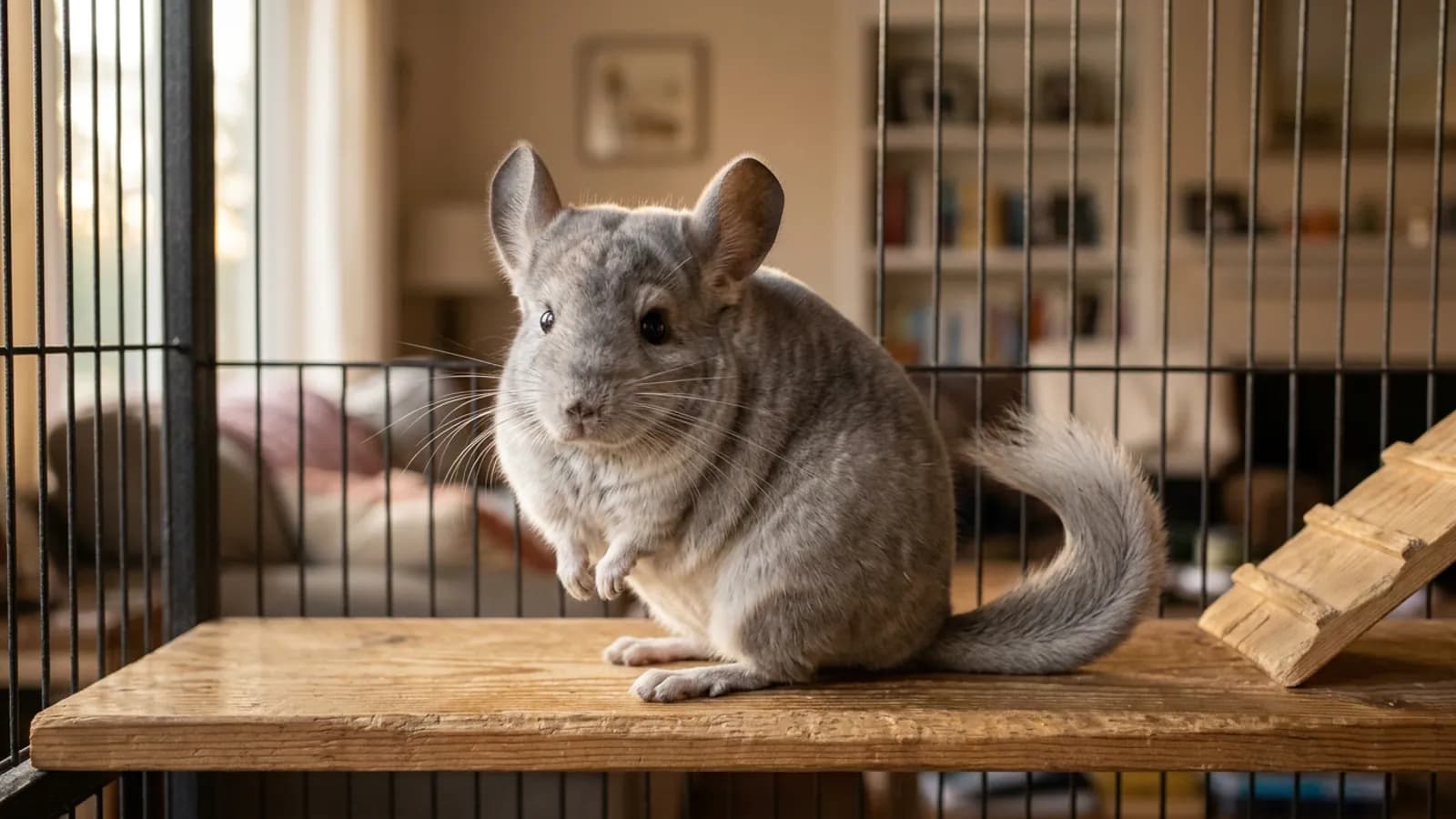
If you searched for a chinchilla giant rabbit, you have landed on a site run by someone who keeps the other animal entirely. I have kept chinchillas for about ten years, and a chinchilla giant rabbit, more properly the Giant Chinchilla rabbit breed, is not the small silver rodent dozing in the cage across my room. It is a big domestic rabbit that borrowed its name from my animal's fur, and that borrowed name sends a steady stream of people to the wrong place. So let me sort it out owner to owner: what the rabbit actually is, why it wears a chinchilla's name, what blue, brown, and grey chinchilla rabbit really mean, and the exact point where the two animals stop having anything in common.
What a chinchilla giant rabbit actually is
The Giant Chinchilla is a breed of domestic rabbit, and the word giant is not marketing. It is one of the larger rabbit breeds kept in North America, commonly 12 to 16 pounds, which is roughly 5.5 to 7 kilograms of rabbit. Put that next to the animal I keep and the gap is almost comic: a healthy pet chinchilla weighs about 400 to 600 grams, a little over a pound. A single Giant Chinchilla rabbit can outweigh ten of my chinchillas.
It was developed in the United States in the early 1920s by a breeder named Edward Stahl, who crossed standard chinchilla-colored rabbits with larger breeds such as the Flemish Giant to build the size up. The first doe he prized was nicknamed the Million Dollar Princess, and the breed was recognized by the American Rabbit Breeders Association later that decade. It was bred as a commercial meat and fur rabbit, not as a pocket pet, and that origin still shows in the body: broad, heavy, calm, and built to grow fast.
None of that describes a chinchilla. My animals are Andean rodents, agile, nocturnal, and built to leap. If you are weighing the rabbit as a pet, I am not the right guide, and I would send you to rabbit-specific resources. If the rabbit's name is simply what pulled you here, stay, because the confusion is worth clearing up. The same tangle sits behind the American chinchilla rabbit and the standard chinchilla rabbit, both rabbits, neither the rodent I keep.
How a rabbit ended up wearing a chinchilla's name
The name is about the coat, nothing more. The chinchilla I keep has dense grey fur that is banded along each hair: dark at the base, a pale band, then a darker tip. That banding is what gives the pelt its soft, grizzled, silver look. Back when the fur trade was booming, that look was fashionable and expensive, and rabbit breeders learned to reproduce a version of it.
In rabbits, a specific gene strips the yellow and fawn pigment out of the normal wild agouti coat. A wild-type rabbit hair carries a band of warm tan; remove that tan and you are left with black ticking over a pale, near-white underband, which reads to the eye as silvery grey. Breeders called that result chinchilla because it mimicked my animal's fur, and the name stuck to three separate rabbit breeds: the Standard Chinchilla, the American Chinchilla, and the Giant Chinchilla. They are three sizes of the same coat idea, not three kinds of chinchilla.
So the honest translation is this. Chinchilla, on a rabbit, is a color. On my animal, it is the animal. That distinction matters because people assume a chinchilla giant rabbit must need chinchilla care, and almost nothing carries across, as you will see below.
Blue, brown, and grey chinchilla rabbit, explained
Once you know the coat is a color rather than a creature, the other terms fall into place. They describe which pigment sits in the ticking on top of that pale chinchilla base.
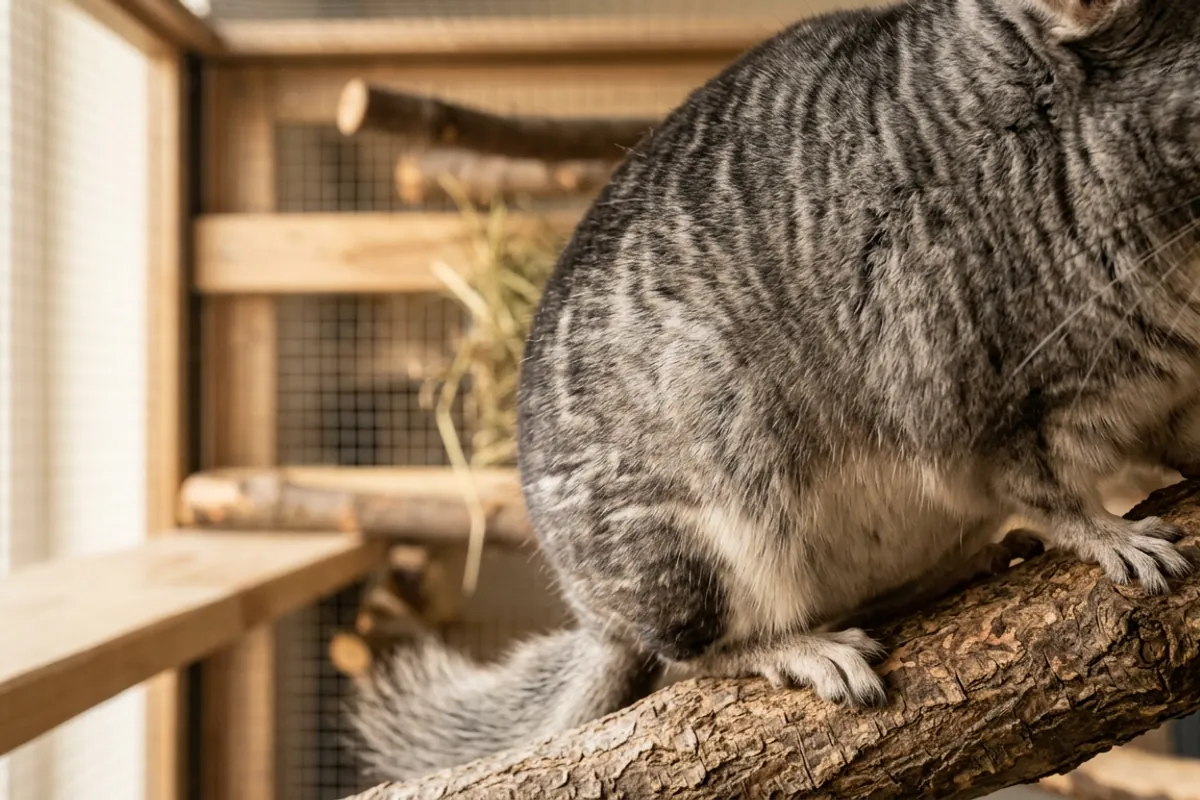
A grey chinchilla rabbit is the original and the most common. This is the standard chinchilla coloring: black ticking over the silvery underfur, which is exactly what earned the coat its name in the first place. When someone says a rabbit is simply chinchilla colored, this grey is almost always what they mean.
A blue chinchilla rabbit carries a dilution gene. That gene softens black pigment to a slate blue-grey, so the ticking that would have been black is now blue. The whole coat looks cooler and hazier, and in some breeds this variety is called squirrel. It is the same chinchilla base with the black turned down a shade.
A brown chinchilla rabbit works the same way through a different gene, the one that turns black pigment to chocolate brown. The ticking reads warm brown instead of black, sitting over the same pale base. You will also see this described as chocolate chinchilla.
The useful thing to hold onto is that blue, brown, and grey here are all variations on one coat pattern, produced by which color gene is switched on, not different animals with different needs. It is the rabbit version of a lesson I make often about my own animals: a coat color is skin deep. A brown chinchilla rodent needs exactly the same care as a grey one, and you can read how little the color ever changes on the animal I actually keep.
The rabbit and the rodent share almost nothing but a coat
Here is where I have to be blunt, because assuming these two animals are interchangeable is how care goes wrong.
They are not even in the same order of mammals. Rabbits are lagomorphs; chinchillas are rodents, specifically Andean rodents from the high, dry, cold slopes of South America. My animal evolved on cold mountain nights, which is the single fact that dictates most of its care.
Size, as covered, is a tenfold gap. Lifespan splits them too: a large rabbit breed often lives around 5 to 8 years, while a well-kept chinchilla commonly reaches 10 to 20. That long life is a real commitment people underestimate, and I have written about the pet chinchilla lifespan at length.
Temperament and handling differ. A calm Giant Chinchilla rabbit tolerates being picked up and held in a way most chinchillas never will; mine are prey animals that would rather run and climb than be cuddled, and they can release a patch of fur in a panic grip. Diets overlap on one point, unlimited hay, and diverge sharply after that, which I will come back to. And the housing is different in kind, not just size: my animals need vertical space to leap and metal to gnaw, not a rabbit's floor-level hutch.
If you want the full picture of the rodent on its own terms, what a chinchilla really is is the place to start. From here on, everything I say is about that animal, the one I keep, in case the rabbit's name is what led you here and a chinchilla is what you actually meant.
If you keep the real chinchilla, its fur sets the rules
That famous coat is not just a look, it is the reason for the single strangest rule I follow: my chinchillas never touch water. Their fur is so dense, with dozens of hairs growing from each follicle, that it does not dry out once soaked. A wet chinchilla stays damp against the skin, and that leads to chilling and fungal trouble fast. So they bathe in dust, not water.
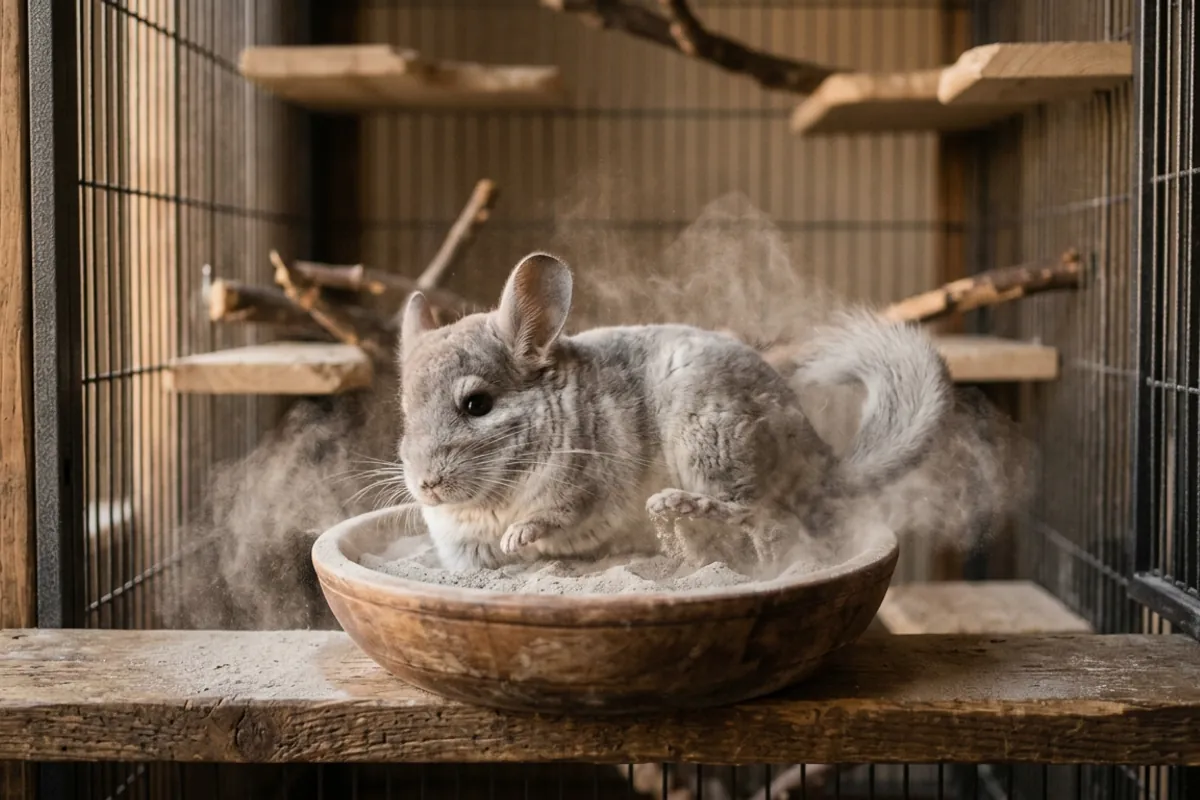
The dust is fine volcanic pumice that rolls through the coat and lifts out oil and moisture, and a proper chinchilla dust bath gives them a deep enough bowl to roll in. Lixit Blue Beauty chinchilla dust, 3 lb As an Amazon Associate I earn from qualifying purchases. A couple of baths a week, ten to fifteen minutes each and then taken away so they do not sit in it, is plenty for most animals. If you want the method rather than just the gear, I laid it out in the chinchilla dust bath done right.
The same density is why a chinchilla is so fluffy and why heat is so dangerous, which is the next thing I cannot be soft about. A rabbit's coat does not carry this rule at all. My animal's does, and getting it wrong is not a cosmetic mistake.
Heat is the one rule the rodent will not forgive
I am relentless about temperature because of one animal. Pebble came to me as a rehome out of an overheated attic, and her first summer brought a heatwave that put her in the emergency vet overnight. That scare is why the heat guidance across this whole site reads like a set of rules rather than gentle suggestions.
A chinchilla is comfortable at 60 to 70 degrees Fahrenheit, which is about 15 to 21 Celsius. Above 75 Fahrenheit, roughly 24 Celsius, you are into risk. At 80 Fahrenheit, about 27 Celsius, and up, you are in emergency territory, and it comes on faster in humid air because that dense coat cannot shed heat and the animal cannot sweat. This is the mountain rodent showing through: it is built for cold nights, not a warm living room.
Keep the room cool, keep the cage out of direct sun, and watch the real numbers with a cage thermometer and humidity gauge rather than trusting how the room feels to you. digital thermometer and humidity gauge with remote probes As an Amazon Associate I earn from qualifying purchases. A chilled granite or marble cooling stone gives the animal somewhere to dump heat on a hot afternoon. Kaytee Chinchilla Chiller granite stone As an Amazon Associate I earn from qualifying purchases. If you want to see a dangerous day coming before it arrives, the heat danger calculator and the warning signs of heat stroke are the two things I would read first. I do not soften this one, ever.
Hay comes first for both, then the diets split
Here is the one place the rabbit and the rodent genuinely agree. Both animals live on grass hay, unlimited, all day, every day. For my chinchillas that means a constant pile of good grass hay such as timothy. Oxbow Western Timothy Hay, 40 oz bag As an Amazon Associate I earn from qualifying purchases. It is not a side dish, it is the whole meal. The long fibre keeps the gut moving and, just as importantly, wears down teeth that never stop growing.
Juniper, my other chinchilla, is a rescue with dental disease, and she is the reason I never treat hay as optional. When those ever-growing teeth are not ground down, they overgrow into the jaw and the animal stops eating. So alongside unlimited hay I keep a rotation of safe wooden chews, such as an apple wood chew variety pack. emours apple wood chew sticks, 40 count As an Amazon Associate I earn from qualifying purchases. It gives those teeth constant work between meals.
After hay, the diets diverge. A rabbit can take a good amount of leafy greens and vegetables. A chinchilla should not: fresh, wet greens and rich vegetables upset a gut evolved for dry mountain forage and can cause real digestive trouble. Mine get unlimited hay, a measured amount of plain chinchilla pellets, and only tiny, dry, occasional treats. If you arrived thinking chinchilla and rabbit eat from the same bowl, that is the assumption to drop first. The full food logic sits in what to feed a chinchilla.
Which animal are you actually looking for
Sort out which creature you want, because the two ask for opposite things. If you want the chinchilla giant rabbit, you want a large, calm, floor-dwelling rabbit that can be held, lives around 5 to 8 years, and eats hay plus greens; a rabbit breeder or breed club is your next stop, not me. If instead you want the small silver rodent whose fur lent the rabbit its name, you want an animal that lives a decade or two, must stay cool, bathes in dust and never water, leaps rather than lounges, and needs metal-and-wood housing built tall.
The tangle is common enough that I have written the same clarification for the chinchilla rabbit in general and for the bunny chinchilla mix-up. A shared name on a coat is the whole of what these animals have in common. Everything that keeps one alive and comfortable is its own, and getting them mixed up is exactly the mistake this page exists to prevent.