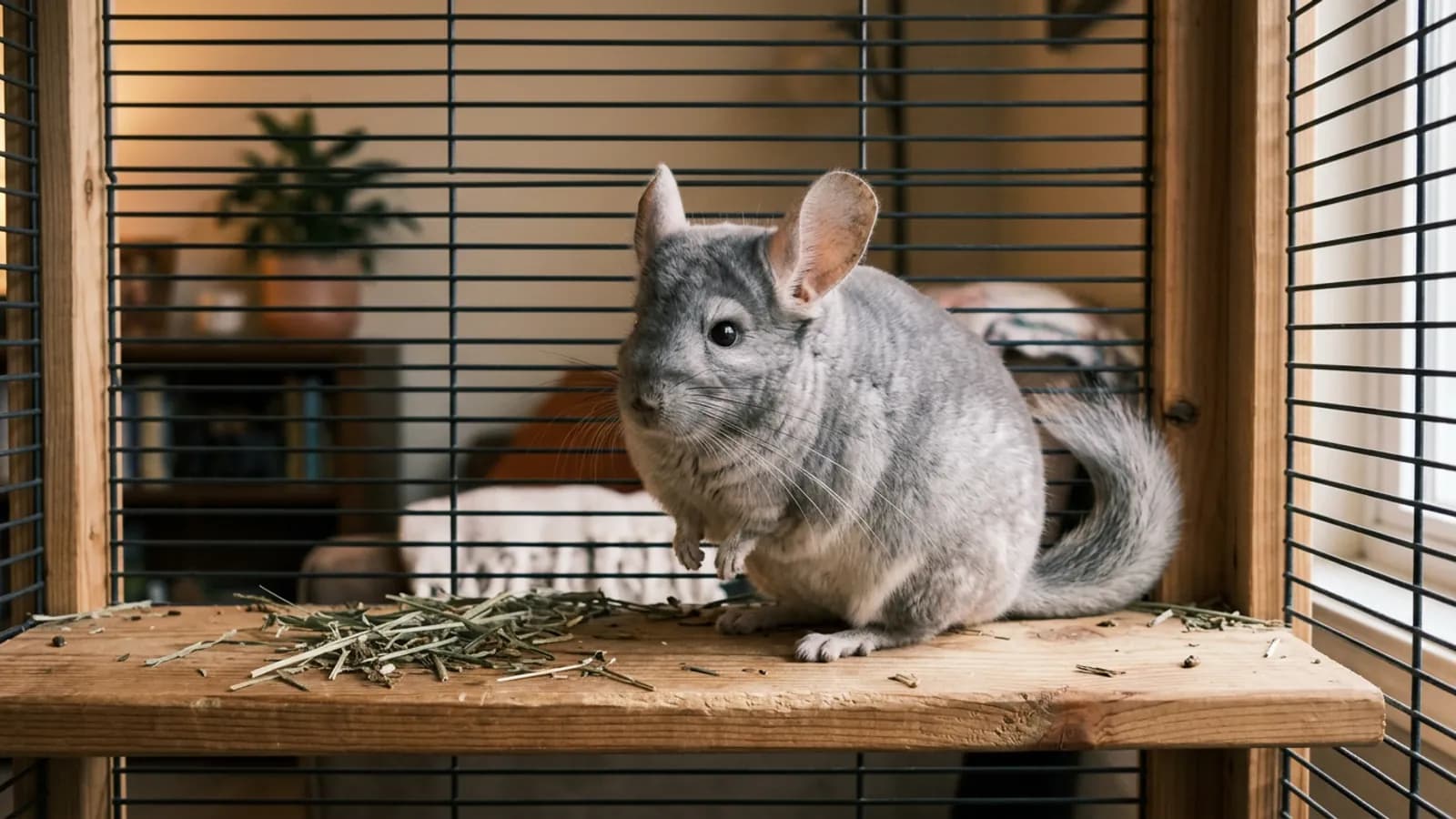
If you searched for a chinchilla rabbit and landed on a site about chinchilla rodents, you are far from the first person to make that turn, and the mix-up is not your fault. A chinchilla rabbit is a rabbit: a breed, or really a small family of breeds, named for a coat that mimics the silver-gray fur of the little Andean rodent I actually keep. It is not a cross between a rabbit and a chinchilla, and it is not a chinchilla with long ears. It is a rabbit through and through, and the only thing it ever borrowed from my animals is their color. In this piece I want to sort out what a chinchilla rabbit really is, walk through the breeds people mean when they say the words, and then be straight about where my ten years of experience actually sit, which is with the rodent and not the rabbit.
What a chinchilla rabbit actually is
A chinchilla rabbit is a domestic rabbit whose fur was bred to look like chinchilla pelt. The story starts in France in the early 1900s, where a breeder crossed and selected ordinary rabbits until he had one with a pearly, ticked gray coat, and the Standard Chinchilla rabbit was first shown around 1913. It spread quickly because the fur trade wanted pelts that passed for the real thing at a fraction of the cost. From that first breed came larger versions, and today most rabbit associations recognize three: the Standard Chinchilla, the American Chinchilla, and the Giant Chinchilla.
I want to be honest up front. I keep chinchillas, the rodents. I have not raised rabbits, and rabbit-specific medical and husbandry questions belong with people who have. What I can do is clear up the naming, because I field the confusion constantly, and I can tell you exactly how my animals differ from the rabbit that took their name.
Why a rabbit ended up with a rodent's name
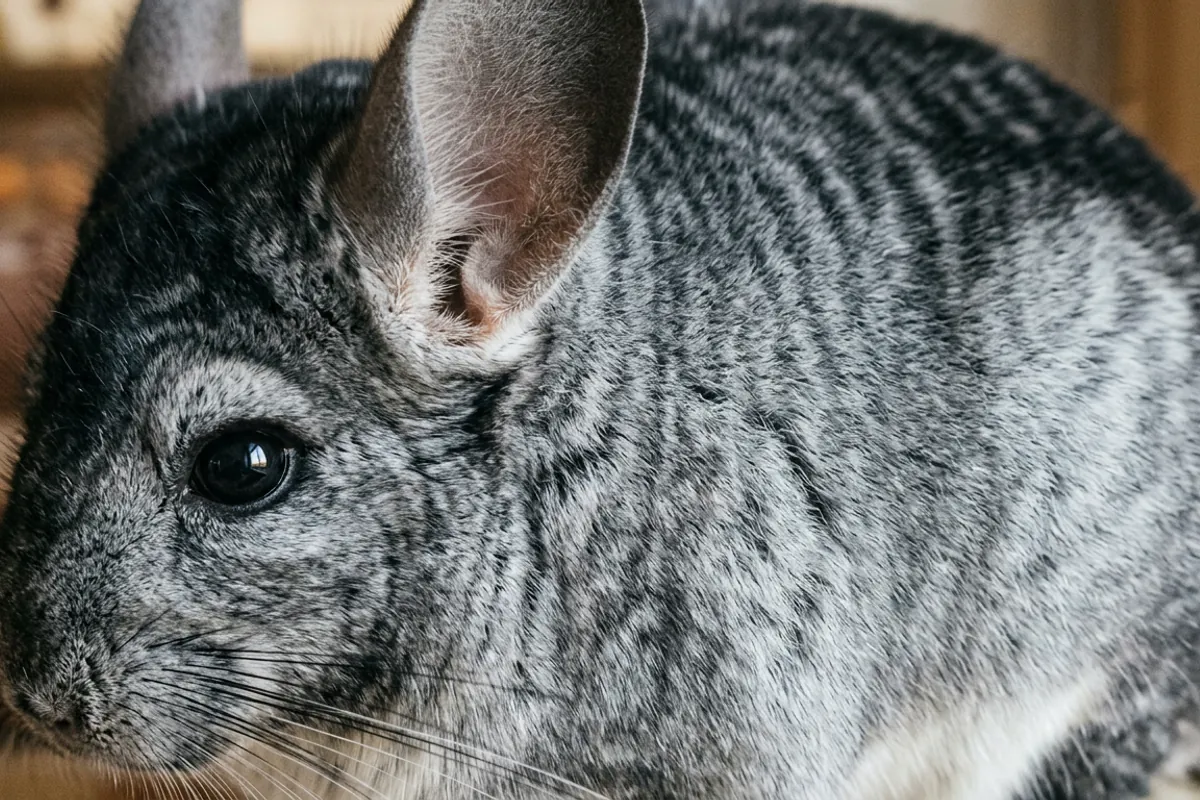
The whole thing is about color. A wild-type chinchilla's fur is not a flat gray. Each hair has a dark slate base, a pale band, and a black tip, and when thousands of those banded hairs sit together the eye reads a soft, shifting silver. Rabbit breeders noticed they could get the same optical trick in a rabbit's agouti coat by selecting for the right banding, and the result looked so much like chinchilla fur that the name simply stuck.
That same borrowing happened in other species too. There are cats called chinchillas, and the British chinchilla cats carry the name for the same reason: a coat that shimmers pale gray. None of it changes the animal underneath. A chinchilla rabbit is a rabbit, a chinchilla cat is a cat, and only one animal is the actual chinchilla. If you want to see how the color genetics work in my animals, and why the rodent comes in far more shades than the gray everyone pictures, I get into that in the piece on rare chinchilla colors.
The main chinchilla rabbit breeds
When people say chinchilla rabbit without any other word, they usually mean one of three sizes.
The Standard Chinchilla is the original and the smallest, a compact rabbit of roughly 5 to 7 pounds (about 2 to 3 kg). The American Chinchilla is the mid-size version at around 9 to 12 pounds (4 to 5.5 kg), bred up for more meat and pelt. The Giant Chinchilla is the largest, commonly 12 to 16 pounds (5.5 to 7 kg), a genuinely big rabbit developed by crossing the chinchilla coat into heavier stock. Those weight ranges come from rabbit breed standards, not from me, and individual animals vary.
The American Chinchilla has an unexpected footnote: it is now one of the rarer domestic rabbit breeds, tracked by livestock conservancies, because the fur trade that created it collapsed and took most of the breeding stock with it. That is a strange fate for an animal invented to be common. The soft, dense coat that made all of these rabbits valuable is the same feature that makes my rodents so heat-sensitive, and it is the reason both animals were hunted hard. Today the chinchilla rabbits are kept as show animals and pets as well, but they were not designed as lap pets, and a 15 pound rabbit is a serious commitment in space and handling.
Chinchilla lionhead, soviet, and angora rabbits
Because chinchilla is really a color, you will also see it bolted onto other rabbit breeds, and this is where most of the extra search terms come from.
A chinchilla lionhead rabbit is a Lionhead, the small breed with a wool mane around its face, carrying the chinchilla coat color. The soviet chinchilla rabbit, or Sovetskaya Shinshilla, is a large breed developed in the former Soviet Union in the mid-1900s, bred for meat and fur in a cold climate and heavier than the French originals. It is a rabbit that happens to wear the chinchilla name, nothing more, and I dug into that history in a separate piece on the Soviet Chinchilla. A chinchilla angora rabbit is an Angora, the long-wool breed, in chinchilla coloring, and that long coat needs regular grooming that a short-coated rabbit does not.
The pattern is always the same. Take an established rabbit breed, add the chinchilla banding to the coat, and the color name rides along. None of these is a new species, and none of them is closer to my rodent than any other rabbit. If you came looking because a listing used the word chinchilla and you were not sure what you were being sold, I wrote whole pieces on exactly that confusion: the chinchilla rabbit breed and the chinchilla rabbit mix.
Rabbit care and chinchilla care pull in opposite directions
Here is the part that actually matters if there is a live animal involved, because a rabbit and my chinchilla need almost opposite things in several places, and getting them mixed up hurts the animal.
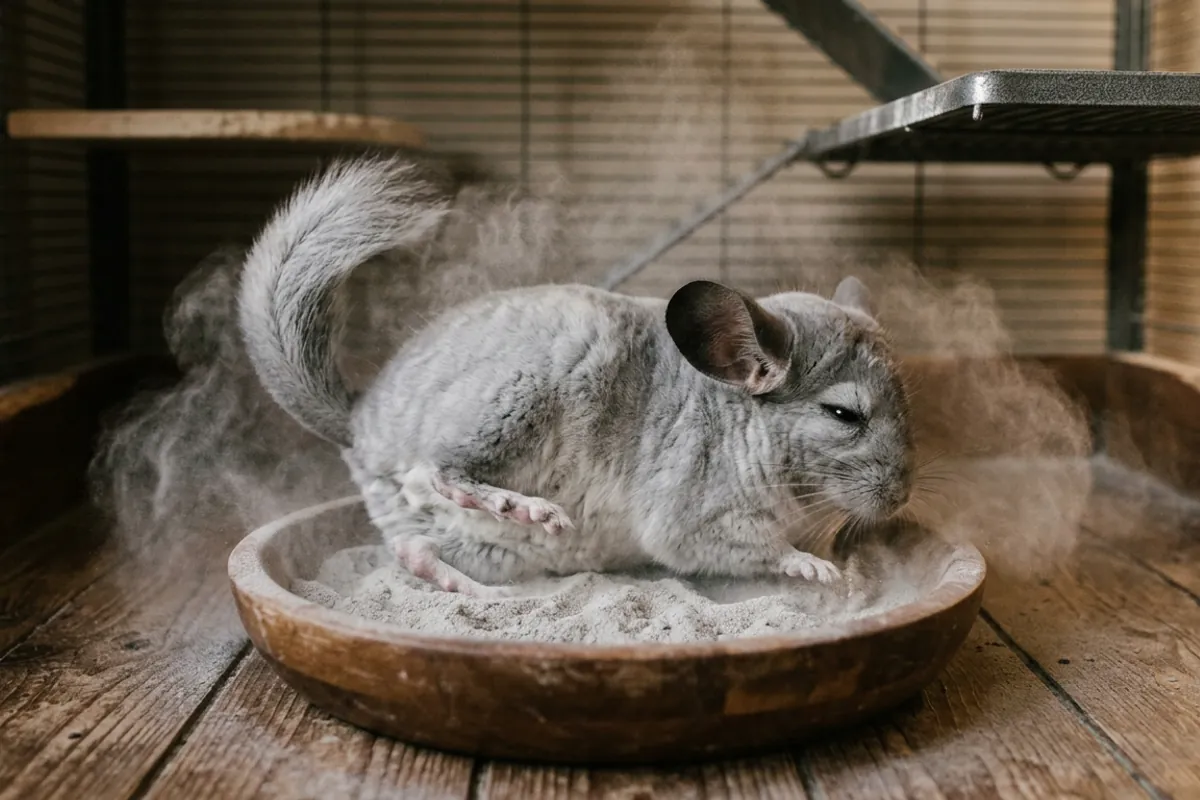
Bathing is the starkest one. A chinchilla never touches water. Their coat is so dense that water gets trapped against the skin, cannot dry, and turns into fungal trouble and worse. They clean themselves by rolling in fine dust, and that dust bath is not optional grooming, it is how the fur stays healthy. A rabbit does not take dust baths at all and grooms more like a cat. If you read rabbit advice and try to apply it to a chinchilla, or the reverse, you will get one of them badly wrong. I lay out the rodent's version in the chinchilla dust bath.
Diet splits them just as hard. Both animals live on grass hay, so that part rhymes, but a rabbit also eats fresh leafy greens and some vegetables as a normal part of its diet. A chinchilla's gut cannot handle that. Fresh, wet, or rich food causes bloat and diarrhea in my animals, and both are dangerous. Chinchillas eat unlimited dry grass hay first, with a small measured amount of plain pellets as a supplement, and that is close to the whole story. Handing a chinchilla the salad bowl you would give a rabbit is a genuine way to make it sick, so please do not assume the two share a menu just because they share a name.
Heat is where I get loudest, because it is where I nearly lost one of mine. Pebble came to me from an overheated attic, and her first summer brought a heatwave that put us at the emergency vet overnight. Chinchillas evolved high in the Andes, and that thick coat that inspired the rabbit breeders does not let heat out. The comfortable range is 60 to 70°F (15 to 21°C). Above 75°F (24°C) you are in risky territory, and 80°F (27°C) and up is an emergency, faster still when the air is humid. Rabbits handle a somewhat wider band, though they suffer in heat too. If you take one number from this whole article, make it that one, and you can sanity-check your own room with the heat danger calculator.
Housing and lifespan differ as well. My chinchillas need a tall cage they can jump and climb in, built of metal and wood with no plastic to chew and swallow, while a rabbit needs floor space to hop across. And chinchillas are long-lived for their size, often 10 to 20 years, where pet rabbits commonly live around 8 to 12. A ten-year-plus animal is not an impulse buy.
Handling separates them too. A frightened chinchilla can release a patch of fur to slip out of a grip, a defense called fur slip, and their bones are light and easy to hurt with a clumsy hold. They are crepuscular, most awake at dawn and dusk, and they do not want to be cuddled the way a calm rabbit might tolerate. I cover that release response in chinchilla fur slip.
What the chinchilla I keep actually needs
If it turns out the rodent is the animal you wanted, here is the honest short version of what keeps one healthy, and it looks nothing like rabbit keeping.
Hay is the whole meal, not a side dish. Grass hay, timothy or a similar grass, should be in front of a chinchilla all day, every day, because their teeth grow continuously and chewing long fiber is what wears the molars down. I buy it in bulk so it is always fresh and never rationed. Oxbow Western Timothy Hay, 40 oz bag As an Amazon Associate I earn from qualifying purchases. On top of that, a small measured portion of plain chinchilla pellets covers the gaps, and that is it for the daily diet. No fruit, no vegetables, no yogurt drops, no seed mixes. Treats are a rare, tiny thing.
Teeth are the reason I am so strict about chewing. My rescue Juniper came to me with dental disease, and I manage it day to day, so I have watched up close what happens when teeth do not get worn down. Alongside unlimited hay, a chinchilla needs safe wood to gnaw, and I keep a rotation of untreated apple wood and similar chews going at all times. emours apple wood chew sticks, 40 count As an Amazon Associate I earn from qualifying purchases.
The cage has to be metal and wood, tall, with solid ledges to jump between and nothing plastic in reach. Critter Nation double unit small animal cage As an Amazon Associate I earn from qualifying purchases. For exercise, if you add a wheel, it has to have a solid running surface. Wire rungs catch feet and break legs, and I will not have one in my home. 15 inch Chin Spin solid surface chinchilla wheel As an Amazon Associate I earn from qualifying purchases. The dust bath comes two or three times a week, using proper fine volcanic dust and never more often than the coat needs, since too much dries the skin. Lixit Blue Beauty chinchilla dust, 3 lb As an Amazon Associate I earn from qualifying purchases.
And because of Pebble, I treat heat as a monitored risk, not a hope. A thermometer and hygrometer on the cage tells me the real number where the animal lives, not the guess from across the room. digital thermometer and humidity gauge with remote probes As an Amazon Associate I earn from qualifying purchases. A chewable stone chilled in the freezer gives a chinchilla somewhere to shed heat on a warm afternoon while I sort out the actual cooling. Kaytee Chinchilla Chiller granite stone As an Amazon Associate I earn from qualifying purchases. None of this replaces air conditioning in a real heatwave, and none of it replaces an exotics vet when something is wrong.
Which animal you actually meant
So, which one were you looking for. If you meant the rabbit, whichever coat it wears, your next stop is rabbit breeders, rabbit rescues, and a rabbit-savvy vet, because I keep the rodent and I would be guessing past that line. If you meant my animal, start with the basics of chinchilla care and, when you are ready, how to buy a chinchilla from someone honest rather than an impulse cage at a store.
Whichever animal you meant, the color in the name is the least important thing about it. A chinchilla rabbit is not a small chinchilla, and a chinchilla is not a short-eared rabbit, and the fur that ties their names together tells you nothing about how to keep either one alive. Learn the animal in front of you, feed it what its gut is built for, watch the temperature, and when anything medical comes up, call a vet who treats that species. That is the part the name will never tell you.