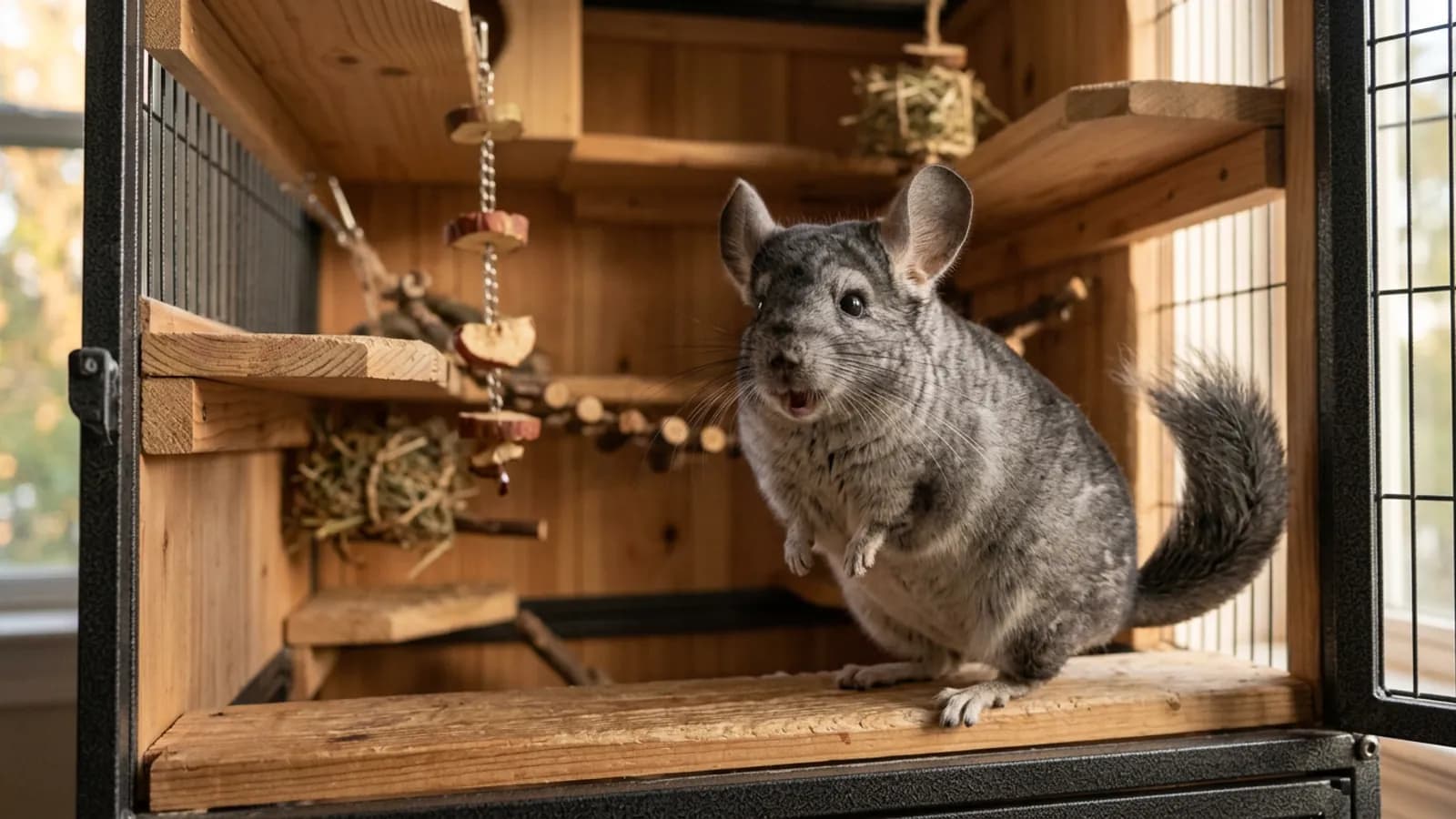
The first time Pebble let out a string of sharp barks in the dark, I was out of bed before I was fully awake, certain something was wrong. That is the thing about chinchilla noises: they land somewhere between a squeaky dog toy and a smoke alarm, and until you learn them, every one of them sounds like an emergency. Ten years of keeping these animals has taught me that almost none of them are random. A chinchilla talks, in its own small vocabulary, and once you can tell a contented murmur from an alarm bark from the sound that means call the vet, you stop panicking and start actually reading the animal in front of you. This is my honest field guide to what those sounds mean.
Why a chinchilla is so vocal in the first place
Chinchillas evolved high in the mountains of South America, living in colonies among the rocks, and a social animal that lives in a group needs a way to talk across distance and in the dark. Sound does that job. Even alone in your living room, a pet chinchilla still runs the whole ancestral script, which is worth remembering before you decide a noise is a fault to fix. If you want the fuller picture of the wild animal, I go into it in the piece on what a chinchilla in the wild is really like.
Two facts about that wild animal explain most of what you hear at home. First, they are prey. A prey animal is wired to raise the alarm fast and to hide weakness, which is exactly why an alarm call is loud and unmistakable while a genuinely sick chinchilla often goes quiet and small. Second, they are crepuscular, most active at dawn, at dusk, and through the night. That is why the racket tends to start right when you are trying to sleep, and it is normal, not a defect. Sound never travels alone, either; it rides alongside posture and movement, and I cover how those fit together in what chinchilla behavior is really telling you.
The soft, contented sounds
Most of what a settled chinchilla says is quiet, and it is easy to miss until you know to listen for it. There is a soft, rhythmic squeak some keepers call a contact call, a gentle "I am here, where are you" murmur that chinchillas trade with each other and sometimes with you. Pebble makes a low, almost cooing sound when she is dozing in her hammock and I walk past, and it is the closest thing she has to a hello. A mother uses similar soft calls with her kits, so the sound is baked deep into the species.
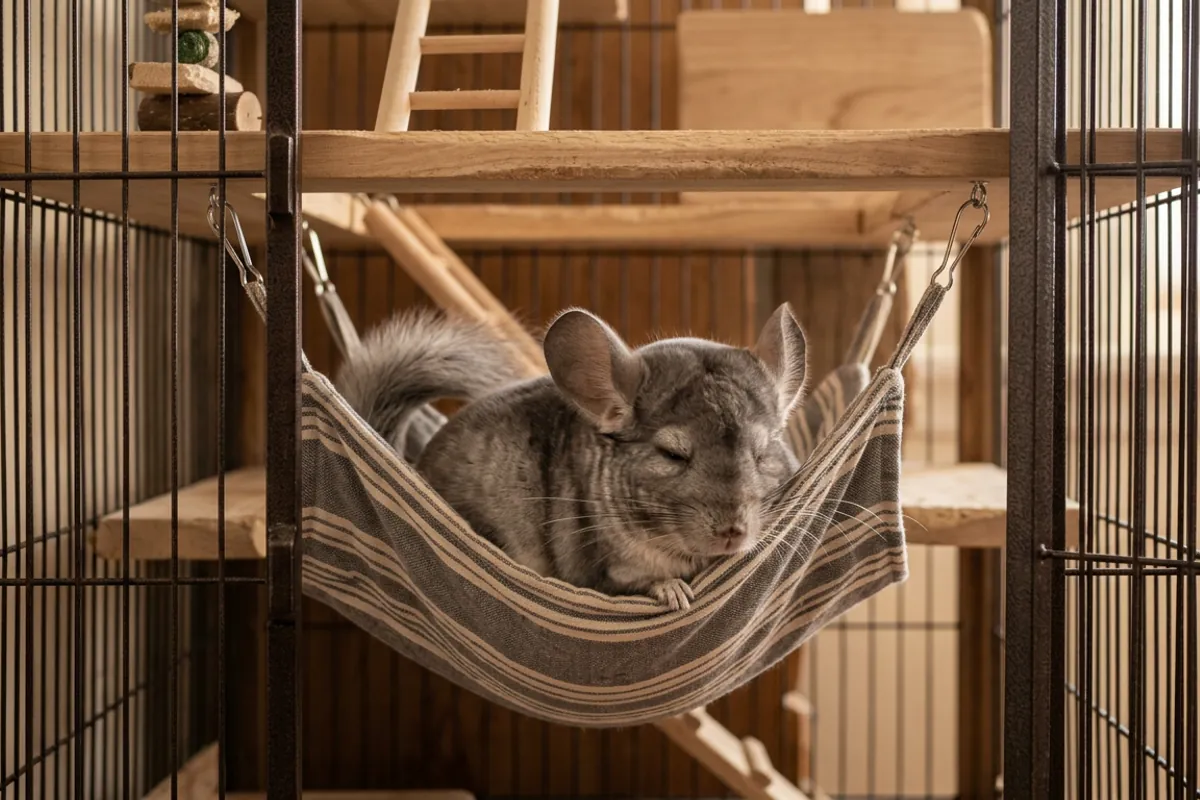
There is also a soft teeth grinding, sometimes called bruxing, that a relaxed chinchilla makes when it is calm and content, a little like a cat's purr in what it signals. It is quiet, slow, and it comes packaged with loose, easy body language: eyes half closed, no tension in the body, no rearing up. This is the sound you want to be hearing. The catch is that teeth noises come in more than one flavour, and this contented grind is easy to confuse with a warning chatter, which I will get to in a moment. Context settles it every time. A soft grind from a sleepy chinchilla melting into a ledge is contentment; the same rough sound from a stiff, upright chinchilla with its weight back on its haunches is not contentment at all.
The alarm bark
The bark is the one that gets you out of bed. It is a sharp single note, repeated at fairly even intervals, and it can carry on for a surprisingly long time. A chinchilla barks when it is startled or when it has decided something in the environment is a threat: a strange noise, a shadow moving across the ceiling, a new smell, a cat at the window, and sometimes nothing you will ever be able to identify.
The bark is a broadcast, not a private grumble. In a colony it tells everyone to freeze and pay attention, and at home it means your chinchilla's threat alarm has tripped. The right response is to find and remove the trigger rather than to coo the animal out of the sound, because reassurance does not tell it the danger has passed. Check the obvious first: a household pet that has wandered near the cage, a window open onto a noisy street, a new object looming where there was empty space yesterday. Some chinchillas are simply more anxious and bark more readily than others. Pebble will bark at a delivery van; Juniper barely lifts her head at anything. Neither of them is wrong. What does matter is a change: if a normally quiet chinchilla starts barking constantly, treat it as a sign that something in the setup is stressing it, and go hunting for what.
The angry chatter, and the spit
There is a whole set of sounds that mean back off, and they are worth knowing because ignoring them gets people bitten. The clearest is a rapid teeth chattering, sharper and faster than the sleepy contentment grind, usually with the body upright and tense. Some keepers call the harsher version kacking. It often arrives with a warning posture: standing tall, sometimes barking at the same time, and in the strongest case spraying a jet of urine or releasing a puff of fur, a stress reaction called fur slip.
This language shows up most between chinchillas that have not been properly introduced, or during a bonding attempt that is going badly and needs to be slowed right down. It can also be aimed at you, if a chinchilla is frightened or has learned that hands reaching in mean something unpleasant. The message is not aggression for its own sake. It is fear, or a boundary being drawn, and the answer is to give space, move slowly, and never force handling straight through it. A chinchilla that chatters and sprays and is ignored is a chinchilla learning that it has to escalate to a bite next time to be heard. I wrote more about how that escalation happens, and how to walk it back, in what chinchilla biting really means.
The scream you hope you never hear
Every so often a chinchilla lets out a genuine scream, a loud, high, drawn-out shriek that sounds nothing like the everyday chatter. It is unmistakable, and it is upsetting on purpose. A scream means real distress: pain, terror, a fight that has turned physical, or an animal that is trapped or badly frightened.
This is never a noise to wait out. Go and look the second you hear it. Check that a foot or a leg is not caught in a gap, that two chinchillas are not locked in a fight, that nothing has fallen or shifted. If you find an injury, or a chinchilla that screamed and is now sitting hunched, still, and withdrawn, that is a vet call and not a wait-and-see. Prey animals do not scream lightly, because in the wild a scream draws predators. When one does scream, believe it.
The noises that mean call the vet
Some sounds are medical, and because chinchillas are so good at masking illness, the ones you can actually hear carry real weight. The most important category is breathing. A healthy chinchilla breathes silently. If you hear wheezing, clicking, snuffling, whistling, or visibly laboured breathing, or your chinchilla is sneezing over and over and sounds congested, that points at a respiratory problem, and respiratory infections in these animals can move fast and turn serious. Do not sit on it overnight to see if it clears. The time to sort this out is before it happens, which is why I keep the number for an exotics vet found before I ever needed one.
The second medical sound is a dental one, and I pay close attention here because my Juniper came to me with dental disease that I manage day to day. Loud, frequent, or effortful teeth grinding that comes bundled with drooling, a wet chin, weight loss, dropped food, or a chinchilla that clearly wants to eat but cannot, can mean the teeth have overgrown or gone crooked. That is malocclusion, and it needs a vet with the right tools, not a home remedy. The best prevention I know is unlimited grass hay and a real variety of hard chews so the teeth wear down the way they are meant to. I keep a rotation of untreated apple wood on hand for exactly this reason. emours apple wood chew sticks, 40 count As an Amazon Associate I earn from qualifying purchases. None of that reverses established dental disease, but it is the daily work that keeps healthy teeth healthy, and there is more in the guide to chinchilla teeth and when to see a vet.
Heat earns its own line here, because it is the scare that made me the keeper I am. In real heat distress a chinchilla often does not make a dramatic sound at all. It goes still, breathes fast and shallow, sometimes with its mouth open, and lies stretched flat trying to shed warmth. Open-mouth or laboured breathing in a warm room is an emergency, not a noise to interpret. Chinchillas are comfortable at 60 to 70°F (15 to 21°C); above 75°F (24°C) is risky, and 80°F (27°C) and up is dangerous, faster still in humid air. I keep a thermometer and hygrometer clipped to the cage so I am reading numbers instead of guessing. digital thermometer and humidity gauge with remote probes As an Amazon Associate I earn from qualifying purchases. If you want the full list of what heat trouble looks like, it is in chinchilla heat stroke warning signs.
Sounds that are not your chinchilla's voice
Not every noise coming out of the cage is a vocalization, and it helps to sort the voice from the furniture. Steady chewing through the night is a good sound, not a bad one. It means the teeth are being worn down the way they should be, and a chinchilla that suddenly goes quiet at the chews worries me far more than one that gnaws all night. A hollow thump is usually just a chinchilla launching off a high ledge and landing hard, though a repeated, deliberate foot stomp can be a small protest or a startle reflex. The soft rumble and patter of a chinchilla running is ordinary night traffic, especially on the right kind of wheel. A safe wheel with a solid running surface, never open wire that a foot or tail can drop through, makes that gentle running hum rather than a rattling clatter. 15 inch Chin Spin solid surface chinchilla wheel As an Amazon Associate I earn from qualifying purchases.
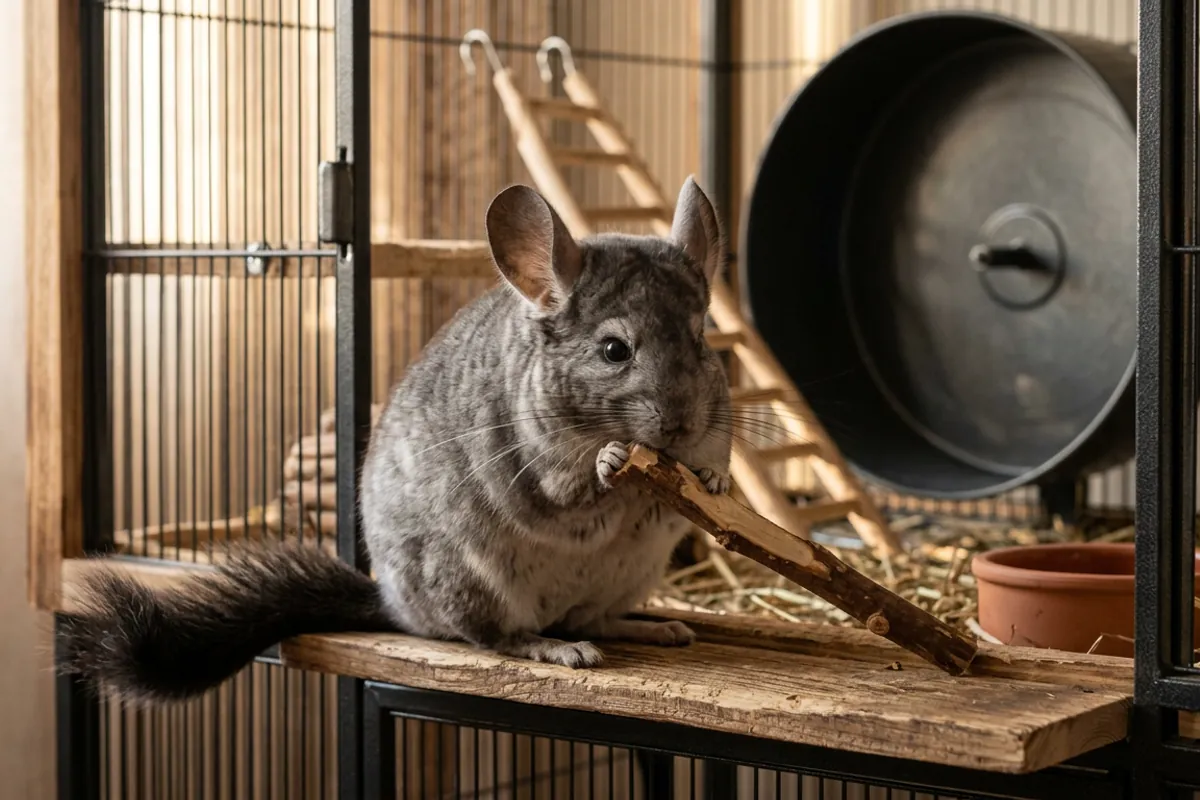
Then there are the sleep sounds. Chinchillas twitch, chirp, and let out tiny squeaks while they sleep, the same way a dog paddles and yips through a dream. A little chirp from a napping chinchilla that is otherwise loose and relaxed is nothing to lose sleep over yourself. As with every sound in this guide, it only means something when you read it together with the body doing the making and the situation around it.
Learning your own chinchilla's vocabulary
No two chinchillas talk exactly alike. Pebble is chatty and reactive; Juniper is quiet and always has been, so when she does make a sound I read it as more meaningful precisely because she says so little. That is the real skill here, and it is not memorizing a fixed dictionary. It is knowing what normal sounds like for your particular animal, so that a genuinely new noise stands out against the background you already know by heart.
Keep the map simple. Contented murmurs, a soft sleepy grind, and steady chewing are the everyday soundtrack of a settled chinchilla, and you can relax into them. An alarm bark means go find the trigger. A sharp chatter over a tense, upright body means give it space and stop pushing. A scream means go and look right now. And any breathing you can hear, any grinding paired with drooling or weight loss, and any stillness with fast breathing in a warm room, all mean the phone and the exotics vet rather than another night of hoping. Sound is one of the clearest windows a prey animal will ever hand you into how it is really doing. Once you learn to listen properly, your chinchilla is telling you almost everything you need to know. If you want a companion walk through the same calls from a slightly different angle, I put one together on chinchilla sounds and what your chinchilla is telling you.