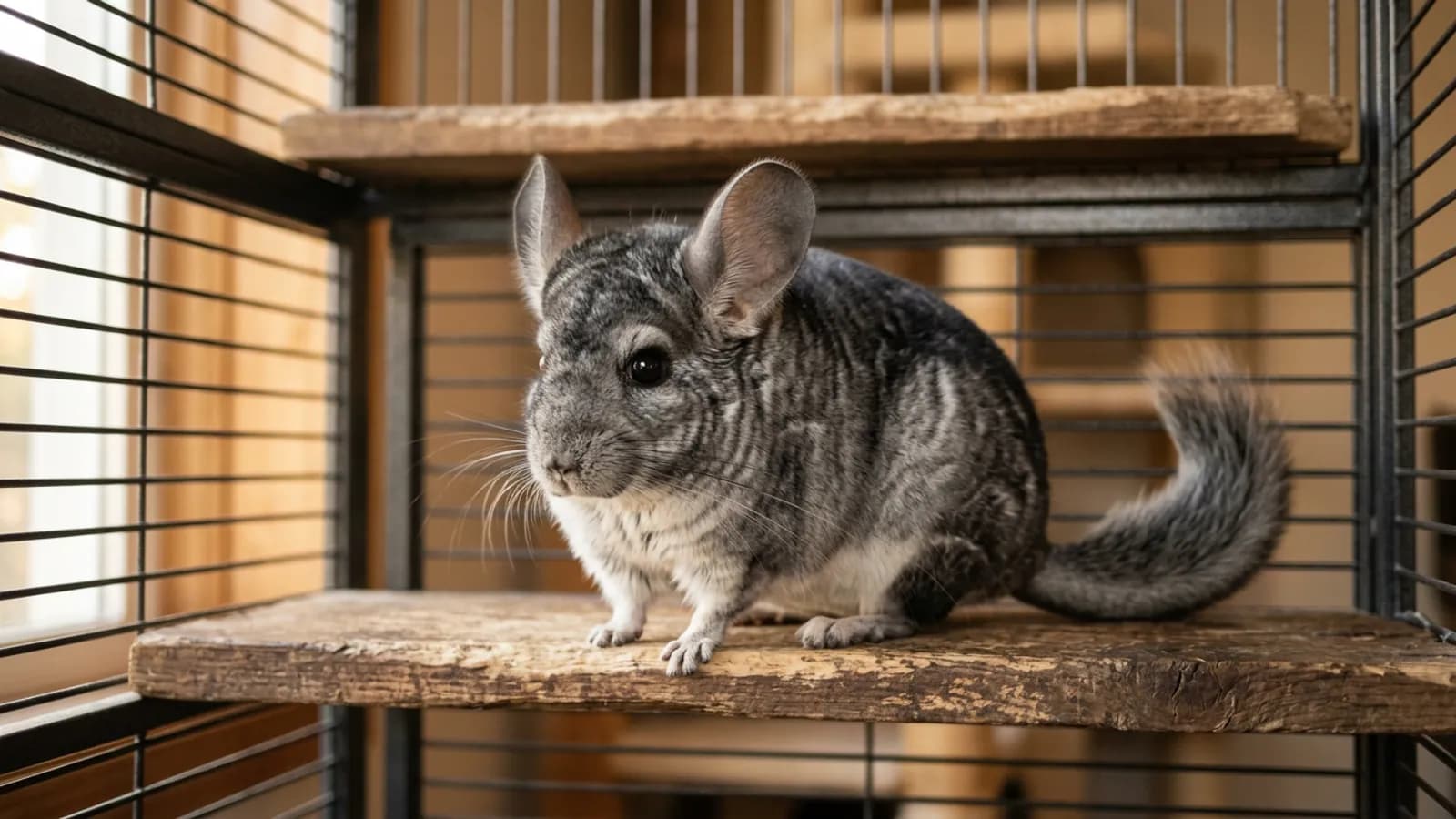
If you searched for the american chinchilla rabbit expecting the small, dense-furred rodent I keep, the first thing to know is that it is a rabbit. A big one, in fact. It carries the chinchilla name because an early breeder looked at its coat and saw the same silver-gray, salt-and-pepper wash that a South American chinchilla wears, not because the two animals share a family tree. I have kept chinchillas for about ten years and I write about them here every week, so let me be honest up front: I am an experienced chinchilla keeper, not a rabbit keeper. What I can do is untangle the confusion the shared name causes, tell you what this breed actually is, and be straight about the few places where my animal and this rabbit overlap and the many where they do not.
The name is borrowed from a coat, not a bloodline
The chinchilla rodent's fur is famous for a reason. Each hair is banded, dark at the base, a pale band through the middle, and dark again at the tip, and the coat is packed so densely that it reads as a soft silver-gray with a salt-and-pepper shimmer. Rabbit breeders in the early twentieth century managed to reproduce that banded agouti pattern in a rabbit, and the likeness was close enough that the name stuck. That is the entire reason the word chinchilla sits inside american chinchilla rabbit. It describes the coat, and only the coat.
The rabbit is a lagomorph. My chinchillas are rodents from the high, dry Andes of South America, and the two lineages parted so long ago that a shared coat color is the only thing connecting them. The color itself changes nothing about how either animal lives, eats, or needs to be housed, which is the same point I keep making about coat names in what a chinchilla rabbit really is. A borrowed color is not a borrowed biology, and if you want the plainest version of the rabbit-versus-rodent mix-up, I also wrote bunny chinchilla for exactly that.
Where the American chinchilla rabbit came from
The story starts in France. A breeder there developed a rabbit with that chinchilla-like coat, and it was first shown to the public around 1913. Within a few years the breed crossed the Atlantic, reaching the United States near 1919, where it caught on quickly for both its fur and its meat. That fur trade is the whole reason the breed exists in the numbers it once did, because a chinchilla-patterned pelt from an animal you could raise in a hutch was a cheap stand-in for the real thing.
American breeders wanted something larger than the imported original. They selected for size over several generations, and the heavier animal they produced was recognized in the 1920s as a breed in its own right, the American Chinchilla. That is the animal most people mean when they type american standard chinchilla rabbit into a search box, though the phrasing mashes two separate breeds together. The Standard Chinchilla is the original, smaller rabbit. The American Chinchilla is the larger version bred here. There is also a Giant Chinchilla, larger still. Three distinct rabbit breeds, one shared coat, and a lot of understandable confusion between them. If the tangle of chinchilla-named rabbits interests you, I go through the wider family in the chinchilla rabbit breed and the oddly named Soviet Chinchilla, which is also a rabbit and not my animal at all.
How big it gets, and what the breed standard asks for
An American Chinchilla is a substantial rabbit. Most weigh somewhere between 9 and 12 pounds, with does usually running a little heavier than bucks. That puts it well above the Standard Chinchilla, which sits closer to 5 to 7 pounds, and below the Giant Chinchilla, which can reach 12 to 16 pounds. If you are picturing something the size of my chinchillas, adjust upward hard: a full-grown chinchilla rodent is well under two pounds, fur and all.
The body is what rabbit people call a commercial type, deep and meaty through the shoulders and hindquarters, because the breed was shaped to be productive rather than dainty. The coat is where the name earns its keep. Up close you can see the same banded structure the rodent has, slate undercolor at the base, a lighter band, then dark ticking on top, blending into that recognizable salt-and-pepper gray. It is a genuinely handsome rabbit, and the fur is dense and soft.
But it is worth keeping the two coats in proportion. A rabbit's fur is nowhere near the extreme density of a chinchilla's, which runs to fifty or more hairs from a single follicle and is the densest fur of any land mammal. That density is exactly why my animal cannot get wet and why it dust-bathes instead, a point I will come back to. The rabbit borrowed the look, not the underlying machinery of the coat.
One of the rarer rabbits you will ever meet
Here is something that surprises people. The American Chinchilla is genuinely uncommon now. It was hugely popular in the 1920s, during the boom in rabbit fur and rabbit meat, and then it faded as that market collapsed over the following decades. Conservation groups that track heritage livestock now list it among the rarer domestic rabbit breeds, the kind kept alive mostly by a small circle of dedicated breeders rather than by any real commercial demand.
I say this plainly because it matters if you are thinking of getting one. You are not going to find an American Chinchilla in the average pet shop the way you might stumble onto a chinchilla rodent, and honestly, neither animal belongs in a pet shop bought on impulse, which is the whole argument of how to buy a pet chinchilla without regretting it. A rare breed means fewer breeders, longer waits, and a quiet responsibility that comes with keeping a bloodline going. That is a different commitment from picking up a companion rabbit at the nearest shelter, and it is worth going in with your eyes open rather than being charmed by a photo of the coat.
Where my chinchilla and this rabbit genuinely overlap
For all the differences, there are real similarities, and they come down to the gut and the teeth.
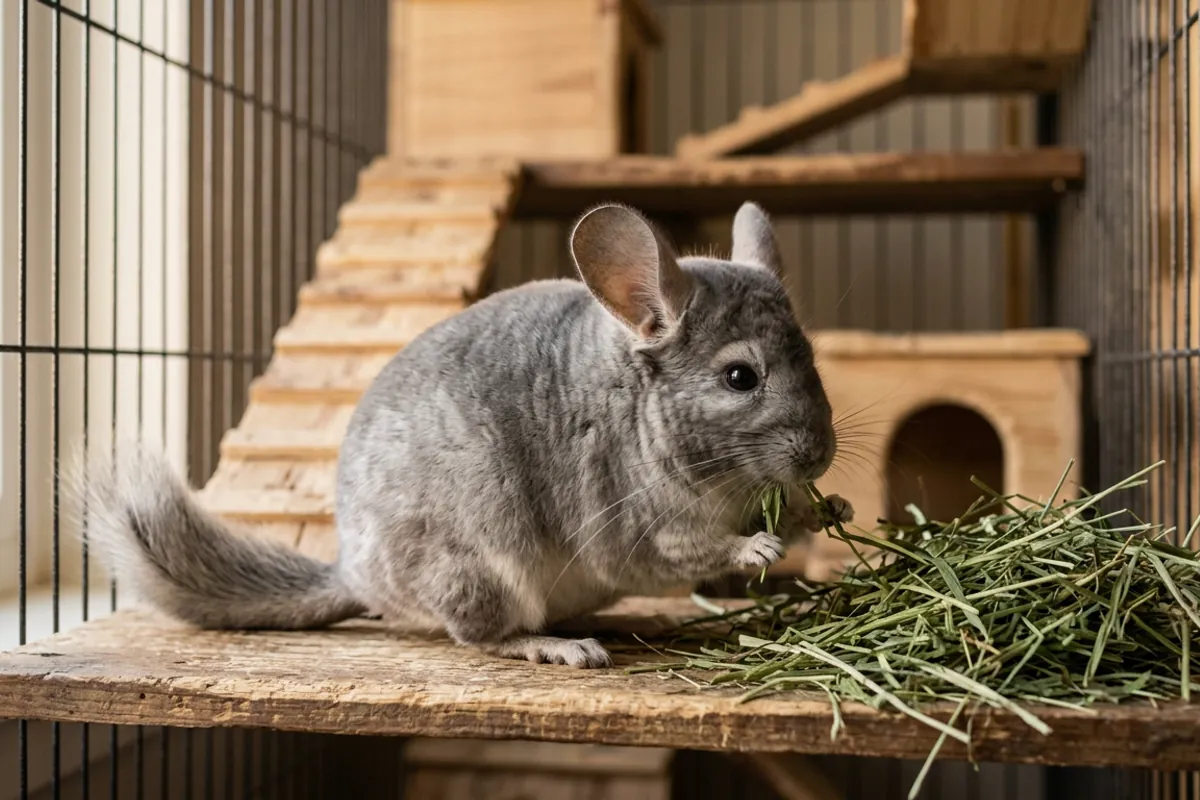
Both animals are built around fiber. A rabbit and a chinchilla both run on grass hay as the foundation of the diet, eaten in effectively unlimited amounts, because both have digestive systems that need a constant flow of long fiber to keep moving. For my chinchillas that means unlimited timothy or other grass hay in front of them at all hours. Oxbow Western Timothy Hay, 40 oz bag As an Amazon Associate I earn from qualifying purchases. A good grass hay does the same heavy lifting for a rabbit. I go deep on why in timothy hay for chinchillas, and the fiber-first principle carries straight across to the rabbit even if the rest of the menu does not.
Both animals also have teeth that never stop growing, and both can develop painful dental disease when those teeth are not worn down properly by chewing. One of my own chinchillas, Juniper, came to me as a neglected rescue with dental problems I manage day to day, so I do not take this lightly for any long-toothed animal. If a rabbit or a chinchilla stops eating, drools, or drops weight, that is an exotics vet visit, not a wait-and-see. I wrote about the chinchilla side of it in spotting malocclusion before it turns serious, and the warning signs read across to rabbits well enough to act on.
And both feel heat badly. My chinchillas are the extreme case. Their comfort zone is a narrow 60 to 70°F (15 to 21°C), they start to struggle above 75°F (24°C), and 80°F (27°C) is a genuine emergency, faster in humid air. Rabbits tolerate a somewhat wider band than that, but make no mistake, heat stroke kills rabbits too, and a hot, humid day is dangerous for both animals. A cheap thermometer on the cage is the simplest insurance either one can have. digital thermometer and humidity gauge with remote probes As an Amazon Associate I earn from qualifying purchases.
Where the care splits, and why it matters
Now the differences, because getting these wrong is where animals get hurt.
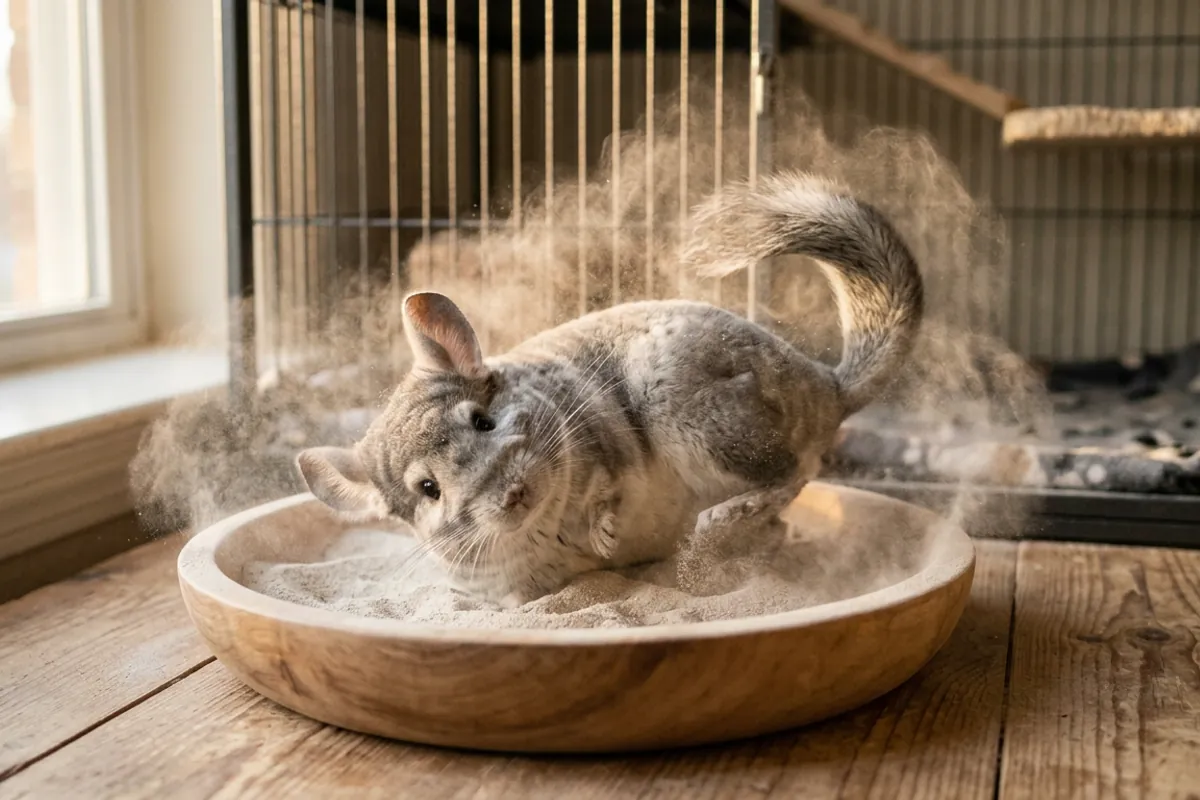
Start with the bath. Chinchillas do not bathe in water, ever. Their fur is so dense that it cannot dry properly once it is soaked, and a wet chinchilla is at real risk of fungal skin problems and chilling. Instead they roll in fine volcanic pumice dust, which lifts oil and moisture out of the coat. Lixit Blue Beauty chinchilla dust, 3 lb As an Amazon Associate I earn from qualifying purchases. I cover the how and how-often in what chinchilla dust is. A rabbit needs none of this. Rabbits groom themselves, they do not take dust baths, and as a rule you should not be bathing a rabbit in water either, since it stresses them badly. So the dust bath is a chinchilla thing only, and buying dust for a rabbit is money and confusion wasted.
Diet is the other big split. Both eat hay, yes, but a rabbit's diet includes fresh leafy greens and a range of vegetables as a normal, healthy part of the menu. A chinchilla's gut is far more delicate about fresh, wet food, and the safe chinchilla diet is dry: unlimited hay, a measured amount of plain pellets, and very sparing dry treats. Feed a chinchilla the salad a rabbit thrives on and you can trigger serious digestive upset. Do not let the shared hay fool you into thinking the two menus are interchangeable. I lay out the chinchilla side in the chinchilla diet guide.
Housing overlaps in spirit and differs in detail. Both do best in roomy enclosures, but a chinchilla needs a tall cage with vertical space to climb and leap, built from metal and wood with no plastic to gnaw and swallow. A large ground-dwelling rabbit is built for floor space more than height. Same word, cage, two quite different shapes, and one more reason not to assume the care transfers just because the coat name does.
If you are deciding between a rabbit and a chinchilla
People sometimes land on this breed while trying to choose a pet, so let me be useful rather than coy. If you specifically want an American Chinchilla rabbit, you are looking for a rare heritage rabbit, and your best path is a breed-focused rabbit breeder or a rabbit rescue, plus a vet who actually sees rabbits. I am not the person to teach you rabbit husbandry in depth, and I would rather say that than pretend otherwise.
If what actually drew you in was the soft gray coat and you are open to either animal, the honest differences are these. Chinchillas are long-lived, often into their teens, largely nocturnal, delicate about heat and about water, and they interact more on their own terms than a cuddly rabbit might. They are also dust-bathers and dedicated chewers who need a tall, chew-proof metal cage. A rabbit is heavier, more of a floor animal, can share more of your daytime hours, and eats a broader diet. Neither is low-maintenance, and neither is a good impulse buy. If the long commitment is the part you want to weigh, how long chinchillas really live is the honest number for my side of it.
Whichever way you go, the two rules that carry across both animals are simple. Keep unlimited grass hay in front of them, and keep them cool. Beyond that, learn the specific animal you are bringing home, because a shared coat name is the one thing that tells you nothing at all about how to care for them. If you want the full chinchilla version before you decide, start with my chinchilla care guide.