Search "chinchilla cats" and you land in two completely different places at once. One is a cat: a Persian or a British Shorthair whose pale coat is tipped with a darker colour, a look breeders have called chinchilla for well over a century. The other is the mix-up that fills my inbox, someone hoping a chinchilla cat is a cross between the fluffy rodent I keep and a house cat, or wondering whether the two animals can happily share a sofa. I keep the rodent, not the cat, so let me untangle the name first, and then get to the part that actually keeps an animal alive: a cat is a predator and a chinchilla is prey, and that fact rewrites everything about housing them under one roof.
Where the cat got the name
The word chinchilla on a cat describes a coat, not a species. In a chinchilla-coated cat, each hair is pale for most of its length and carries colour only on the very tip. That tipping catches the light and gives the coat a faint shimmer, and it is a deliberate echo of the wild chinchilla's fur, where each hair runs dark slate at the base, then a pale band, then a coloured tip. Breeders liked the effect, borrowed the rodent's name, and it stuck.
You will see it described in a few ways. Silver chinchilla is the classic: a white undercoat with black tipping, so the cat looks like it has been dusted with soot. Golden chinchilla swaps that pale undercoat for a warm apricot. There is also a difference of degree that trips people up, between chinchilla tipping, which is very light and only on the ends, and shaded, which carries the colour further down the hair. If the cat side is what brought you here, I have two pages that go deeper than I will: British chinchilla cats and the little rodent that lent them the name and the truth behind chinchilla persian cats for sale.
A chinchilla cat is not a hybrid
Let me kill the most common idea straight off. There is no cross between a cat and a chinchilla. They are not remotely related. A cat is a carnivore; a chinchilla is a rodent from the Andes. You could no more breed the two than you could cross a cat with a rabbit, and, tellingly, the exact same naming confusion follows the rabbit world around, which is why I have written about the chinchilla rabbit breed and the Soviet Chinchilla, both of them rabbits that borrowed the name for the same fur reason.
So when a listing or a breeder implies a chinchilla cat is part rodent, or something exotic and half-wild, one of two things is true. Either they do not understand their own animal, or they are counting on you not understanding yours. Either way it tells you something useful about whether to buy from them. A chinchilla cat is a domestic cat with a particular coat colour, full stop, and it comes with all the ordinary cat needs and none of a chinchilla's.
The animal I actually keep
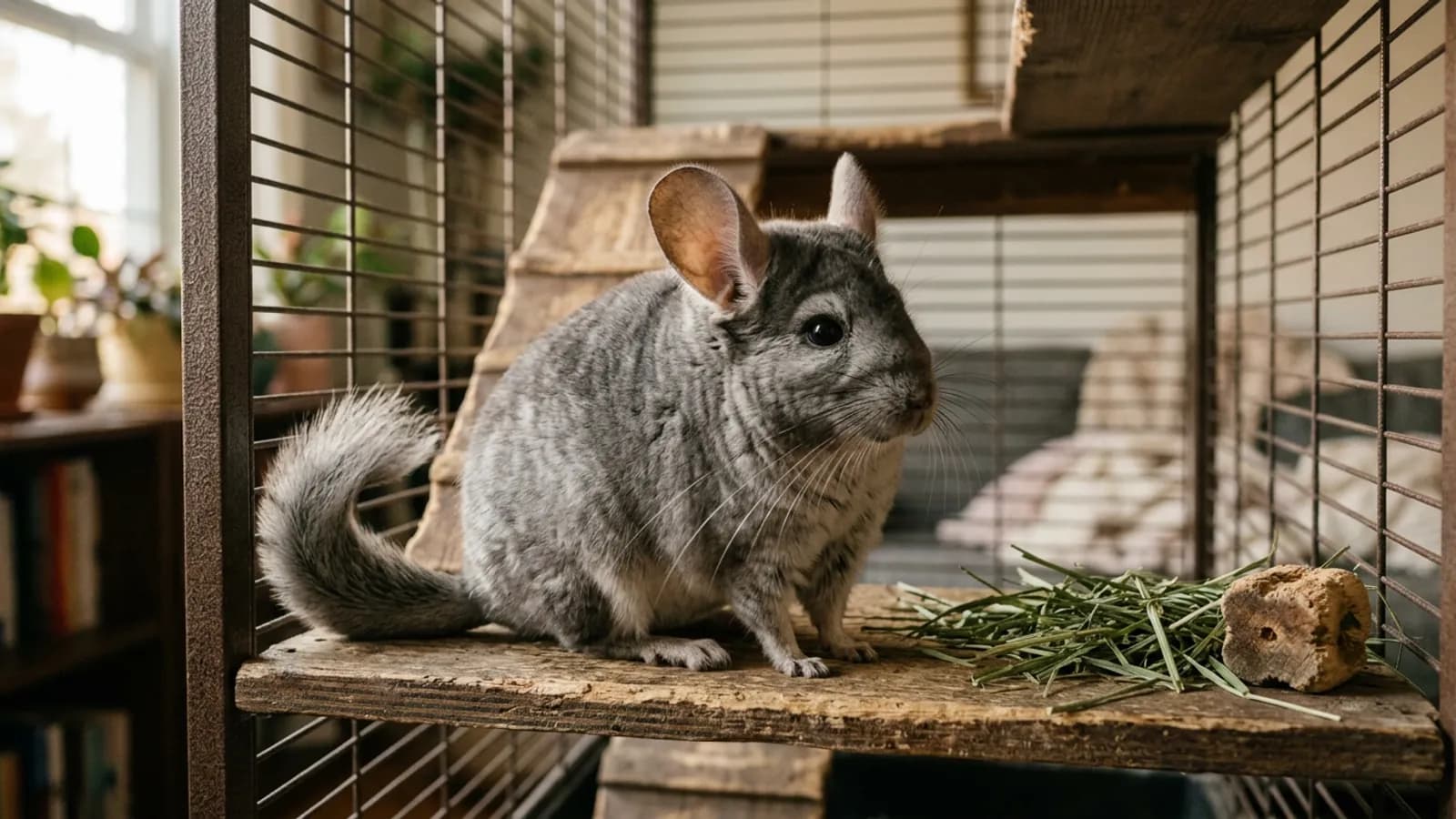
The chinchilla I keep is a small, crepuscular rodent from the high, dry mountains of South America, built for cold nights and thin air. Two of mine, Pebble and Juniper, are the reason this whole site exists. They weigh about a pound each, can live 10 to 20 years with good care, and wear the densest fur of any land mammal, roughly fifty to eighty hairs sprouting from a single follicle where you or I grow one.
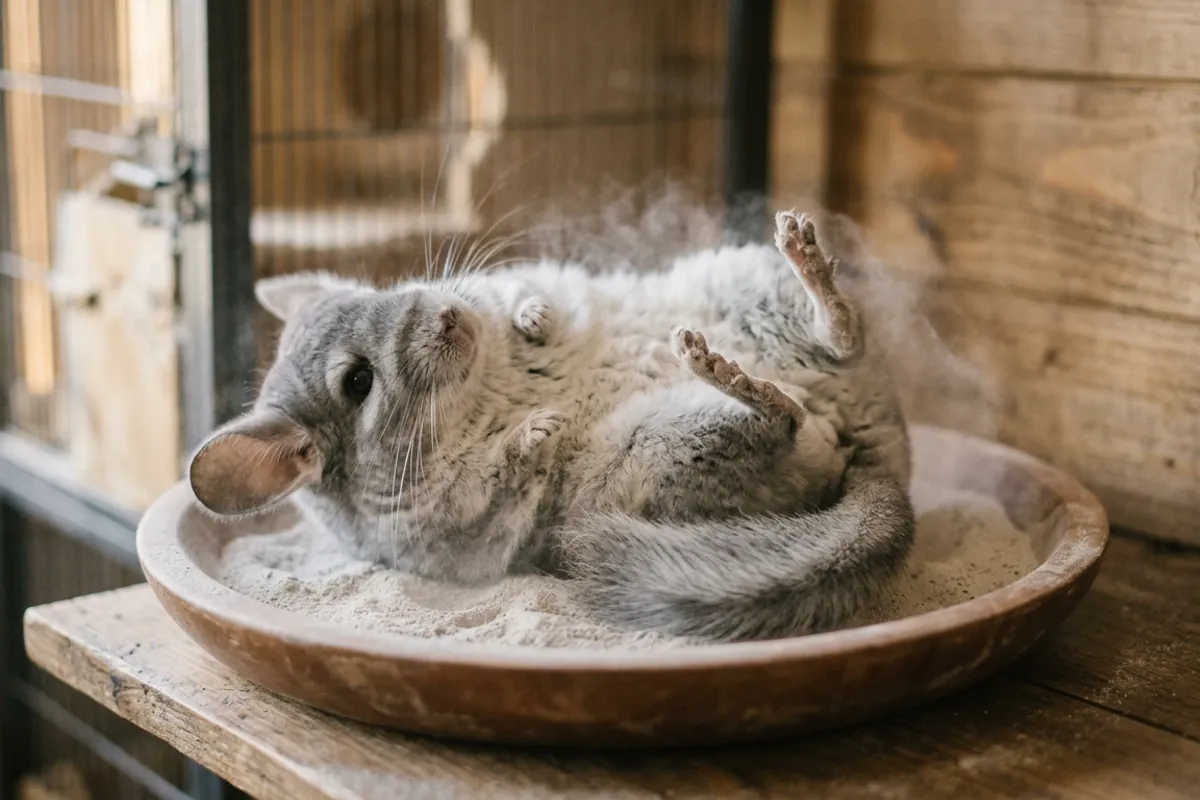
That fur is the whole story of their care, and it is the opposite of low-maintenance. It cannot get wet, because water soaks in and cannot dry against the skin, so a chinchilla cleans itself by rolling in fine dust rather than in a bath. And it traps so much body heat that a room that feels pleasant to you can be deadly to them. If you want the full picture of the animal before anything else, start with what a chinchilla really is. Almost nothing on that list overlaps with what a cat needs, which is the first real hint that keeping both is harder than it sounds.
Can cats and chinchillas share a home
Here is the blunt version. Cats and chinchillas can live in the same house, but they should never share a room unsupervised, and to my mind they should never have direct contact at all. A gentle, elderly, indoor house cat is still a predator, and the instinct does not switch off because the cat is well fed.
Three reasons, in the order of how fast they can kill.
First, the bite and the scratch. A cat's mouth and claws carry bacteria, Pasteurella among them, that a small prey animal's body is not equipped to fight. A scratch or a nip that looks like nothing can turn into a fatal infection within a day or two. A chinchilla is also small enough that a single swat can break bones or cause internal damage you will never see from the outside. If a cat ever makes contact with your chinchilla, that is an emergency exotics vet visit right then, not a wait-and-see.
Second, stress. Chinchillas are prey animals wired to read a predator's smell, sight, and sound as a threat, so a cat prowling around the outside of the cage, even one that never gets a paw in, holds a chinchilla in a low, constant state of alarm. Chronic stress kills appetite, and a chinchilla that stops eating is a gut heading for trouble fast. You will not always catch this as it happens. It shows up as a quiet, hunched animal that has gone off its hay.
Third, the cage. A determined cat can hook a paw through bars, work a poorly latched door open, or simply frighten a chinchilla into hurting itself hurling around the cage to escape. The enclosure that keeps a chinchilla safe from a cat is not the flimsy setup most pet shops push. I walk through this same predator-and-prey logic for dogs in keeping a chinchilla and dog under one roof safely, and nearly all of it carries straight across to cats.
If you already keep both
Plenty of homes hold both animals without anyone getting hurt, and I am not going to tell you it cannot be done. The rule that makes it work is simple and unglamorous: total separation, enforced by walls and doors, not by supervision and good intentions.
Give the chinchilla its own room with a door that closes and latches, and treat that room as off limits to the cat. Inside it, a tall metal cage with a genuinely secure door latch is not optional.
Critter Nation double unit small animal cage As an Amazon Associate I earn from qualifying purchases.
Out-of-cage exercise time, which every chinchilla needs daily, happens with the cat shut firmly behind a closed door, every single time, with no exceptions for the sleepy afternoon when the cat looks harmless. It only takes one lapse to end badly. Wash your hands after handling or petting the cat before you touch the chinchilla, so you are not carrying predator scent straight to a prey animal. And in the first weeks after the two share a home, watch the chinchilla's appetite and its droppings closely. If it goes quiet and stops eating once the cat is around, the stress is real and the answer is more separation, not less.
What the chinchilla needs from you either way
Cat or no cat, a chinchilla's core needs do not bend, and this is the part that people picturing a soft, cuddly pet tend to skip. Get these right and the animal thrives for well over a decade. Get them wrong and no amount of affection saves it.
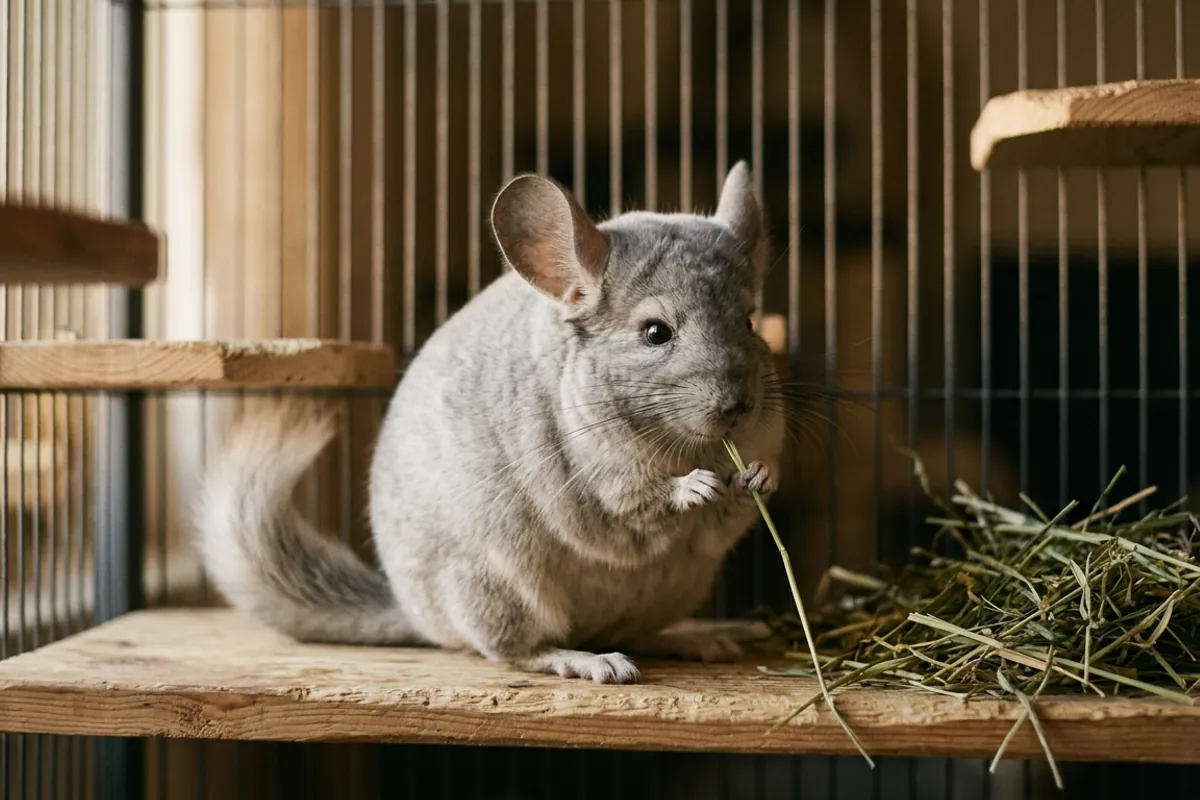
Temperature comes first, because heat kills chinchillas that nothing else would have touched. Keep the room at 60 to 70°F (15 to 21°C). Above 75°F (24°C) you are in risky territory, and 80°F (27°C) and up is an emergency, arriving sooner in humid air where they cannot shed heat at all. Pebble's first summer taught me this the hard way, a heatwave and a night at the emergency vet, and every heat rule on this site comes out of that scare. Put a thermometer where the animal actually lives, not by the door where the reading lies to you.
digital thermometer and humidity gauge with remote probes As an Amazon Associate I earn from qualifying purchases.
A slab of stone they can stretch out against takes the edge off a warm afternoon.
Kaytee Chinchilla Chiller granite stone As an Amazon Associate I earn from qualifying purchases.
Food is the next non-negotiable. Unlimited grass hay, timothy or a similar grass hay, is the whole meal and not a garnish. It keeps the gut moving and grinds down teeth that never stop growing. Juniper, my rescue, came to me with dental disease from a life without enough to chew, and she is exactly why I refuse to compromise on this.
Oxbow Western Timothy Hay, 40 oz bag As an Amazon Associate I earn from qualifying purchases.
Plain pellets are a small measured supplement on top of the hay, never the main course, and treats stay tiny and rare. For the full rundown of what is safe and what is dangerous, what can a chinchilla eat lays it out.
Then bathing, which for a chinchilla means dust and never water. A chinchilla stays clean by rolling in fine volcanic pumice dust a few times a week, which lifts oil and moisture out of that dense coat. A tub of water would soak in and sit against the skin, inviting fungus.
Lixit Blue Beauty chinchilla dust, 3 lb As an Amazon Associate I earn from qualifying purchases.
Finally, give them plenty of wood to gnaw, both for the teeth and the boredom, and if you add a wheel, use a solid running surface, never an open wire one that can snap a leg.
emours apple wood chew sticks, 40 count As an Amazon Associate I earn from qualifying purchases.
That is the outline. Chinchilla care links out to the detail behind each piece.
Reading a chinchilla cat listing
If you are shopping and the phrase chinchilla cat shows up, read it slowly. On a cat, chinchilla is a colour and nothing more. It does not, on its own, make the animal rarer, healthier, or worth a premium, and it certainly does not fold any rodent into the mix. A chinchilla persian for sale is a Persian cat with a particular coat, carrying every one of the health and grooming considerations any Persian carries.
If a seller leans on the word to suggest something exotic, hybrid, or one of a kind, treat that as a flag about the seller rather than a feature of the animal. And if what you genuinely wanted was the rodent all along, make sure the listing is actually for the rodent, because the word chinchilla on its own will not tell you which of two unrelated animals is waiting in the box.
Which animal do you actually want
Before you go any further, get clear in your own head about which animal you have been picturing. If you want a cat with a shimmering, tipped coat, then you want a chinchilla-coloured Persian or British Shorthair, and your real homework is that breed's health, temperament, and grooming demands.
If instead you want the small, dust-bathing, hay-eating rodent that I keep, you are signing up for ten to twenty years of cool rooms, unlimited hay, dust instead of baths, a proper metal cage, and no cat allowed anywhere near it. Both are real animals worth loving, and both deserve an owner who knows what they actually are. The one thing you cannot buy, from anyone, at any price, is a single creature that is somehow both, and nobody honest will try to talk you into believing otherwise.