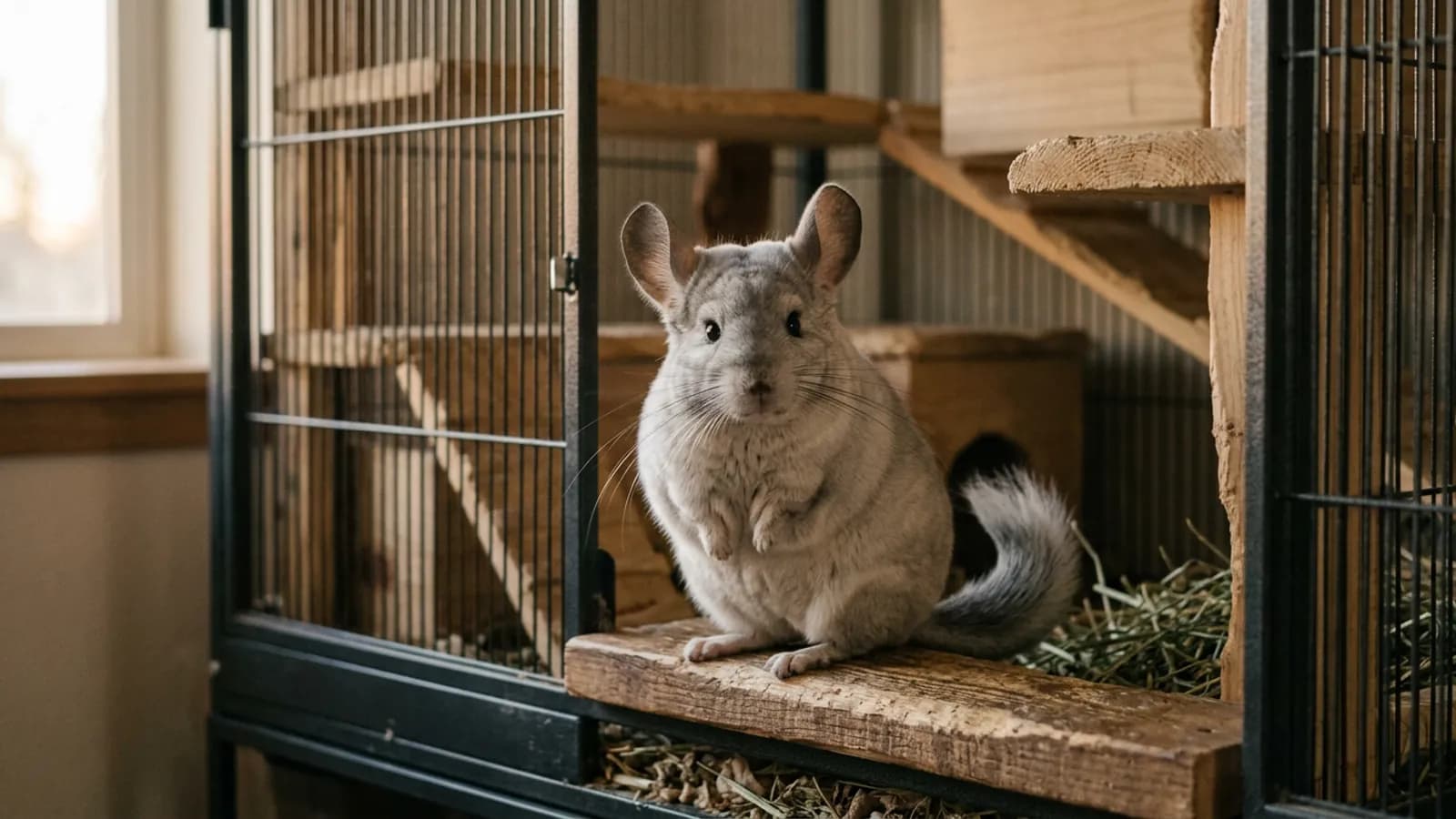
The Littlest Pet Shop chinchilla is a tiny plastic figure with a swollen head and glittery half-inch eyes, and if you typed "chinchilla lps" into a search bar, that toy is almost certainly what you were looking for. LPS is the Littlest Pet Shop line, and the chinchilla is one of its softer, rounder little characters, which is exactly why it charms kids and collectors alike. I have kept the real animal for about ten years, and I want to sit with you for a minute on the gap between that figure and the creature it is modeled on, because that gap is where a lot of well-meaning people get hurt and a lot of animals end up rehomed. A toy asks nothing of you. The animal on my shelf right now, watching me type, asks for a great deal.
What a chinchilla lps actually is
Let me be plain about the search first, because the phrase is doing double duty. "Chinchilla lps" is the shorthand for the Littlest Pet Shop chinchilla: a collectible plastic figurine, part of a franchise of stylized animal characters with oversized heads and bobbling parts. It is not a breed, not a color, not a type of live chinchilla. If you came here trying to identify one, you have the right animal in the wrong medium.
I have written more about the toy line and its history over on the Littlest Pet Shop piece, so I will not repeat all of it. What matters here is the reason the figure exists at all: a real chinchilla is genuinely one of the most photogenic small mammals alive. Dense silver-gray fur, ears like little satellite dishes, a tail that curls up like a question mark. The toy is a caricature of something that is already almost too cute to be real. The trouble starts when the caricature becomes the whole idea someone has of the animal.
What the toy gets right, and what it quietly lies about
The LPS figure gets the silhouette roughly right. Round body, big ears, a suggestion of a bushy tail. That much is fair.
Everything else is where the toy misleads, and it misleads by omission more than by error. The eyes are cartoonishly large; a real chinchilla's eyes are dark and round but proportionate. The fur is painted on as a smooth glossy shell; the real coat is the densest fur of any land mammal, so thick that skin parasites cannot burrow into it and so thick that it is a death trap in the heat, which I will come back to. The toy sits still on a shelf. A real chinchilla is a crepuscular acrobat that bounces off walls at dusk and dawn and needs vertical space to do it.
Most of all, the toy is silent and the animal is not. Chinchillas have a real vocabulary of squeaks, barks, and alarm calls, and learning to read them is part of keeping one well. I broke that down in what your chinchilla is actually telling you, because a plastic figure will never warn you when it is frightened and a live one will, if you know how to listen.
A real chinchilla is a ten-year commitment, not a shelf piece
Here is the number that should stop anyone who fell for the figure and started idly wondering about the animal: a well-kept chinchilla commonly lives 10 to 20 years. That is not a hamster's year or two. That is a pet that can outlast a child's entire time living at home. I have gone into the full picture in how long chinchillas really live, but the headline is that you are signing up for a second decade of daily care, not a season of novelty.
The cost follows from the lifespan. The purchase price is the smallest line on the whole ledger; the cage, the ongoing hay, the dust, and above all the vet fund dwarf it over ten-plus years. I laid out honest figures in what a chinchilla really costs. And exotics vets are not cheap or common, which matters enormously for an animal that hides illness until it is serious. If you cannot name the exotics vet you would drive to at 9pm, you are not ready, and I mean that kindly.
None of this is on the toy's packaging, and none of it should scare you off if you go in clear-eyed. It should only stop the impulse buy, which is the version that ends badly.
The heat rule the toy will never warn you about
This is the part I get bluntest about, because I nearly lost a chinchilla to it. My Pebble came to me from a rehome out of an overheated attic, and her first summer with me brought a heatwave and a night at the emergency vet. That scare is the reason every heat warning on this site reads the way it does.
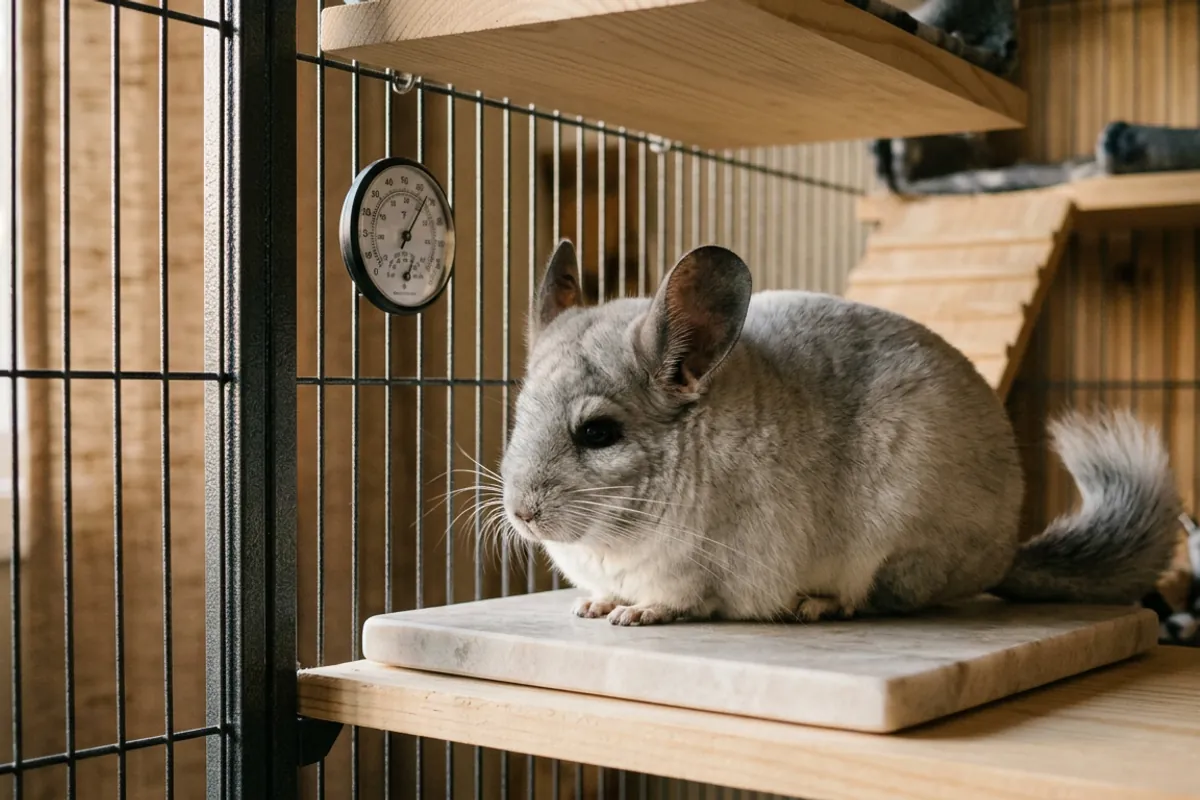
That extraordinary fur that makes the animal so beautiful, and that the toy renders as a shiny coat, is exactly what makes heat lethal. A chinchilla cannot shed heat the way we do. The comfortable range is 60 to 70°F, which is 15 to 21°C. Above 75°F, which is 24°C, you are in risky territory. At 80°F, which is 27°C, and up, you are in an emergency, and it arrives faster in humid air because a chinchilla off-loads what little heat it can partly through its ears and cannot do even that when the air is already wet.
Heatstroke in a chinchilla can be fatal within a shockingly short window, and the early signs are easy to miss if you do not know them. I walk through those signs in detail in the warning signs every owner should know, and I built a heat danger calculator so you can check your own room against the risk line rather than guessing. Keep a thermometer with a humidity reading in the room the animal lives in, not down the hall.
digital thermometer and humidity gauge with remote probes As an Amazon Associate I earn from qualifying purchases.
A flat cooling stone the animal can lie on gives it a place to dump heat, and it is one of the cheapest bits of insurance you can buy.
Kaytee Chinchilla Chiller granite stone As an Amazon Associate I earn from qualifying purchases.
A cooling stone is a comfort measure, not a rescue device. It does not replace keeping the room genuinely cool. If your home cannot hold under 75°F in summer, that is a real, disqualifying problem to solve before the animal arrives, not after.
Teeth, hay, and why they chew all day
My other chinchilla, Juniper, is a neglected rescue whose dental disease I manage every day. She is the reason I am uncompromising about two things, and neither of them is visible on a plastic figure.
The first is hay. A chinchilla's teeth grow continuously for its whole life, and the only thing that keeps them worn to a workable length is the long grinding motion of eating coarse grass hay. So hay is not a snack; it is the foundation of the diet and it must be available without limit, all the time. Good timothy hay is the everyday choice.
Oxbow Western Timothy Hay, 40 oz bag As an Amazon Associate I earn from qualifying purchases.
If you keep more than one animal, or you simply go through it fast, buying in bulk is cheaper and means you never run short.
Oxbow Western Timothy Hay, 9 lb box As an Amazon Associate I earn from qualifying purchases.
Plain pellets sit on top of the hay as a measured supplement, not the main event, and treats stay tiny and rare. I put the whole feeding picture, including what to never offer, in what can a chinchilla eat and the broader diet and hay guide.
The second thing is chews. Teeth also need hard, safe things to gnaw between meals, and variety keeps the animal actually using them. Untreated apple wood and similar safe woods are the standard.
emours apple wood chew sticks, 40 count As an Amazon Associate I earn from qualifying purchases.
I watch, up close and every day, what happens when teeth do not get worn down. Malocclusion is painful, it is progressive, and it is a genuine exotics-vet condition, not something you fix at home. If your chinchilla starts drooling, dropping food, losing weight, or pawing at its mouth, that is a vet visit, not a wait-and-see. I have written the early-warning version in spotting malocclusion before it turns serious and the fuller picture at chinchilla teeth and health. The toy will never chip a tooth. The animal's whole life runs on them.
They bathe in dust, never in water
Here is one that surprises almost everyone who comes to the animal fresh: a chinchilla must never be bathed in water. That miraculous dense coat holds water against the skin, takes ages to dry, and traps damp right down at the skin where it causes fungal infection and worse. Water is a hazard, full stop.
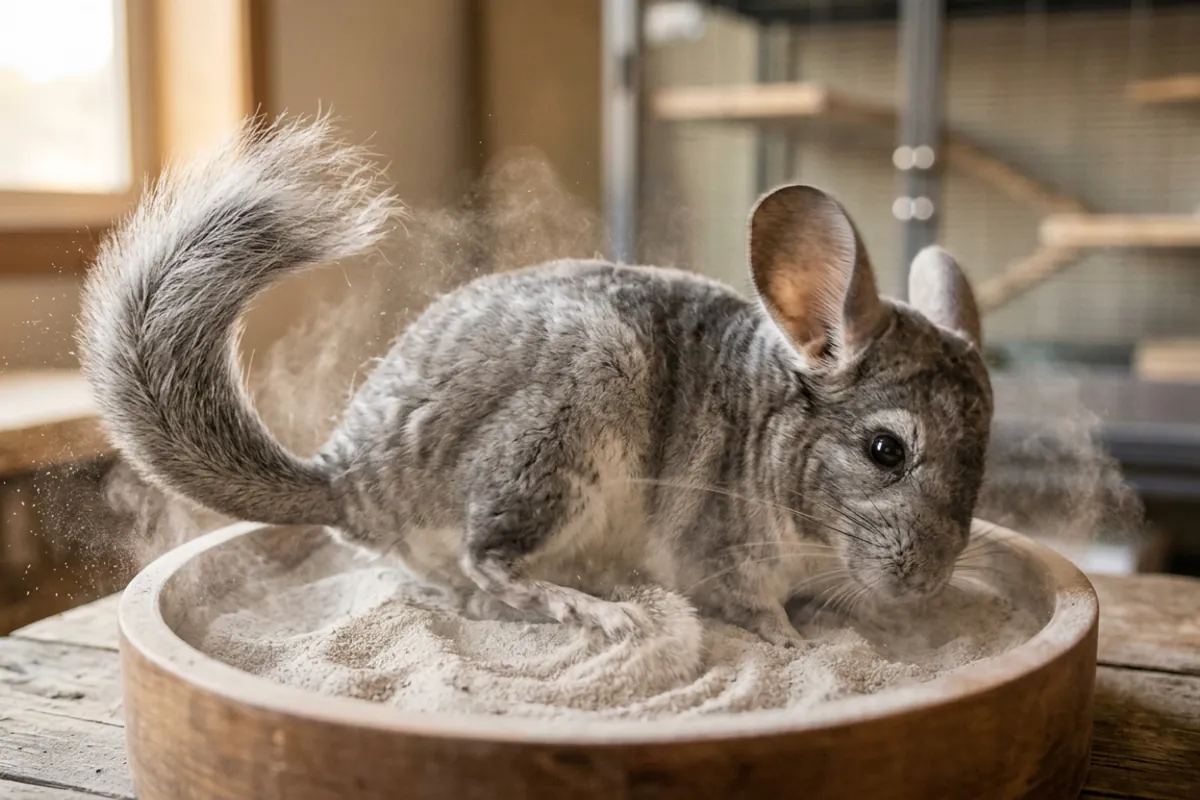
What they use instead is dust, and the dust is not dirt. It is a fine volcanic pumice powder that works its way through the fur and lifts oils and moisture out of it, which is how the coat stays clean and lofted. I explain the difference, and why it matters, in a chinchilla dirt bath is not dirt and what bathing dust really is.
You offer the bath in a container the animal can roll in, for a few minutes a couple of times a week rather than left in all day, since too much dust can dry the eyes and skin. The right dust is the fine pumice sort made for chinchillas.
Lixit Blue Beauty chinchilla dust, 3 lb As an Amazon Associate I earn from qualifying purchases.
The full routine, including how often and for how long, is in the dust bath done right. Watching a chinchilla flip and spin in its dust is one of the real joys of keeping one, and it is a joy no figurine can hand you.
The cage and the wheel a real one needs
A chinchilla needs a tall cage, because it climbs and leaps far more than it runs. Metal bars and solid wooden ledges are what you want; plastic is a chew hazard and a swallowing risk, and it will not survive the teeth anyway.
Critter Nation double unit small animal cage As an Amazon Associate I earn from qualifying purchases.
I go through how to choose one without buying the wrong thing twice in how to choose a chinchilla cage, and I have a specific write-up on the Critter Nation, which is a popular, well-sized option. The full setup, from ledges to placement, is at chinchilla cage setup. Placement matters more than people expect: put the cage in the coolest, most stable-temperature room you have, out of direct sun, for the reasons in the heat section above.
The exercise wheel is the one piece I will not compromise on. It must have a solid running surface. Wire wheels catch feet and tails and cause horrible injuries, and they are still sold widely, so you have to choose deliberately against them.
15 inch Chin Spin solid surface chinchilla wheel As an Amazon Associate I earn from qualifying purchases.
Get the biggest solid-surface wheel that fits, so the animal is not forced to run with an arched back. A wheel is not optional enrichment for an animal this athletic; it is part of meeting a real physical need.
If the toy turned into a real want
Plenty of people arrive at the real animal exactly this way: a kid loved the LPS figure, and now the family is wondering about the living version. That is a fine reason to start looking and a terrible reason to buy on the spot.
If you are seriously considering it, read chinchilla as pets, the honest version and the plain-language care checklist before you go near a listing. When you do start looking, do it carefully: I wrote how to buy one without getting hurt or ripped off and how to find one near you without bringing home trouble precisely because impulse buys from bad sources are how sick animals and heartbreak change hands. And please do not breed on a whim; what breeding actually asks of the animal exists to make that decision a sober one.
A last honest word. The Littlest Pet Shop chinchilla is a lovely little object, and there is nothing wrong with loving it as a toy. But the animal behind it lives for a decade or two, dies fast in a warm room, runs its whole life on teeth that need hay every hour, and can never touch water. If you can give it a cool room, unlimited hay, a proper tall cage, dust instead of a water bath, and an exotics vet on speed dial, it will reward you with years of the most charming company a small pet can offer. If you cannot, the figure on the shelf is the kinder version to keep. I would rather tell you that now than meet your rehome in a few years, the way I met Pebble.