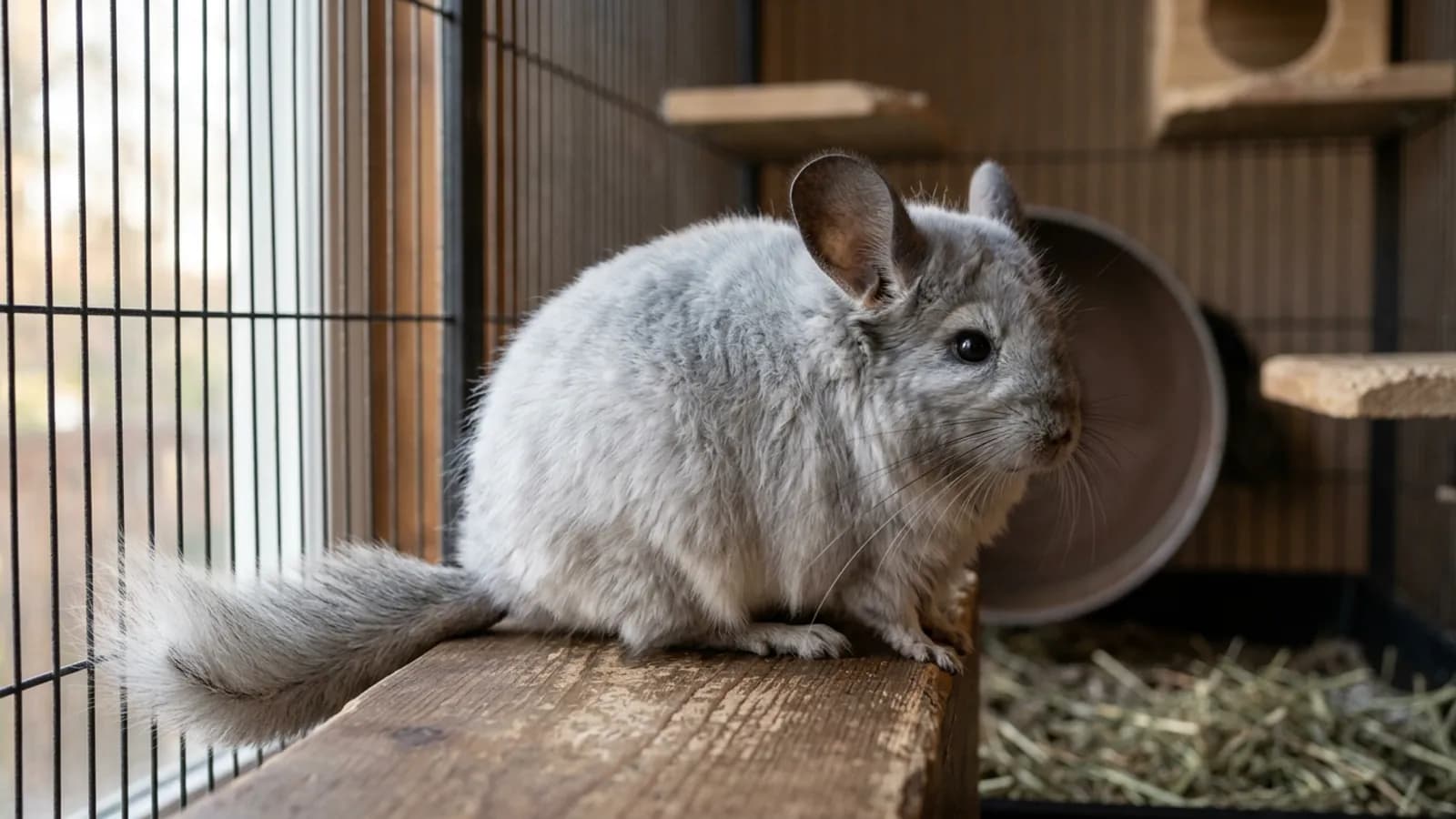
A royal persian angora chinchilla is not a new species, a rare crossbreed, or anything to do with cats, no matter how the name reads on a listing. It is a long-haired chinchilla, the angora coat mutation, sold under a grand-sounding label that borrows its shine from Persian and angora cats. I have kept chinchillas for about ten years, and I have watched this name confuse a lot of first-time buyers into thinking they are getting something exotic that needs special everything. So let me walk through what is real here, what is marketing, and what the fancy name never changes about how you keep the animal alive and well.
The name is marketing wrapped around a real coat
Break the phrase apart and it tells on itself. "Angora" is the only word doing honest work: it is the accepted term for the long-fur mutation in pet chinchillas. "Royal" and "persian" are mood words. They are there because Persian cats and angora cats are famously long-haired and expensive, and pinning those associations onto a chinchilla makes a listing feel like a pedigree.
You will see the same animal written as chinchilla royal persian angora, persian angora chinchilla, or just a royal chinchilla, and they all point at one thing: a chinchilla whose fur grows long instead of the standard short, dense plush. There is no kennel club for chinchillas handing out these titles. A breeder chose the words. That does not make the animal fake, but it should tell you that the price you are being asked is partly for the coat and partly for the name.
If you have ever fallen down the rabbit hole of the truth behind chinchilla persian cats for sale, you have already seen how "chinchilla" gets bolted onto cat listings as a coat descriptor. This is the same borrowing running the other direction: cat glamour bolted onto a rodent.
What the angora coat actually is
The angora chinchilla is a genuine mutation. It is a recessive trait, which means an animal generally needs two copies of the gene to actually grow the long coat, and that is a big part of why they are uncommon and pricey. The fur is longer and softer-looking than the tight standard plush most chinchillas wear, and it is the reason the "persian" comparison sticks.
Here is the part that trips people up: angora describes the coat, not the color. A long-haired chinchilla can be standard gray, it can carry a dark mutation like black velvet, it can be a paler variety. The coat length and the color are separate things riding on separate genetics. So "royal persian angora" tells you the fur is long. It does not tell you the color, and it certainly does not mean the animal is white or albino, which is a separate label people misuse constantly, as I get into in what an albino chinchilla really is. If a seller uses the royal persian angora name as if it were a color grade, that is a seller who does not understand what they are selling.
None of this makes the animal a different pet. Under the long coat is an ordinary chinchilla, with the exact biology that sets every care rule for the plain gray ones.
What the label never changes
This is the sentence I want to stick: the name changes the price and nothing about the animal's needs. A royal persian angora chinchilla is a chinchilla. It wants the same temperature range, the same hay-first diet, the same dust baths, the same tall metal-and-wood cage, and the same dental attention as the fifty-dollar rehome down the road.
I say this bluntly because I have seen people spend a small fortune on a fancy-named chinchilla and then economize on the parts that actually keep it alive, as if the coat came with a warranty. It does not. If anything, the long coat adds a couple of chores rather than removing any. Everything below is standard chinchilla keeping, with the two places the angora coat genuinely asks for more attention flagged as they come.
If you are still deciding whether any chinchilla fits your life, the honest version of chinchilla as pets is worth reading before the coat seduces you.
The long coat asks for more grooming attention
Chinchillas do not bathe in water, ever. Their fur is so dense that a wet coat cannot dry properly down to the skin, and trapped damp turns into fungal skin trouble fast. They clean themselves by rolling in fine volcanic dust, which slips down through the fur and lifts oils and debris out. That is non-negotiable for every chinchilla, and it matters more, not less, on a long-haired one.
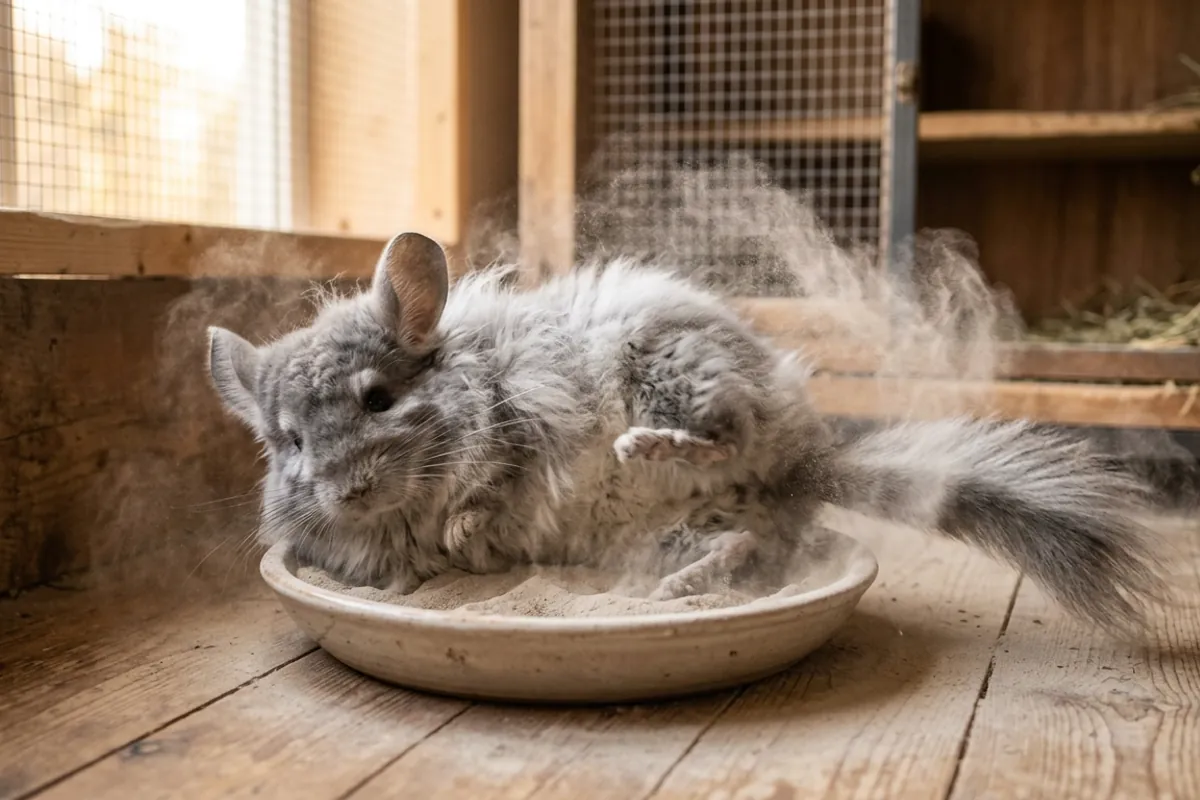
A standard dust bath a few times a week is the baseline. I use a proper dust rather than any sand. Lixit Blue Beauty chinchilla dust, 3 lb As an Amazon Associate I earn from qualifying purchases. The dust has to be the fine pumice kind; sand scratches and does not clean. I walk through the difference in detail in the chinchilla dust bath done right, and it holds fully for angoras.
The extra job with a long coat is watching for mats. Longer fur tangles more readily than the tight standard plush, especially around the rear where droppings and moisture collect, and a mat that sets against the skin gets uncomfortable and can hide problems underneath. Check the coat over regularly with your eyes and a gentle look through the fur. Do not decide to give it a water bath to fix a mat; that trades a small problem for a dangerous one. If a mat is tight to the skin and you cannot resolve it with dust bathing and gentle handling, that is a job for an exotics vet or an experienced groomer, not kitchen scissors near a squirming animal.
One more thing the coat changes: chinchillas release patches of fur when grabbed or frightened, a defense called fur slip. On a long-haired animal the bare patch shows more and takes longer to look normal again, so gentle, unhurried handling pays off double here.
Heat is the bigger danger under all that fur
This is the part I will not soften, because it is the reason I keep chinchillas the way I do. My Pebble came to me from an overheated attic, and her first summer brought a heatwave and a night at the emergency vet. Chinchillas evolved in the cool, dry high Andes. They cannot sweat, and they cannot pant effectively, so they shed heat mainly through their large ears and struggle badly once the air gets warm.
The comfortable range is 60 to 70°F, which is 15 to 21°C. Above 75°F, which is 24°C, you are in risky territory. At 80°F, which is 27°C, and up you are in an emergency, and it happens faster in humid air because dampness robs them of what little cooling they have. A dense standard coat already traps heat against the body. A long angora coat traps more. I would not read the "royal persian angora" name as anything but a reason to be stricter about temperature, not a reason to relax.
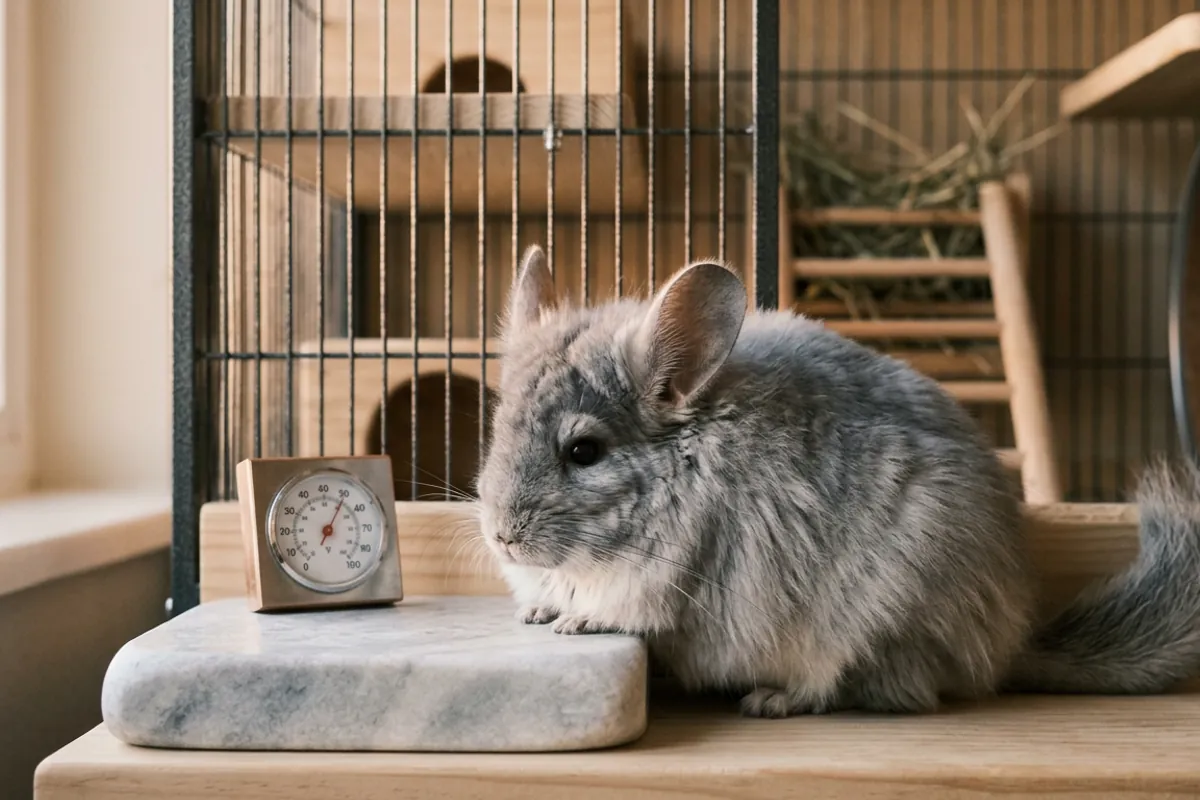
Practical steps are the same ones I preach for every chinchilla, just held to more tightly. Keep the room genuinely cool, measure it rather than guessing with a wall thermostat across the house, and give the animal a chilled surface to press against on warm days. Kaytee Chinchilla Chiller granite stone As an Amazon Associate I earn from qualifying purchases. Put a real thermometer on or near the cage so you are reading the air the animal actually breathes. digital thermometer and humidity gauge with remote probes As an Amazon Associate I earn from qualifying purchases. Learn the early signs of overheating before you need them, because they escalate quickly; I lay them out in the chinchilla heat stroke warning signs, and the whole chinchilla temperature picture is worth committing to memory. If you want to sanity-check a room on a hot day, the heat danger calculator does the math for you. When in doubt on a hot day, cool the animal and call an exotics vet; heat stroke is not something you wait out.
Diet, and the royal canin question
The diet does not change for a fancy coat either. Chinchillas run on unlimited grass hay, first and always. Good timothy hay should be in front of the animal at all times, because the constant chewing is what keeps both the gut moving and the teeth worn down. Oxbow Western Timothy Hay, 40 oz bag As an Amazon Associate I earn from qualifying purchases. If you go through hay quickly, as you will, buying it in bulk saves money and waste. Oxbow Western Timothy Hay, 9 lb box As an Amazon Associate I earn from qualifying purchases.
On top of unlimited hay, a measured amount of plain chinchilla pellets covers the nutritional gaps. Pellets are a supplement, not the main meal, and the honest details of how much and which kind live in the chinchilla pellets guide; a straightforward option like Oxbow does the job without fuss. Skip the colorful mixes with seeds and dried fruit, and be careful with treats, which I cover in what a chinchilla can and cannot eat.
Now the search that brings some people here: royal canin chinchilla. Royal Canin is a well-known pet food brand for cats and dogs, and to the best of my knowledge it does not make a chinchilla-specific food. If you searched that phrase hoping for a premium chinchilla diet with a familiar name on the bag, there is not one, and there does not need to be. A named brand is not what your chinchilla needs. Unlimited grass hay, a measured plain pellet, and constant chewing material are the whole diet. Do not let a famous cat-and-dog label pull you away from the hay bin.
The chewing part is dental, not entertainment. Chinchilla teeth grow continuously for life, and if they do not get worn down they overgrow into painful malocclusion. My Juniper came to me with dental disease and I manage it every day, which is why I am uncompromising about hay and a real variety of safe wood to gnaw. emours apple wood chew sticks, 40 count As an Amazon Associate I earn from qualifying purchases. There is more on this in chinchilla chew toys as dental care and on spotting trouble early in chinchilla teeth problems.
Buying a royal persian angora chinchilla
Because the angora coat is a recessive, uncommon mutation and the name carries cat-world glamour, these animals cost more, sometimes a lot more, than a standard chinchilla. That price gap is the whole reason to slow down and buy the animal, not the label.
Ask the seller what the animal actually is: what color underlies the long coat, whether both parents were healthy, and how old it is. A breeder who understands their own stock can answer plainly and will let you see the animal move, eat, and be handled. Watch for a dry, clean rear, bright eyes, steady breathing, and a coat with no tight mats or bald patches. Ask what it is being fed and get a little of the same hay and pellet to ease the transition home. The care that goes into an animal matters far more than the flourish in its listing, and a title cannot cover for a sick chinchilla.
I would treat any listing that leans hard on "royal" and "persian" while going vague on health and lineage with suspicion. The general homework for a good purchase holds here: how to buy a chinchilla without regretting it later, what a chinchilla price actually tells you, and how to read a chinchilla for sale listing without getting hurt. None of those change because the coat is long; they just matter more when the number is bigger.
Is a long-haired chinchilla right for you
Set the housing up the same way you would for any chinchilla, because the coat does not shrink the space it needs. That means a tall cage of metal and wood with wooden ledges to jump between, no plastic anywhere it can gnaw, and a solid-surface wheel rather than a wire one that catches feet and tails. Critter Nation double unit small animal cage As an Amazon Associate I earn from qualifying purchases. 15 inch Chin Spin solid surface chinchilla wheel As an Amazon Associate I earn from qualifying purchases. If you are shopping for the enclosure, how to pick the best chinchilla cage without buying the wrong one twice will save you money, and the full cage setup guide covers the rest.
So, honestly: a royal persian angora chinchilla is a lovely animal with a coat that photographs beautifully and a name that costs extra. If you want one, want it for the animal. Budget for the same cool room, the same endless hay, the same dust, the same vet fund, plus a little more grooming vigilance for the long fur. Do that and the coat is a pleasure. Buy the name and cut corners on the care, and the fancy label will not save an animal that overheats or whose teeth go untended. The chinchilla under all that fur only ever needed the basics done right.