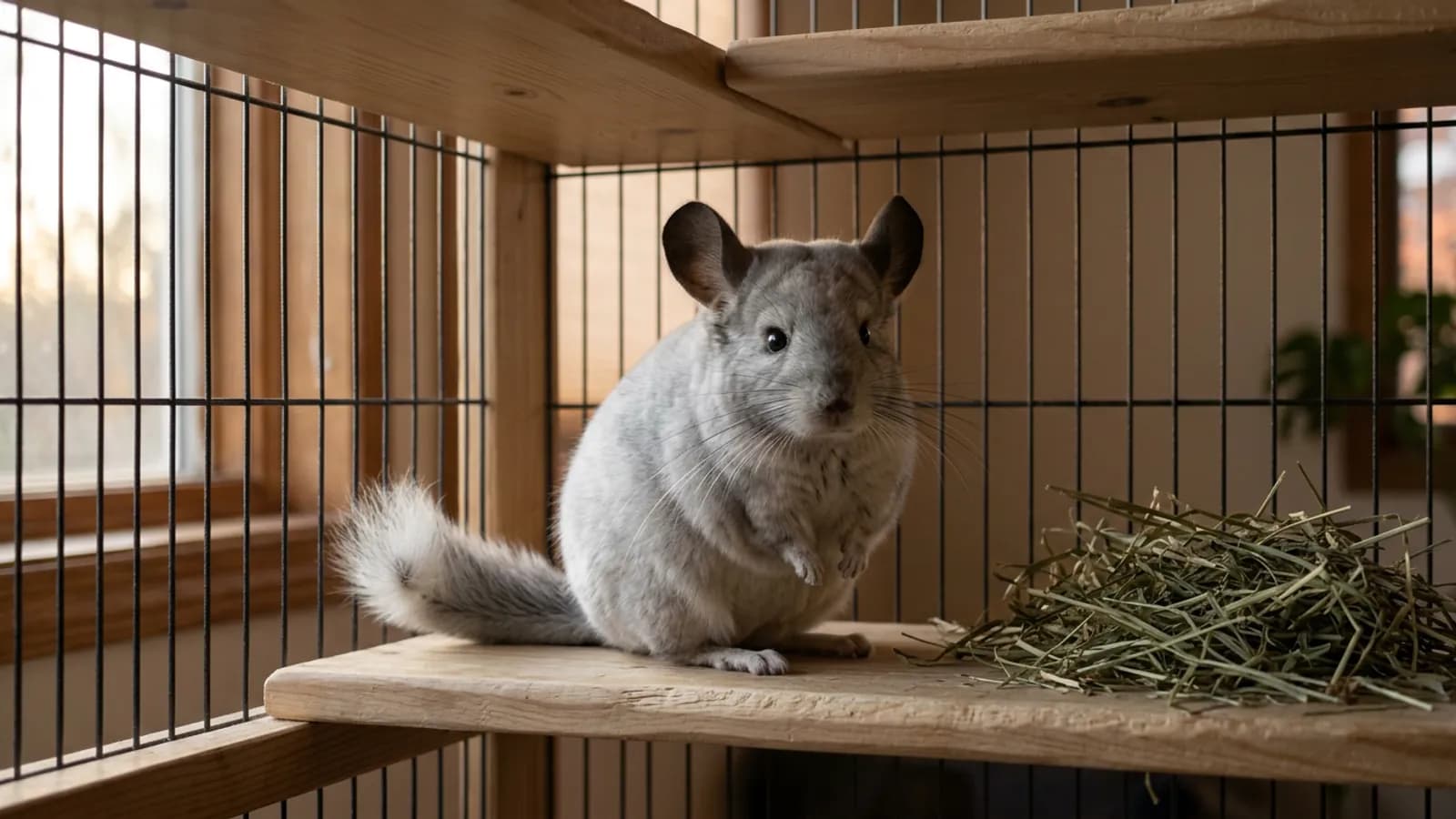
If you typed standard chinchilla rabbit into a search bar and landed on a site run by someone who keeps chinchillas, let me clear something up before you read another line. The standard chinchilla rabbit is a rabbit. It is not the small silver rodent I have dozing in a cage across the room. It is a real, recognized rabbit breed that happened to grow a coat resembling a wild chinchilla's fur, and the fur trade liked that resemblance enough to name the breed after it. Past the name and the coat, a rabbit and my chinchillas share almost nothing about how you house them, feed them, or keep them alive through a hot afternoon. Both mix ups are common, and both can end with the wrong animal in the wrong setup. So this is two articles in one: what the breed is, and how not to confuse its care with the animal I actually keep.
What the standard chinchilla rabbit actually is
The Standard Chinchilla is a breed of domestic rabbit, and it is the original of the chinchilla coated rabbits. The usual account credits a French engineer, M.J. Dybowski, who bred it and first showed it in France a little over a hundred years ago, in the early 1910s. It reached Britain and then the United States within the decade, and it was a sensation for one blunt reason: its pelt looked like the wildly expensive fur of the South American chinchilla, at a fraction of the cost. A whole fur industry grew up around that likeness.
As rabbits go it sits at the smaller end, usually around 5 to 7 pounds, with a compact, rounded body. Breed clubs on both sides of the Atlantic recognize it, and today you will find it as a show animal and a pet far more than as a fur source. By reputation the breed is calm and manageable, which is part of why it outlived the collapse of the rabbit fur trade. I will not pretend to deep rabbit experience though. Any specific health or handling question about one belongs with a rabbit savvy vet, not with me. If you want the fuller version of how this breed and its larger cousin came to be, I wrote about the bigger one in the American chinchilla rabbit is a rabbit, not the animal I keep.
Where a rabbit gets the name chinchilla
The whole thing comes down to fur. A wild chinchilla's coat gets its soft, smoky look from each hair being banded: a dark base, a pale band, and a dark tip, so the coat reads as an even salt and pepper gray rather than a flat color. Rabbit breeders selected for a coat that does the same trick, agouti fur with that banded structure, and the result looks close enough to a chinchilla pelt across a room that the name stuck.
The comparison flatters the rabbit more than it earns, though. A wild chinchilla's fur is famous for its density, with dozens of hairs growing from a single follicle, which is what gives the coat its depth and also why the animal cannot get wet safely. A rabbit's coat, however handsome, is nothing like that structurally. The eye is fooled by color, not by the actual fur.
This borrowing is a pattern you see over and over once you start noticing it. The word chinchilla gets attached to almost anything with that silvery, ticked coat. It is why there are British chinchilla cats and chinchilla persian cats, none of them related to the rodent at all. It is the same borrowing at work with the chinchilla rabbit as a general term. The label describes a look, not a lineage. And here is the part that matters for anyone shopping: the coat name never changes the animal underneath it. A chinchilla coated rabbit is a rabbit, with a rabbit's biology and a rabbit's needs, no matter how much the fur flatters the comparison.
Standard, American, and giant: three rabbits, one coat name
There is not one chinchilla rabbit, there are three, and the only thing separating them on paper is size. The Standard Chinchilla is the small original. The American Chinchilla is the mid sized one, commonly quoted around 9 to 12 pounds. The Giant Chinchilla is the big one, often in the 12 to 16 pound range, bred up deliberately for more meat and pelt off a single animal. Same banded coat, three very different body sizes.
The American Chinchilla, the mid sized one, nearly went extinct as the fur market vanished and is now treated as a rare breed by conservation registries. I mention that only because it shows how tied these rabbits were to fur, and how little that history has to do with the pet rodent sharing their name. If a listing just says chinchilla rabbit with no other word, it is worth asking which of the three the seller means, because a Standard and a Giant are not interchangeable in the space, food, and handling they need. None of that changes my side of the fence though. All three are rabbits, and a five pound rabbit and a one pound chinchilla are still different animals with different rules.
The one thing the rabbit and my chinchillas share
For all the differences, there is one real overlap, and it is the most important rule in either animal's diet: unlimited grass hay, all day, every day. Both rabbits and chinchillas have teeth that never stop growing. The molars in particular keep erupting through the animal's whole life, and the only thing that keeps them worn to a healthy length is hours of grinding tough, fibrous hay. Take the hay away and the teeth overgrow, and overgrown teeth are not a cosmetic problem. They cause pain, drooling, weight loss, and abscesses that turn into serious vet bills or worse.
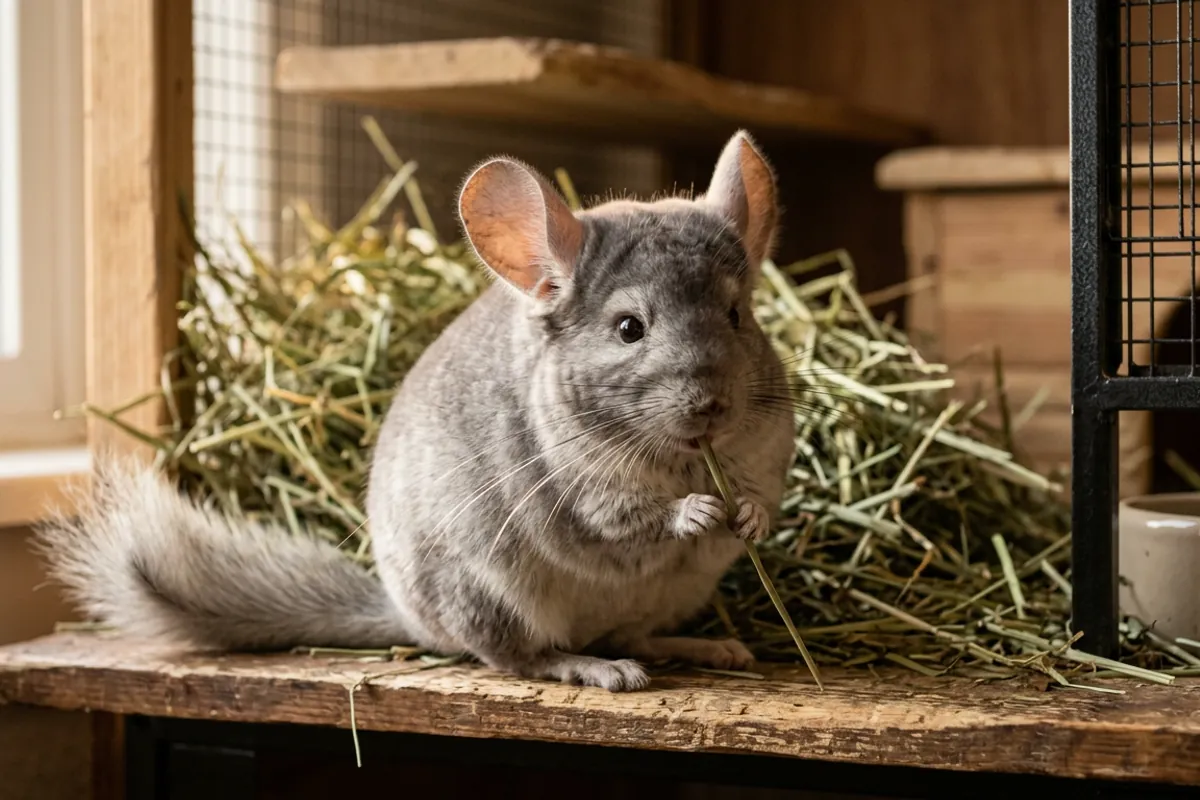
I do not have to imagine that. One of my two, Juniper, came to me as a neglected rescue, and I manage her dental disease day to day. Watching what happens up close when teeth do not get worn down is exactly why I am uncompromising about hay for a chinchilla, and it is the one bit of my routine I would hand a rabbit keeper without a second thought.
Unlimited does not mean a handful topped up when you remember. It means hay always present, so the animal can graze around the clock the way its gut and teeth evolved to. Timothy and other grass hays are the everyday base. Alfalfa is richer and higher in calcium, fine for a growing kit or a nursing mother in small amounts but too much for a healthy adult as a daily diet. Timothy hay is the everyday staple I keep boxed and topped up for my own. Oxbow Western Timothy Hay, 40 oz bag As an Amazon Associate I earn from qualifying purchases.
Beyond hay, both animals gnaw wood, and safe wood chews earn their place for the same dental reason. For my chinchillas that means untreated apple wood and similar safe hardwoods, never softwood and never anything painted or treated. A rotating pack of apple wood chews keeps the interest up. emours apple wood chew sticks, 40 count As an Amazon Associate I earn from qualifying purchases.
If you want the chinchilla side of the teeth story in full, I put it in chinchilla teeth, from what healthy looks like to when to see a vet.
Where their care splits hard
Now the divergence, and it is wide. Start with the bath. A chinchilla cleans that dense coat by rolling in fine volcanic dust, never water. The dust is a fine pumice, close to what they would roll in among Andean rocks, and it lifts oil and moisture out of the fur the way water never safely could. Their coat is so thick that if it gets soaked it stays damp against the skin and grows fungus, so a chinchilla takes a dust bath a few times a week and never, ever a water bath. Lixit Blue Beauty chinchilla dust, 3 lb As an Amazon Associate I earn from qualifying purchases. A rabbit does not need a dust bath at all, grooms itself more like a cat, and, for what it is worth, also should never be dunked in water, since a soaked, stressed rabbit can go into shock. Two animals, two completely different grooming systems.
Then temperature, and this is the one I refuse to soften. A chinchilla is built for the cold, high Andes, wearing a coat that traps heat brutally well, and it cannot shed that heat the way we do. The comfortable range is 60 to 70°F, which is 15 to 21°C. Above about 75°F, roughly 24°C, you are into risky ground, and at 80°F, about 27°C, you have an emergency, faster still if the air is humid. My conviction here is not theoretical. My other chinchilla, Pebble, came out of an overheated attic, and her first summer brought a heatwave near miss and a night at the emergency vet. That scare is why I keep the cage temperature honest with a thermometer and hygrometer rather than guessing. digital thermometer and humidity gauge with remote probes As an Amazon Associate I earn from qualifying purchases. It is also why I keep a chilled stone in the cage for the hot stretch of the day, a cold surface she can stretch out on. Kaytee Chinchilla Chiller granite stone As an Amazon Associate I earn from qualifying purchases. Rabbits handle warmth better than that. They still overheat, and I would never leave any small animal in a hot room, but the chinchilla numbers above are hard lines and they do not transfer to a rabbit. Do not run a rabbit cold thinking it needs Andean temperatures, and never gamble a chinchilla up at a rabbit's tolerance. If you keep a chinchilla, the whole heat story and a calculator for your own room are on chinchilla heat safety and the chinchilla heat danger calculator.
If you actually came for the rodent
Plenty of people who search for a chinchilla rabbit actually want the rodent and just grabbed the nearest words. If that is you, here is the short version of what the animal needs, and none of it looks like rabbit keeping.
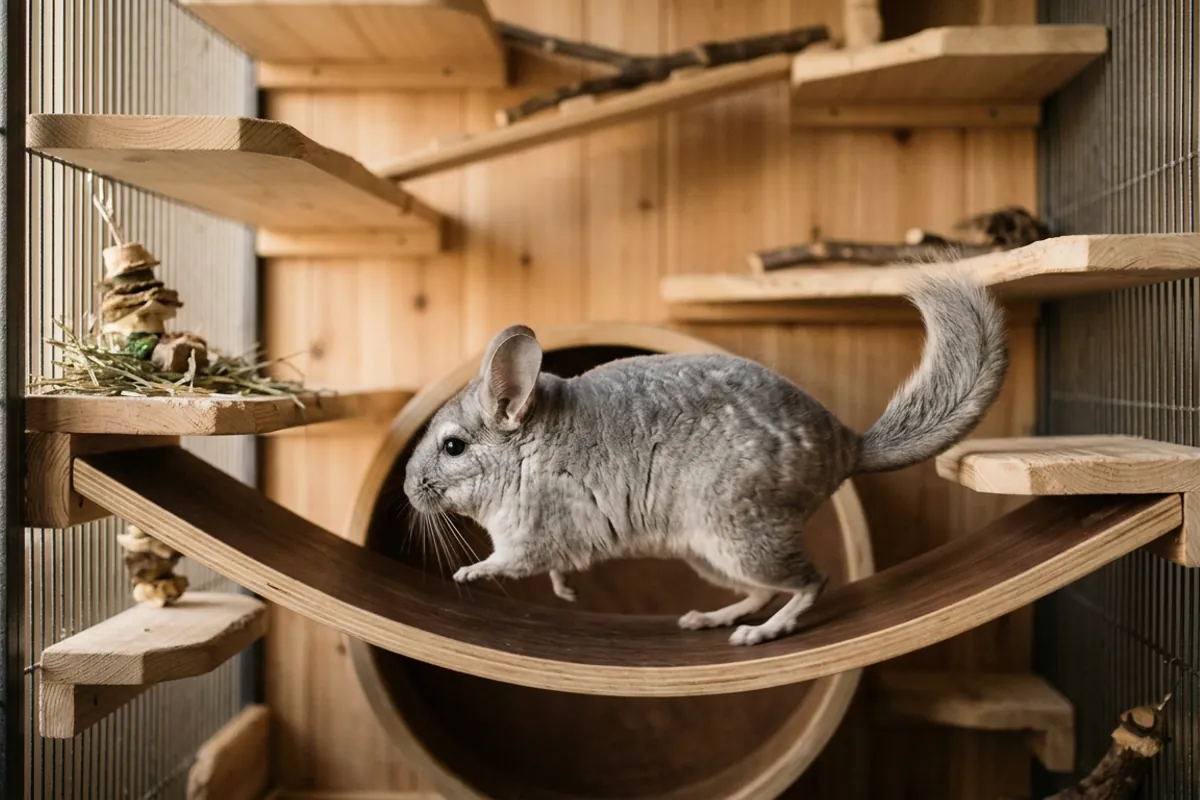
Housing comes first. A chinchilla needs a tall cage made of metal and wood, never plastic, because a chinchilla will chew plastic and can swallow pieces that block its gut. Height matters more than floor space, because these are animals that climb and leap, so wooden ledges set at different heights give them the vertical world they actually use. Critter Nation double unit small animal cage As an Amazon Associate I earn from qualifying purchases. Exercise is part of that, and the wheel is where people get hurt buying the wrong thing. It has to be a solid running surface, large enough that the back does not arch. Wire rungs and small wheels catch feet and break legs, so I only use a solid surface wheel. 15 inch Chin Spin solid surface chinchilla wheel As an Amazon Associate I earn from qualifying purchases.
The diet is hay first, exactly as above, with a measured amount of plain pellets as a supplement and not the main meal. Treats are tiny and rare, and a lot of what gets sold as chinchilla treats is sugar the animal cannot handle. Water goes in a bottle, and the only bath is dust, a few times a week, using fine chinchilla dust and never sand or sudden water.
A chinchilla is also a long commitment. Kept well they commonly live 10 to 20 years, which is a decade or two of daily hay, weekly dust, and a room you hold cool through every summer. They are most awake at dawn and dusk, they do not love being clutched, and they earn trust slowly on their own terms. If you want the full setup laid out once, I keep it at chinchilla care and how to choose a chinchilla cage without buying the wrong one twice, and the honest, unglamorous picture of ownership at chinchilla as pets.
Reading a listing so you bring home the right animal
The confusion is worst at the point of sale, because the word chinchilla in a listing can mean at least three different animals. It can mean the rodent I keep. It can mean one of the three chinchilla rabbits, standard, american, or giant. It can even mean a cat or a coat color, which is why I have written so much about chinchilla persian cats and the rest. A photo usually settles it fast: a chinchilla rabbit has long ears, a rabbit's face, and a body many times the size of the rodent, while the animal I keep is a round, big eared, bushy tailed thing that fits in two hands and weighs about a pound.
So before you commit, ask the plain question: is this a rabbit or a rodent? Ask the adult size and weight. Ask what it eats and how it is housed, because the honest answers will sort the two instantly. It is not pedantry. The two animals cost different amounts to keep, live different lengths of time, and need different rooms, different food, and different vets. A rabbit savvy vet and an exotics vet who sees chinchillas are not always the same person. A seller who cannot tell you clearly which animal you are looking at is not a seller I would buy from. Get that one word pinned down and you will not bring home a five pound rabbit expecting the little Andean climber, or the other way around. They are both worth keeping well. They are just not the same commitment, and the coat name they share does nothing to change that.