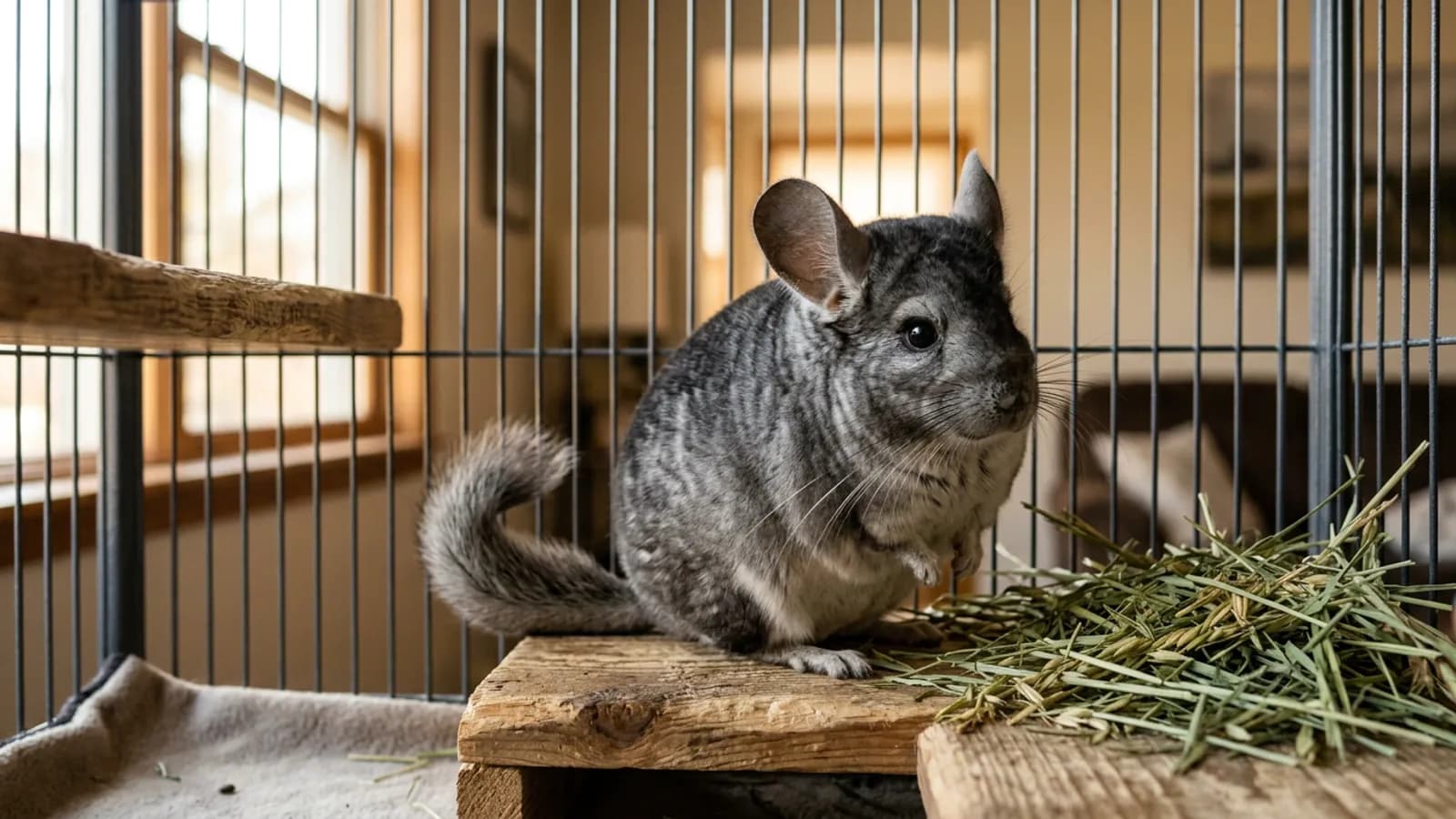
If you searched for chinchilla silver persian and pictured the small grey rodent I keep, you landed on the wrong animal. The chinchilla silver persian is a cat, a Persian with a near-white coat and fine dark tipping that makes the fur shimmer silver, and it carries that name only because early breeders thought the coat looked like my chinchilla's. I have kept chinchillas for about ten years, long enough to watch this one word send people down the wrong path, buying the wrong food and the wrong housing for whichever animal they end up with. So I want to untangle it here, plainly. The two share a single label and almost nothing else, and the care that keeps one alive would be exactly the wrong care for the other.
The cat that borrowed my animal's name
The word chinchilla does a lot of borrowing. My animal is a rodent from the high Andes of South America, and it wore the name first. The cat world took it because a pale, dark-tipped coat reminded early breeders of that rodent's silvery fur, and the label stuck. So when you see persian chinchilla silver, or just chinchilla silver, on a cat breeder's page, the chinchilla part is describing a look, not a species. There is no chinchilla in the cat, and no cat in my cage.
I keep the rodent, not the Persian, so treat what I say about the cat as a pointer rather than gospel and check a cat breed authority for the fine print. What I can hand you with confidence is which animal is which, and why the difference matters more than the shared word suggests. If you came here for the cat, the honest short version is that you want a Persian breeder and the cat fancy's colour standards. If you came for the rodent and got tangled in cat listings, stay with me. I have written more about the feline side of this in what a chinchilla persian really is and in the cat colour named after the animal I keep.
What a silver chinchilla Persian looks like
A chinchilla silver Persian is, in plain terms, a mostly white cat that looks dusted with soot. Each hair stays pale for most of its length and carries dark pigment only at the very tip, so the colour sits on the surface like frost on grass. In the cat fancy, the tipping on a chinchilla silver covers only the top eighth or so of each hair, the lightest and most sparkling version of the pattern. Let that tipping run deeper, down to roughly a third of the hair, and the same breeders call it shaded silver instead. Those are the cat world's terms, and I am reporting them, not ruling on them. Persians come in other tipped and shaded colours too, golden among them, but silver is the one that borrowed my animal's name most directly, so it is the one people muddle with the rodent.
The face is the other giveaway. A silver chinchilla Persian usually carries green or blue-green eyes, a brick-red nose outlined in black, and the flat, round Persian head under a long, dense coat. None of that describes my rodent, whose fur is one even colour from nose to rump, whose eyes are dark, and whose face is anything but flat. If the animal in the photo has a pushed-in face and emerald eyes, you are looking at a cat, and no amount of the word chinchilla changes that.
Where british chinchilla silver fits
The same coat idea travels to another breed. British Shorthairs and British Longhairs come in a tipped silver variety, and breeders call it british chinchilla silver: a white coat with fine black tipping and, usually, green eyes, set on the stocky British body rather than the flat Persian one. It is a different breed wearing the same borrowed word, and that word is doing the same job it always does, describing silver-tipped fur.
So british chinchilla silver, persian chinchilla silver, and plain chinchilla silver are all cat coats, close cousins in look and named from the same source. The rodent I keep does not come in breeds at all. It comes in colours and patterns, which is exactly where the real confusion with silver mosaic chinchilla begins, so that is where I am headed next. If the British cat is what pulled you in, I went further into it in British chinchilla cats and the little rodent that lent them the name.
The real chinchilla, and why its fur looks silver
Now the animal I actually keep. The standard chinchilla, the ordinary grey one most people picture, already looks silver, and that is not a trick of the light. Every guard hair is banded along its length: a dark slate base, a paler middle band, and a dark tip, all sitting over a clean white belly. Stack that banding across the densest fur of any land mammal and the eye reads the whole coat as a shifting silver-grey.
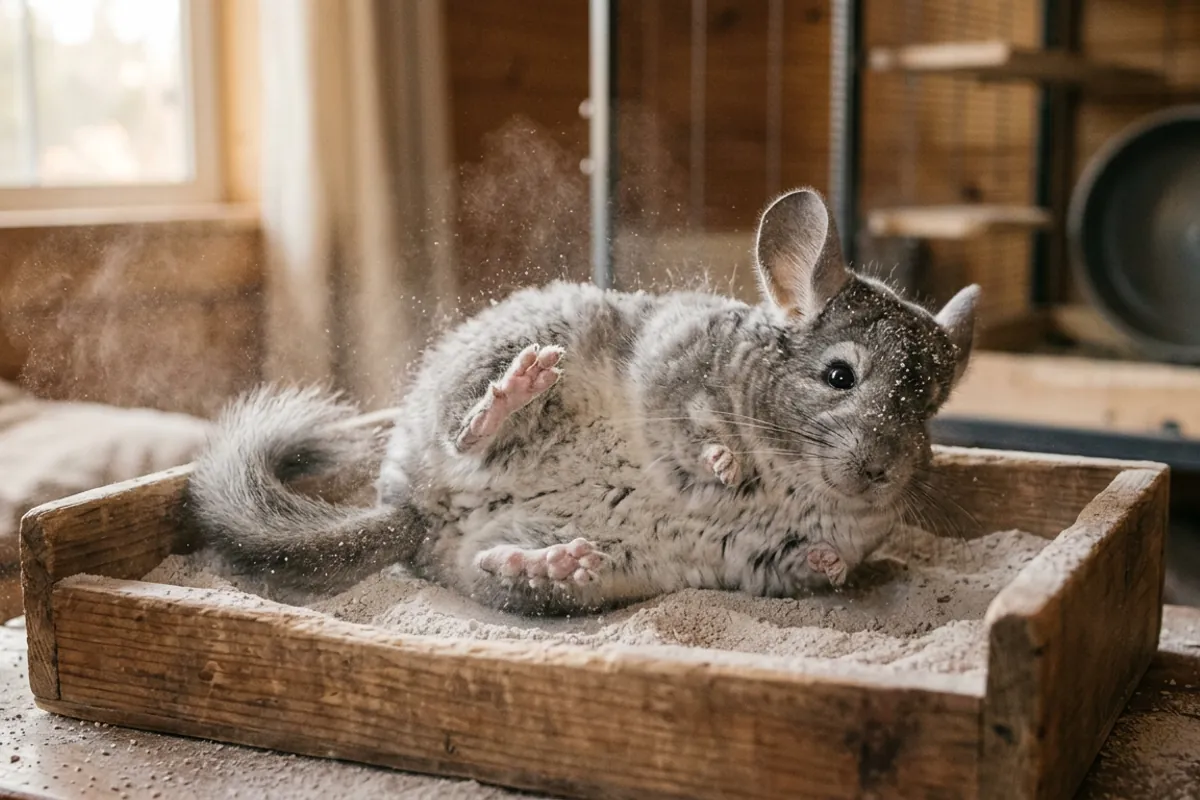
The density is the part people underestimate. Keepers commonly cite as many as fifty hairs growing from a single follicle, and something on the order of twenty thousand hairs packed into a square centimetre. That is why the coat feels like nothing else you have touched, and, more importantly, why it holds no water. So when someone says chinchilla silver about the rodent, they usually just mean a good standard grey, the everyday colour, not a rare morph.
It is worth being honest about the genetics too. There is no single recognised mutation called silver in chinchillas the way there is a named beige or ebony or violet. Silver is a word keepers reach for to describe a look, not a formal colour gene. The genuinely different morphs have their own names, and I laid the real ones out in what rare chinchilla colours really are and in what a chinchilla sapphire really is. The base animal is already silver by default.
Silver mosaic chinchilla, a pattern and not a colour
Here is where the rodent earns its own silver label. Mosaic is a coat pattern in chinchillas, not a colour: a mostly white animal with grey patches scattered unevenly across the body, so no two mosaics ever look quite alike. Call one a silver mosaic chinchilla and you are simply describing a mosaic whose grey markings read cool and silvery rather than dark and heavy. It is still a pattern painted over the same standard animal underneath.
Mosaic is tied to the white gene in chinchillas, which is why a mosaic always has that white base with patches laid over it, rather than an all-over silver wash. Because the white gene can be tricky to pair, responsible breeders are careful about it, and I would not chase a striking mosaic pattern from a seller who cannot tell you anything about the parents. The pattern is lovely, but it is still just paint.
That is the crucial point, and it is the very same one that applies to the cats. The pattern is skin-deep. A silver mosaic chinchilla eats the same hay, needs the same cold room, and grows the same relentless teeth as a plain grey one from the pet shop. Nothing about the markings changes a single line of the care. I went further into how mosaic works, and why it is a pattern rather than a shade, in what a chinchilla mosaic really is. Read the coat as decoration, and read the animal underneath as the thing you are actually keeping alive.
Beyond the coat, two very different animals
Strip away the shared word and these two animals barely overlap. A Persian cat is a predator, an obligate carnivore that has to eat meat to survive. My chinchilla is a strict herbivore whose gut is built for a steady flow of coarse fibre and nothing rich, so the same bowl of food would make one thrive and the other sick.
The rest of the biology runs just as far apart. A chinchilla weighs about a pound and lives fifteen to twenty years with good care, far longer than most rodents its size. It is crepuscular, most awake at dawn and dusk, and it talks in a range of squeaks, barks, and chirps rather than meows. It cannot be bathed in water, cannot tolerate a warm room, and cannot go a day without hay in front of it. A cat can do all three. If a single fact tells the two apart at a glance, it is this: you can leave a cat in a 78°F (26°C) room and it will simply nap, while the same room is quietly dangerous for a chinchilla. That is not a small difference in care. It is the difference between an animal that is fine and an animal in trouble, and it is why getting the species right, before anything about silver, matters so much. There is more on the rodent's basic biology in what a chinchilla really is.
What the silver coat never changes about care
Whatever silver you were chasing, the care of a real chinchilla is fixed, and it is more demanding than most people expect. Three things carry most of the weight, and none of them care about the colour of the fur.
Heat will kill long before the coat ever fades
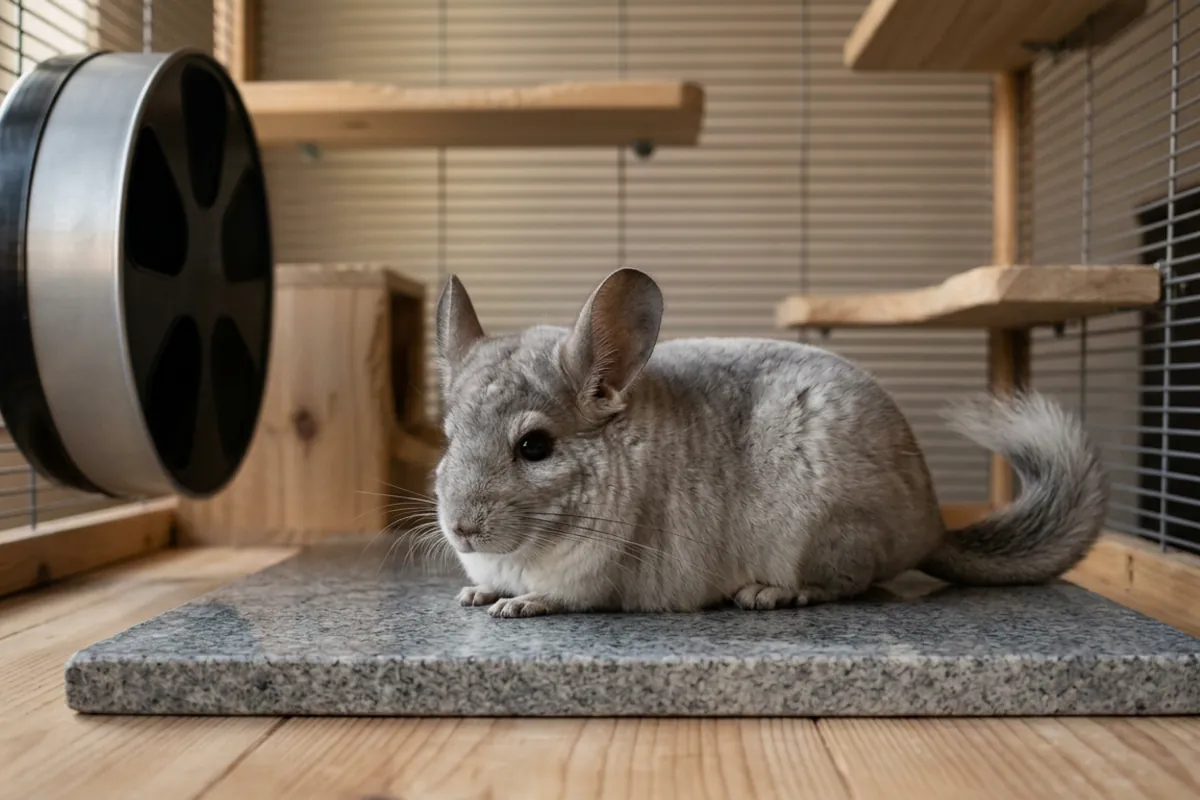
That thick silver fur evolved to trap heat in the cold, high Andes, and it traps heat just as well in a warm living room, which is the whole problem. Chinchillas are comfortable at 60 to 70°F (15 to 21°C). Above 75°F (24°C) you are into risky territory, and 80°F (27°C) and up is a genuine emergency, sooner in humid air, because an animal cannot shed heat through a coat that dense. Pebble, my first, came out of an overheated attic and spent a night at the emergency vet during her first summer, and that scare is why I will not soften this line for anyone. Clip a thermometer to the cage so you always know the real number. digital thermometer and humidity gauge with remote probes As an Amazon Associate I earn from qualifying purchases. Give a cooling stone for the hot afternoons. Kaytee Chinchilla Chiller granite stone As an Amazon Associate I earn from qualifying purchases. The full protocol lives in chinchilla heat safety.
Hay first, always, for teeth that never stop growing
A chinchilla's teeth grow for its entire life, and only hours of grinding coarse grass hay wear them back down. Unlimited timothy or other grass hay is the whole meal, not a side dish. Oxbow Western Timothy Hay, 40 oz bag As an Amazon Associate I earn from qualifying purchases. Keep a measured tablespoon or two of plain pellets as a supplement, never the main course. My Juniper is a rescue whose teeth were already failing when she reached me, and watching her manage that day to day is why I am uncompromising here. Add hard wood chews to give the teeth more to work against. emours apple wood chew sticks, 40 count As an Amazon Associate I earn from qualifying purchases. I dug into why in timothy hay for chinchillas.
Dust for bathing, never water
That same dense coat holds no water, so a bath in water soaks straight to the skin, stays damp for hours, and grows fungus. Chinchillas clean themselves by rolling in fine volcanic dust that pulls oil out of the fur. Offer a dust bath a few times a week, for ten or fifteen minutes, not around the clock, or you dry the skin out the other way. Lixit Blue Beauty chinchilla dust, 3 lb As an Amazon Associate I earn from qualifying purchases. I walk through the how and the how often in the chinchilla dust bath.
If it is the rodent you want
If you started at chinchilla silver persian and have worked out that it is actually the small grey animal you want, good, but walk in clear-eyed. You are taking on a creature that can live fifteen to twenty years, needs a cool room you can reliably hold below 75°F (24°C) all year, and lives in a tall metal cage because a bored chinchilla will chew soft plastic to pieces. A tall cage of wood and metal is the baseline, not the luxury upgrade. Critter Nation double unit small animal cage As an Amazon Associate I earn from qualifying purchases. Pair it with a solid-surface wheel, never a wire one that can catch and break a foot. 15 inch Chin Spin solid surface chinchilla wheel As an Amazon Associate I earn from qualifying purchases. Buy the animal, not the colour. A silver mosaic chinchilla and a plain standard grey are the exact same commitment for the next two decades, and a seller who prices the pattern like a rare jewel is selling you a story, not better health. The colour is a coincidence of pigment; the two decades of cool rooms, unlimited hay, and dust baths are the real purchase. Meet the animal in person, check that it is bright-eyed, dry-nosed, and busy chewing, and ask what it has been fed. I put the rest of the checklist in how to buy a chinchilla and the money side in what a chinchilla really costs. The coat is the least important thing you will decide on, and the room temperature is the most. Your chinchilla will not care in the slightest how silver its fur is. It will care, a great deal, whether the room is cool.